X-ray imaging reveals leaf structure, aiding drought-resistant crop breeding

Researchers used X-ray imaging from a national laboratory to map leaf structures, seeking to breed crops that conserve water and withstand drought stress.

By Sama News Agency
August 19, 2026
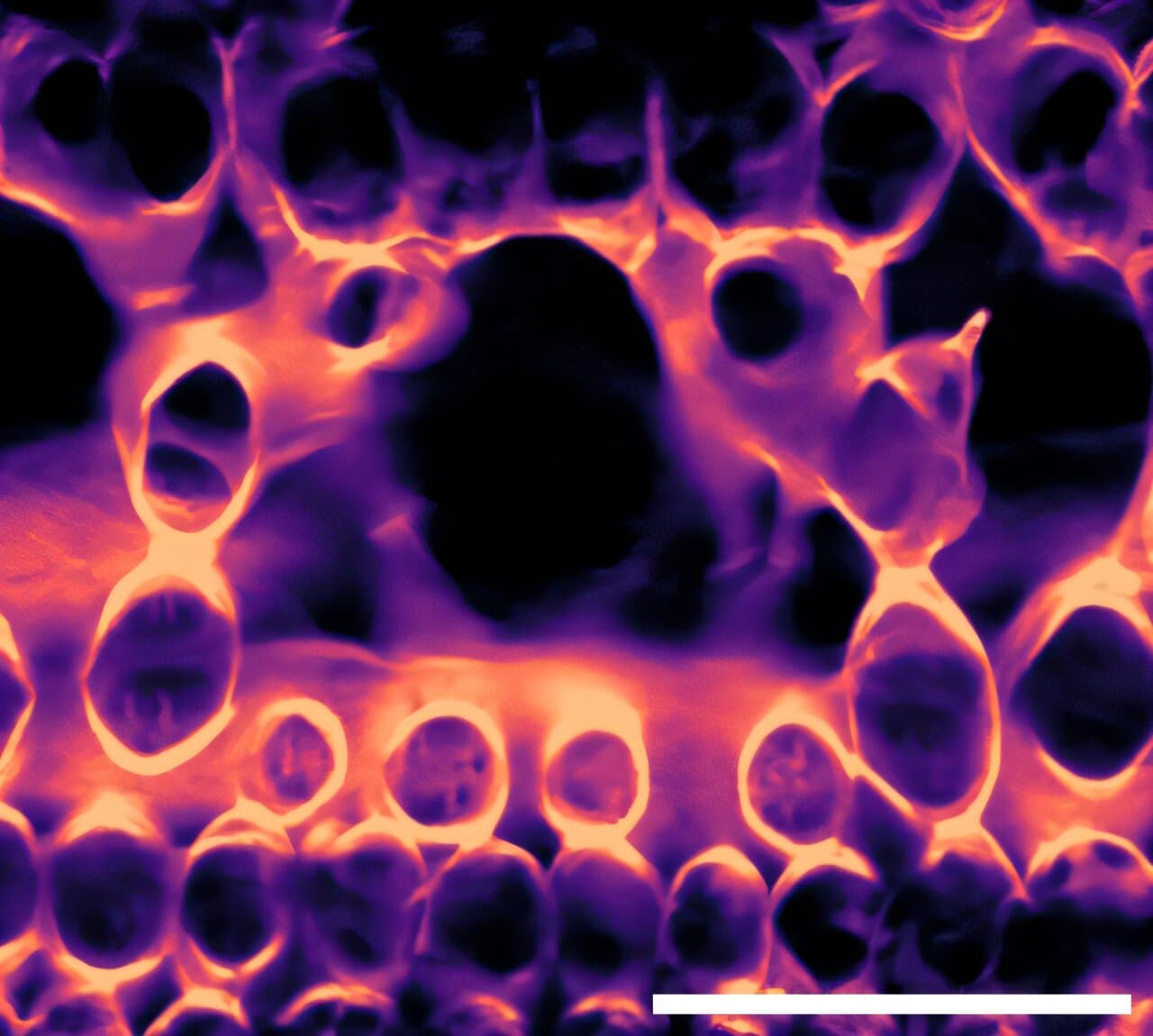
A thermal imaging visualization showing cellular structures with circular and oval-shaped cells outlined in bright orange and yellow against purple and black background.
A thermographic or false-color X-ray image reveals the cellular architecture of a leaf, with the brightly colored regions showing areas of varying density that researchers are studying to identify traits for drought-resistant crop development. (Phys.org)
1 min read
Text size

Scientists are using advanced X-ray imaging to map the interior structure of leaves as they work to develop crop varieties that conserve water during periods of heat and humidity. The technique, powered by a particle collider beamline at Argonne National Laboratory, provides detailed schematics of leaf architecture that researchers say will help them breed hardier plants.

The effort aims to reduce what researchers call "crop sweat"—the water vapor plants release through their leaves—thereby limiting drought stress during dry conditions. By understanding exactly how air moves through the leaf's ventilation system, scientists hope to refine approaches to creating crop plants with improved internal structures.


X-ray imaging reveals leaf structure, aiding drought-resistant crop breeding | Sama News Agency