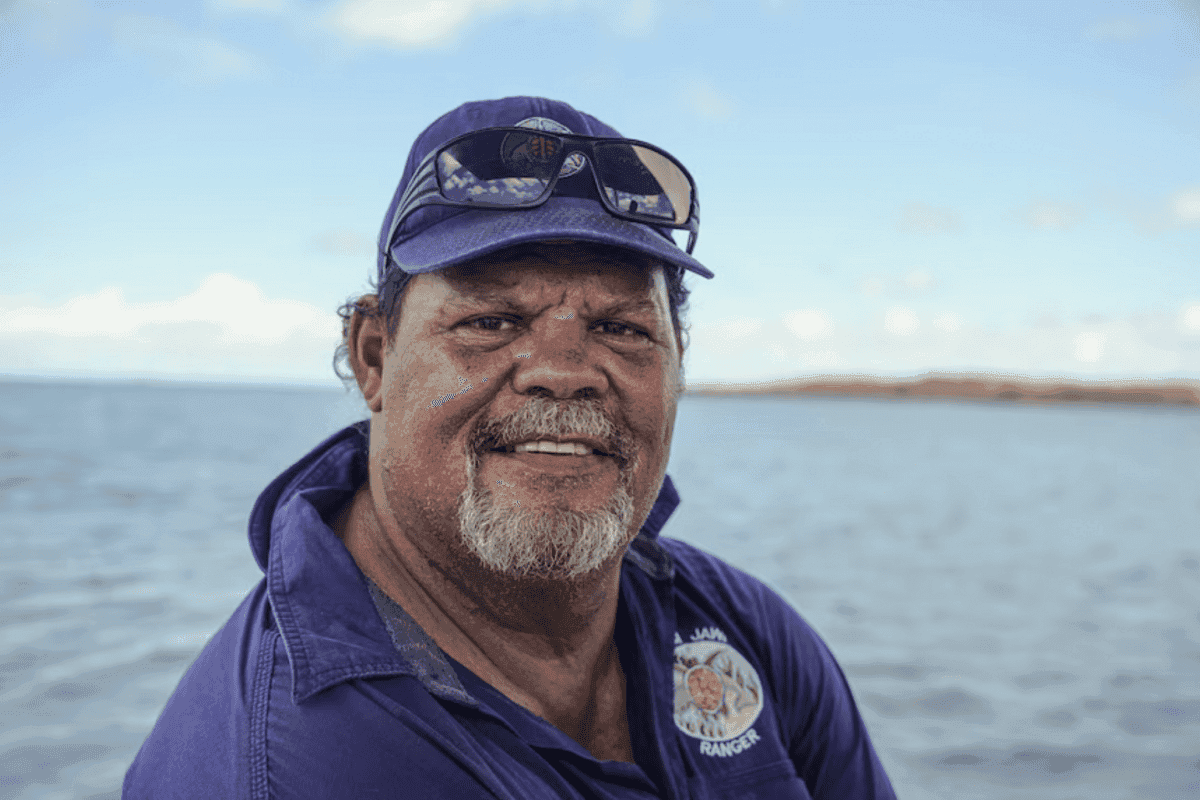
Researchers and Bardi Jawi rangers and traditional owners collaborated on a study published in Ocean & Coastal Management documenting the connections between reef and mangrove ecosystems. The Bardi Jawi, described by ranger coordinator Phillip "Bibido" McCarthy as a "Saltwater People," have worked with the Australian Institute of Marine Science for the past decade to study and protect their mangrove and reef ecosystems and traditional fishing grounds.
The study found that 10 fish species important to Bardi Jawi traditional fishing practices moved between mangroves and reefs long after the nursery stage, aided by tidal movements particular to the Kimberley region where the Bardi Jawi's land is located. Some species used mangroves as refuges when reef ecosystems were vulnerable, according to Katherine Cure, the fish biologist at AIMS who led the study. The findings aligned with what the Bardi Jawi already knew from their traditional ecological knowledge, though the science confirmed their observations, McCarthy said.
The partnership evolved over eight to ten years as the relationship between scientists and traditional knowledge holders deepened, Cure said. The research questions became guided by the needs of local traditional owners as well as scientific interests. McCarthy noted that the Bardi Jawi have accumulated knowledge over 30,000 years passed down through generations, which made it easier for scientists because "we know the area, we know what they need to look for, we know the tidal movements."
The holistic approach of the Bardi Jawi to studying their environment proved valuable, Cure said. McCarthy emphasized that "everything is connected — the songlines, cultural protocols, language, kinship," requiring researchers to look at the whole ecosystem while incorporating traditional knowledge, history, stories, and cultural information into their work.