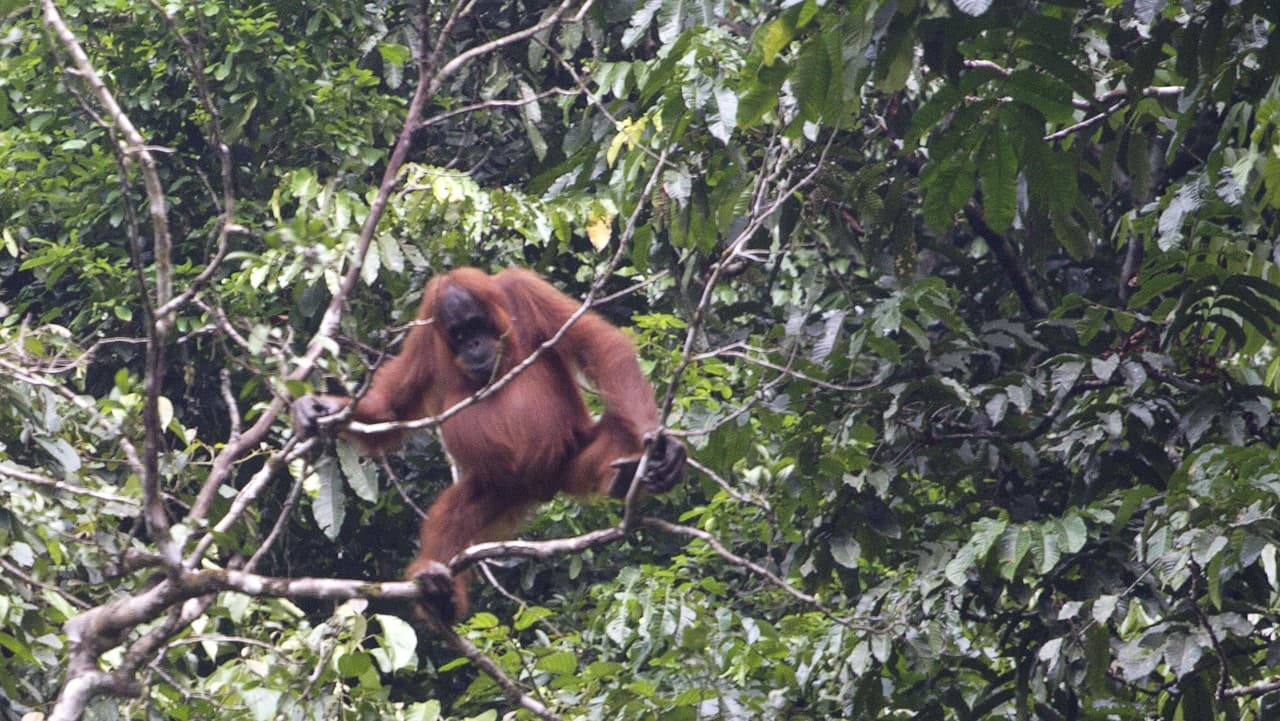
The Ministry of Forestry announced the results of the latest survey on Sumatran orangutan populations, showing a decline of 19.5 percent between 2011 and 2023. The announcement was made at a National Seminar on Reflection of a Decade of Orangutan Conservation in Medan, North Sumatra, on 18 May.
According to the survey, the Sumatran orangutan population (Pongo abelii) is now estimated at around 11,694 individuals, down 2,700 from the count 12 years earlier. Meanwhile, the Tapanuli orangutan (Pongo tapanuliensis) is recorded to have only around 716 individuals remaining.
The Ministry of Forestry said the population decline has been influenced by habitat loss and fragmentation, human-orangutan conflict, and other threats that reduce the opportunity for these animals to breed naturally. Deputy Minister of Forestry Rohmat Marzuki described both orangutan species as endemic animals that are a source of pride for Indonesia, with critical status that requires serious attention because they are indicators of forest ecosystem health.
Dede Aulia Rahman, a researcher from IPB University, called this situation a conservation emergency. According to research, approximately 76 percent of the variation in population change has been influenced by forest loss, with 94,399 hectares of forest in orangutan distribution areas lost between 2011 and 2023 due to plantation expansion, infrastructure development, mining, and illegal encroachment.
Rahman emphasised that habitat loss and fragmentation not only push orangutans into plantations and settlements, but also trigger human-orangutan conflict that results in capture and killing. The Ministry of Forestry will prepare a Population and Habitat Viability Assessment 2026 as a scientific basis for updating orangutan conservation strategies and action plans.