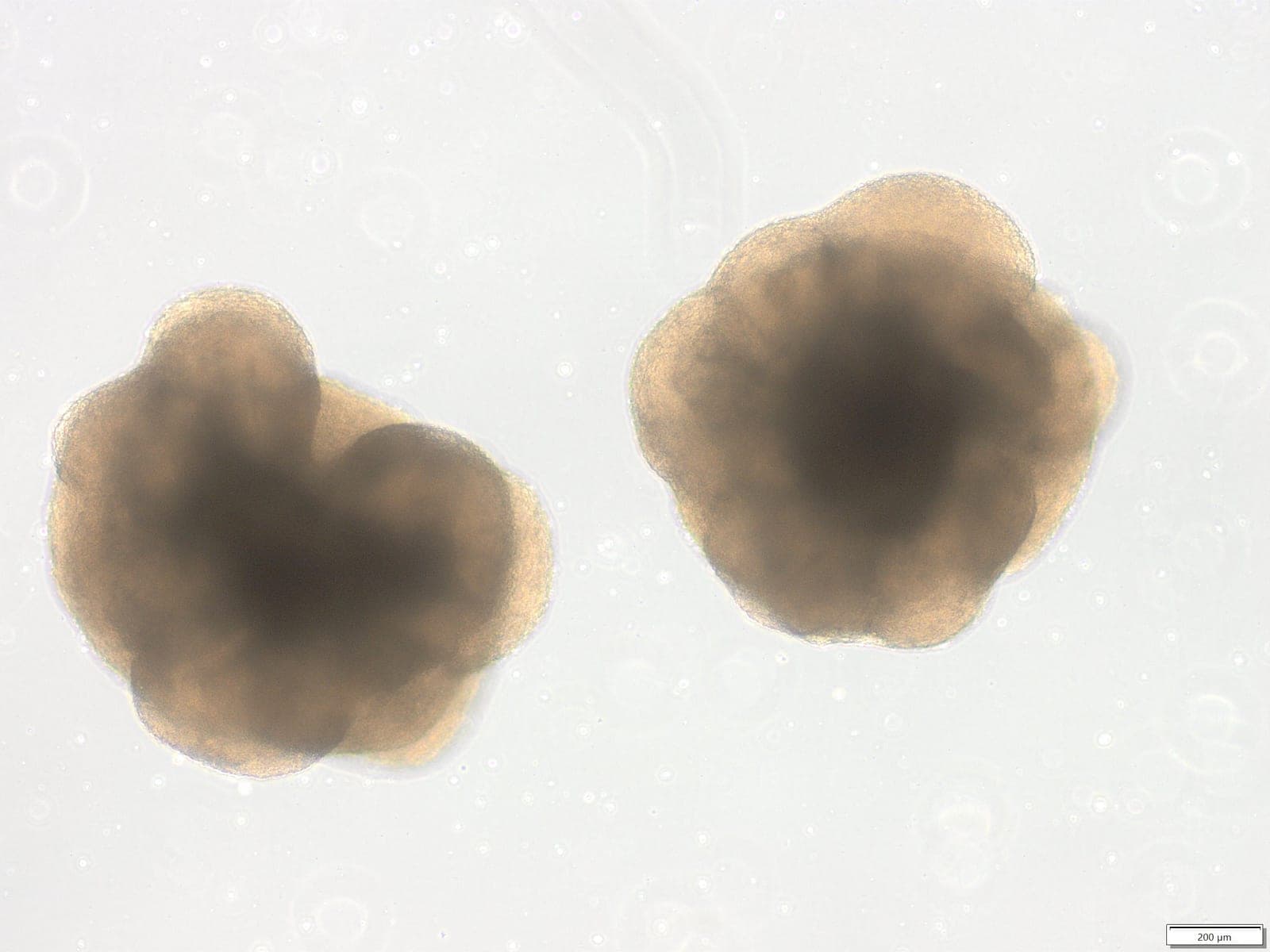
Scientists have developed the first mouse cortical organoid model that accurately reproduces the cell types found in developing brains, but the research revealed a significant limitation: the organoids lack the finely timed developmental sequence of actual neural tissue. The findings appear in Nature, presented by the Hippenmeyer group, with Melissa Stouffer, Osvaldo Miranda Romero, Florian Pauler and Fabrizia Pipicelli as co-lead authors.
Organoids are organ-like microstructures produced from stem cells, which can reproduce themselves and differentiate into specialized cells such as neurons. Researchers developed the mouse cortical organoid model to study how the cerebral cortex develops from stem cells—including how the brain reaches the proper size and how stem cells determine when and into which neurons to develop. Using single-cell sequencing, the researchers compared specific developmental stages of the mouse brain with those of organoids and found that "cell populations in the mouse brain are very similar to those in the organoids" and "the molecular programs are similar," according to Hippenmeyer.
In normal development, the process follows a precise temporal sequence. Stem cells first multiply through symmetric division, then briefly switch to asymmetric division to produce neurons, and only after all neurons are formed do glial cells emerge. However, the research found that stem cells in cortical organoids lack this finely tuned progression. The same cell types emerge as in the developing brain, but the timing of neuronal development is uncoupled in the organoid.
The finding highlights both the promise and limitations of organoid research. At the broad level, cortical organoids provide insights into development, but stem cells in them lack a proper sense of developmental time. Disruptions to the normally precise developmental process, whether through genetic mutations or other factors, can lead to severe brain malformations such as microcephaly or macrocephaly.