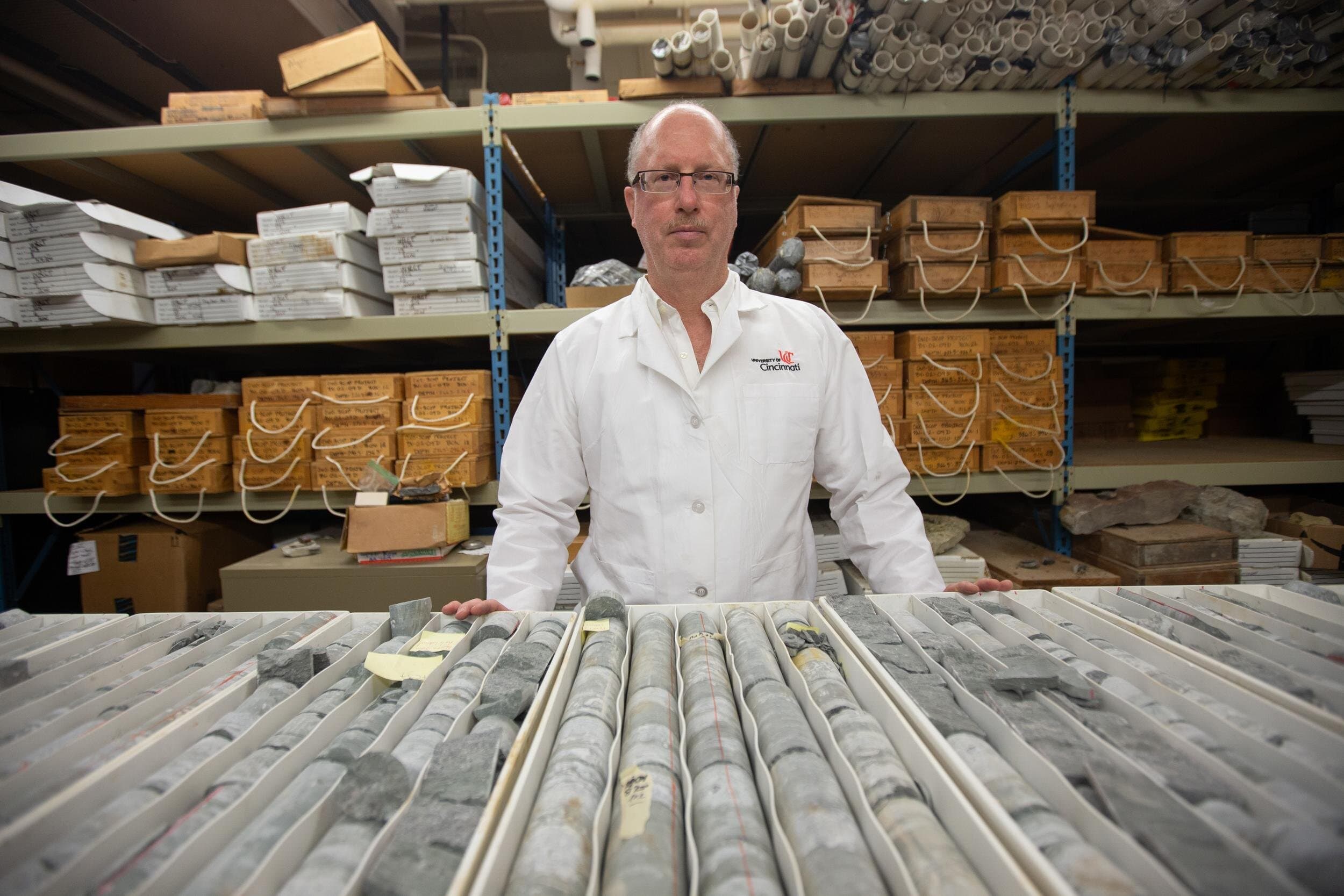
Researchers say a period of rapid warming during an ice age 304 million years ago could shed light on climate change happening today. University of Cincinnati Professor Thomas Algeo and an international team, led by Le Yao of the Nanjing Institute of Geology and Paleontology, examined the warming event, which the study, published in the Proceedings of the National Academy of Sciences, showed unfolded as a cascade of temperature increases.
A small initial rise in global sea surface temperatures triggered a far larger warming driven by methane released from melting permafrost, the researchers found. Global sea surface temperatures climbed more than 7 degrees Celsius. Algeo noted the change occurred over tens of thousands of years at a rate of roughly a tenth of a degree Celsius per 1,000 years, contrasting sharply with the observed nearly 1 degree Celsius increase in sea surface temperature over the past 100 years.
The ancient warming event likely began with volcanic activity and a cyclical shift in Earth's orbital shape that altered solar radiation distribution, researchers said. This modest carbon release crossed what the team described as a "climatic tipping point that led to massive carbon release and transient global warming."
According to the researchers, increased temperatures today could accelerate permafrost melting, releasing trapped carbon in a positive feedback loop that would drive further warming. Algeo said the warming event is particularly significant because it occurred during an ice age rather than under "greenhouse conditions" with high atmospheric methane and carbon dioxide levels.