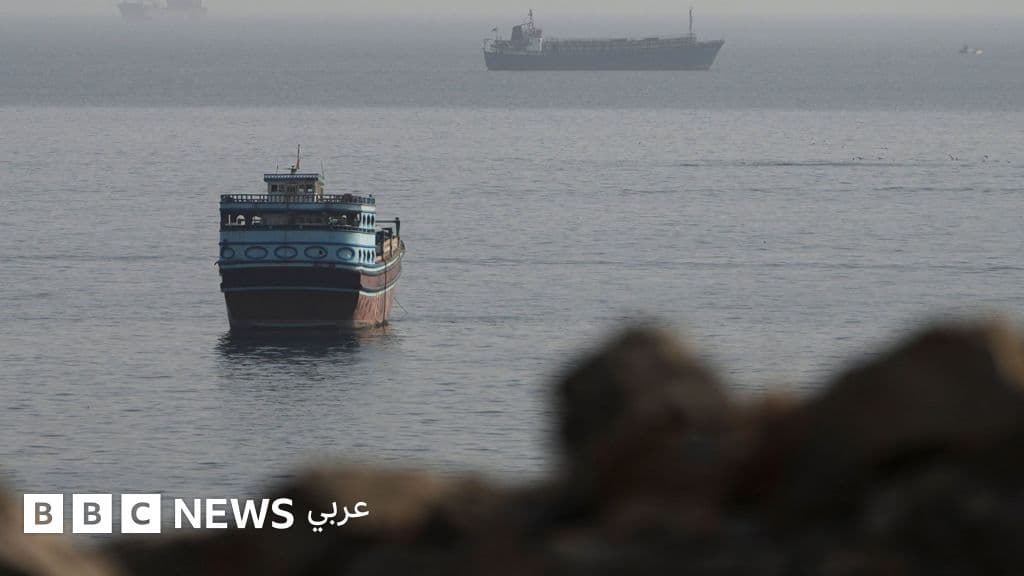
The US military announced on Tuesday that it had fired on a Panama-flagged ship attempting to approach Iranian ports in violation of a blockade imposed by Washington. US Central Command (Centcom) stated through the X platform that helicopters fired two missiles at the cargo vessel "Villa Nova" after the crew "ignored" American warnings.
This is the third time the US military has used force to reinforce the blockade at Iranian ports since reimposing it on 14 July. American forces said they had diverted 55 vessels attempting to pass through since then.
Oil prices rose slightly on Tuesday, reaching their highest level in a week, amid growing doubts about the possibility of reaching a deal to end the war between the United States and Iran. Brent crude oil futures rose $1.19, or 1.4 per cent, to $88.91 per barrel at close. US West Texas Intermediate crude oil futures rose $1.07, or 1.3 per cent, to $83.20 at close.
Mohsen Rezai, the new secretary-general of Iran's Supreme National Security Council, said the Strait of Hormuz would remain closed unless the United States changed its behaviour and accepted Tehran's terms for ending the war. Rezai, reported to be close to Iran's Supreme Leader, added that if an agreement were reached between Iran and Oman on a transit route through the Strait of Hormuz, that would be a separate matter from the decision to close the strait.
Shipping data shows maritime traffic through the Strait of Hormuz fell to six vessels on Monday, compared to an average over ten days of around 11 vessels. Before the war began on 28 February, daily maritime traffic through the strait averaged between 125 and 140 vessels, with about 20 per cent of global oil supply passing through the route.