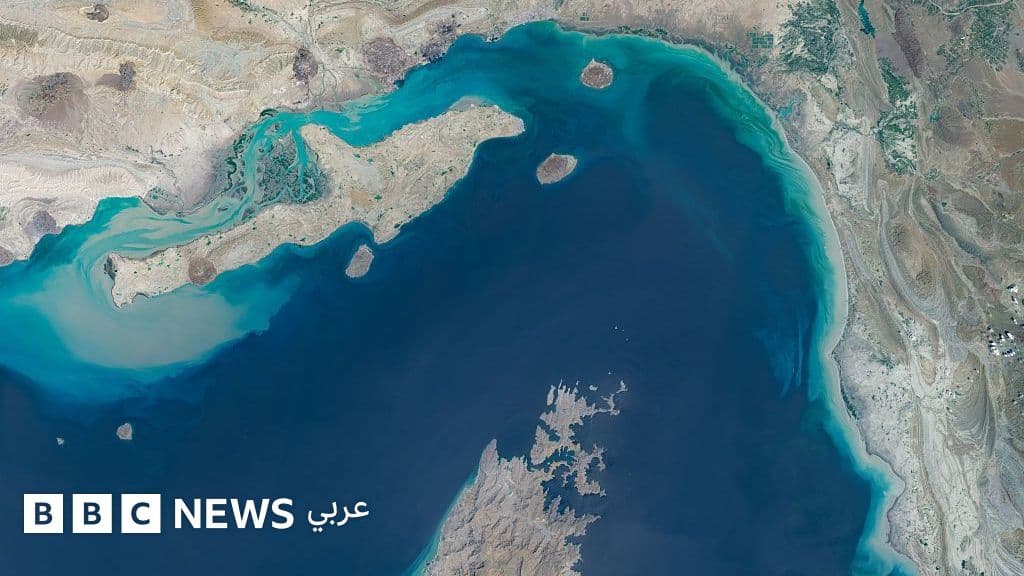
Mohsen Rezai, secretary of Iran's National Security Council, said his country plans to establish an "exclusion zone" outside the Strait of Hormuz in the coming days, in the latest step by Tehran amid rising military and economic confrontation with the United States. Rezai told Iran's state television on Sunday that the zone would begin from the blockade line enforced by the US Navy and would include parts of the Persian Gulf.
Rezai added that any vessel entering the new zone would be added to Iran's "sanctions list", though he did not explain the nature of actions Tehran might take against ships breaching the restrictions. He also stated that the Strait of Hormuz is "completely closed and under the control of Iran's armed forces", a statement that contradicts the US position that oil tanker traffic continues through the strategic waterway.
US Energy Secretary Chris Wright said on Sunday that more than nine million barrels of oil pass through the strait daily, adding that alternative supply routes have increased the flow to roughly two-thirds of levels recorded before the current confrontation began. In normal circumstances, roughly one-fifth of the world's oil and liquefied natural gas supplies pass through the Strait of Hormuz, making any disruption to shipping through the waterway consequential for global energy markets.
Rezai's statement came as the US intensified pressure on Iran through a naval blockade targeting its oil exports, while tightening sanctions. US Central Command said its forces bombed three Iranian oil tankers on Saturday, after Iran's Islamic Revolutionary Guards Corps launched ballistic missiles toward two US Navy vessels. Iran's parliament speaker Mohammad Baqer Qalibaf warned on Sunday that any fresh attack on Iranian interests or security would be met with retaliation that he said would be "faster, harder, and more painful".
The exchange of strikes has intensified in recent weeks after military operations slowed through much of August, when diplomatic efforts made noticeable progress in reviving a ceasefire achieved early in June. The military escalation coincides with mounting economic pressure inside Iran, with declining oil exports and difficulty accessing foreign currency amid the US blockade and sanctions. The US says its campaign is aimed at pressuring Tehran to allow freedom of navigation through the Strait of Hormuz and return to negotiations, while Iran accuses the US of seeking to shut down its economy and force it to make political and security concessions.