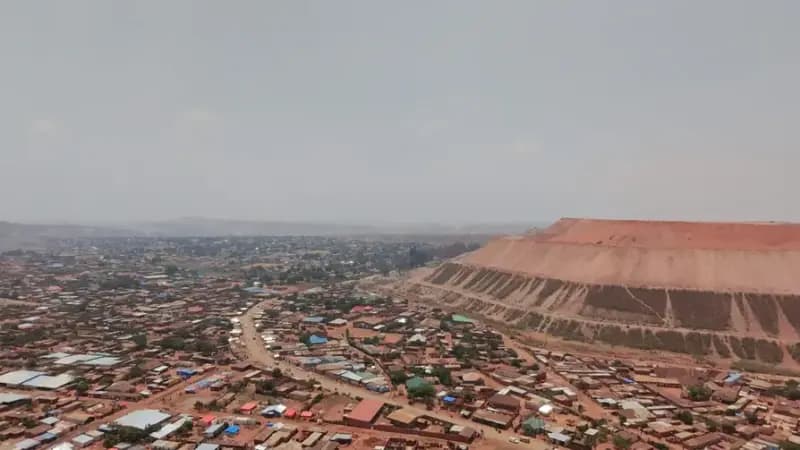
About 1,500 students and 68 staff members at Galaxy School in Kolwezi, Democratic Republic of the Congo, attend classes less than 500 meters from a mining waste disposal site. Nearly 98 percent of hourly fine-particle measurements at the school exceed World Health Organization safety thresholds, according to research conducted by Source International, Rights and Accountability in Development, and AfreWatch in collaboration with professors from the University of Lubumbashi.
Studies published in June 2026 found widespread air and water pollution as well as contaminated sediments surrounding major copper and cobalt mines in the Lualaba region. Fine-particle concentrations at some sites reached up to six times the acceptable WHO threshold. Researchers determined that the chemical footprint of these particles was characteristic of industrial mining residue, ruling out road traffic and other sources as primary causes.
Beyond air quality, researchers detected high concentrations of copper, cobalt, manganese, arsenic, lead, and uranium in rivers, lakes, and community wells. A community well in Kolwezi, 200 meters from a tailings pond, was found to be 100 times more acidic than recommended levels, with manganese concentrations reaching up to 14 times the health limit.
According to Flaviano Bianchini, executive director of Source International, the findings represent a serious concern. "In all our years of pollution monitoring at industrial mining sites worldwide, these results are among the most concerning we've ever recorded," he stated in the report.
Professor Célestin Banza described the contaminated sediments accumulating in waterways as a "chemical time bomb." The Initiative for Good Governance and Human Rights questioned the Congolese state's ability to protect residents from mining companies, arguing that human rights violations were being committed with "total impunity."