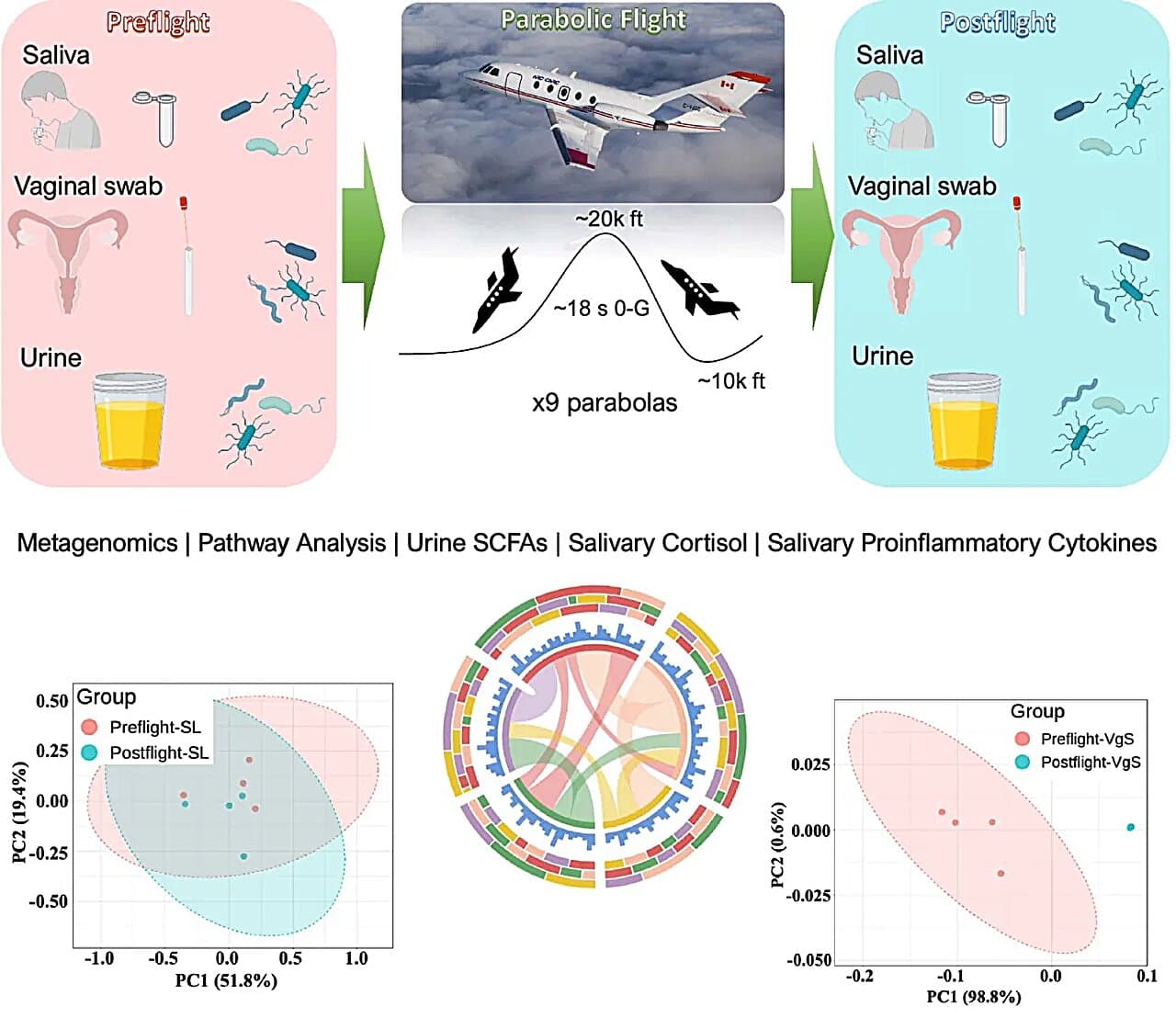
Scientists have documented for the first time how spaceflight conditions affect the vaginal microbiome in women, findings that could help protect astronaut health as space missions grow longer and include more female crew members. A team led by Begum Mathyk, a physician-scientist at the University of South Florida Health Morsani College of Medicine, studied four women of reproductive age who participated in parabolic flights aboard a modified aircraft that simulates microgravity and hypergravity.
The researchers found that parabolic flight induced acute physiological stress and altered the vaginal microbiome significantly more than it affected the oral microbiome, according to the study published in Frontiers in Microbiology. Participants showed heightened cortisol levels and other signs of increased physiological stress after the flights, the study noted.
The vaginal microbiome plays an important role in immune function and tissue health, and disruption to its microbial balance has been linked to inflammation, increased infection risk and altered immune responses. Changes to the vaginal microbiome have not previously been explored under space travel conditions, researchers said.
Mathyk said the findings highlight the sensitivity of the vaginal microbial ecosystem to spaceflight stressors and underscore the need for further research to determine the persistence and clinical significance of those changes during longer-duration missions. The findings build on her previous research examining women's health in space, including the first gynecologic ultrasound studies in microgravity.
The work is becoming increasingly relevant as space missions grow longer and the astronaut corps includes a growing proportion of women, researchers noted. Medical research has traditionally skewed toward males, leaving knowledge gaps in women's health and sex-specific responses to spaceflight.