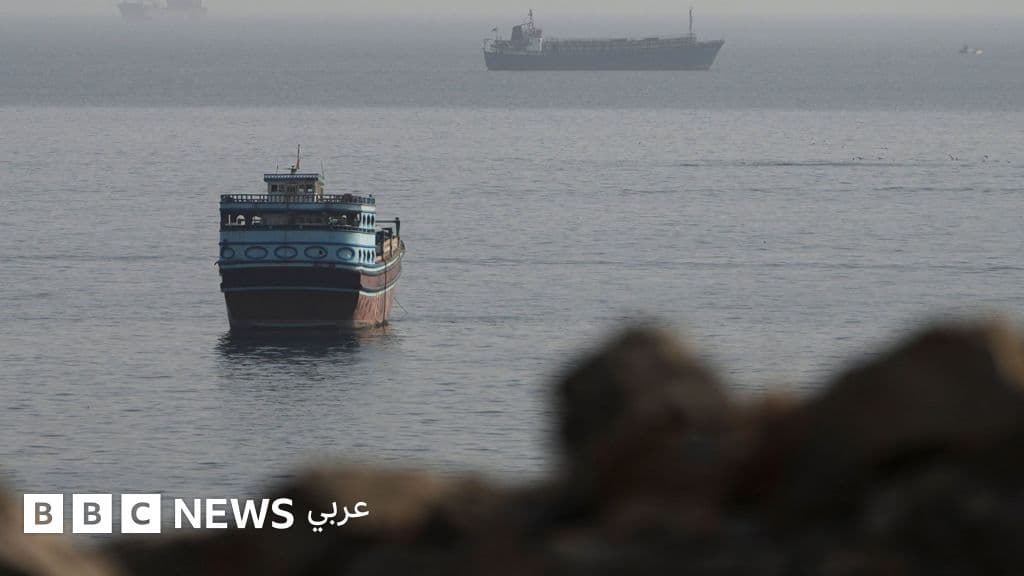
The internationally recognised Yemeni government reported on Tuesday that at least six people were killed in an attack on a ship in the Red Sea off the coast of Mocha, Yemen, allegedly carried out by the Houthis. No group has claimed responsibility for the incident.
According to a statement from Yemen's Coast Guard Service, among the dead were "four crew members" of the cargo ship Tihama, comprising three Pakistani nationals and one Indonesian national, as well as "two armed forces members" involved in a rescue operation to evacuate the ship's crew. The Yemeni Ministry of Transport stated that a Houthi attack on the ship carrying foodstuffs caused a fire onboard and resulted in material damage. The ministry reported that the merchant vessel Tihama was targeted with "three consecutive ballistic missile strikes while transiting the Bab al-Mandab Strait".
The UK Maritime Trade Operations Authority reported on Tuesday about casualties after a ship off the coast of Mocha came under attack from "unidentified projectiles". Maritime security company Vanguard Tek reported the attack resulted in "three crew members dead (two Pakistani and one Indonesian) and four others injured (three Pakistani and one Indonesian)". The company added that Yemeni maritime personnel moved to assist but "came under fire, causing additional injuries". Vanguard Tek said the Tanzania-flagged vessel, named Tihama, was "struck by unidentified projectiles approximately five nautical miles off the coast of Mocha".
The attack comes amid escalating violence in Yemen, which has become a new front line in the regional conflict. The Houthis launched one of their fiercest attacks in years last week against government-controlled areas backed by Riyadh, resulting in dozens of deaths among Yemeni forces. The Houthis declared a maritime blockade against Saudi Arabia in July, citing what they claim is a blockade by Saudi Arabia against areas under Houthi control, including the capital Sanaa and the coastal Hodeidah province. Saudi Arabia denies it has imposed a blockade on Yemen.
Attacks on ships in the Bab al-Mandab Strait have increased uncertainty among shipping companies already suffering from the closure of the Strait of Hormuz. Data from company Kpler showed the average number of ships transiting the Bab al-Mandab Strait reached 32 vessels per day during last week, compared with an average of 50 vessels per day before the blockade was imposed.
In related developments, Iran's newly appointed Secretary General of the Supreme National Security Council, Mohsen Rezaei, said on Tuesday that the Strait of Hormuz would remain "closed unless the United States changes its behaviour" and accepts the conditions laid out by Iran to end the war. Semi-official news agency Tasnim reported Rezaei's statement, who is close to Iran's Supreme Leader Ayatollah Khamenei, saying: "As long as the United States does not change its behaviour and does not accept Iran's conditions, the Strait of Hormuz will not be opened". Rezaei added that "the United States must end the war and release Iran's frozen assets, and war must end throughout the region, including in Lebanon and Gaza".
Muhammad Mokhber, Khamenei's adviser, said in a post on X on Tuesday that "punishment of the aggressor continues, and the Strait of Hormuz will not be opened unless Iran's conditions are met". Disruptions to maritime traffic in the Strait of Hormuz have increased, with only six ships transiting it on Monday, compared with an average of around 11 vessels per day during the ten days before, while the number of ships passing through before the war began ranged between 130 and 140 vessels per day. Oil prices rose on Tuesday amid growing concerns about a possible prolongation of the Strait of Hormuz crisis amid ongoing tensions between Iran and the United States.
There was no immediate comment from Washington responding to Iran's latest statement, but US President Donald Trump previously made new demands stipulating that Iran pay compensation for deaths from war, attacks and protests, and described Iranian officials as "cunning negotiators". Trump said at the White House on Monday: "We will demand compensation for the damage they have caused over 50 years". In an interview published late Monday, Trump outlined the options available to him in handling the war, indicating that among them were "continued" pursuit and allowing Tehran to fail economically, or launching a "very powerful" attack against Iran. Trump said in a phone interview with the "Real America's Voice" network: "I'm negotiating quite a bit; they are negotiators with a very high level of sophistication". Trump's position has oscillated between threats of escalation and assertions that achieving a peace deal is close.
Pakistan, one of the main mediators alongside Qatar, has raised hopes about the possibility of Washington and Tehran moving towards a deal that could truly open the Strait of Hormuz, the vital waterway through which approximately one-fifth of the world's oil and liquefied natural gas supplies previously passed before the war began. Pakistan's Defence Minister Khawaja Asif told Bloomberg in an interview published on Tuesday that the United States and Iran are approaching "some kind of arrangement". Asif said that "things are moving back towards achieving a peaceful settlement or agreement", adding that "indications over the last two or three days show that we are approaching some kind of arrangement". A spokesman for Qatar's Foreign Ministry also said in a press briefing on Tuesday that talks between Oman and Iran on the future of navigation in the Strait of Hormuz have reached an advanced stage, without providing further details.