On June 24, 2026, a seismic doublet struck Venezuela's northern coast, with the strongest impacts in La Guaira and Caracas. The earthquakes also damaged towns in Carabobo and Falcón states, including Valencia, Morón, and Boca de Aroa, communities that received limited international attention compared with the capital and its port.
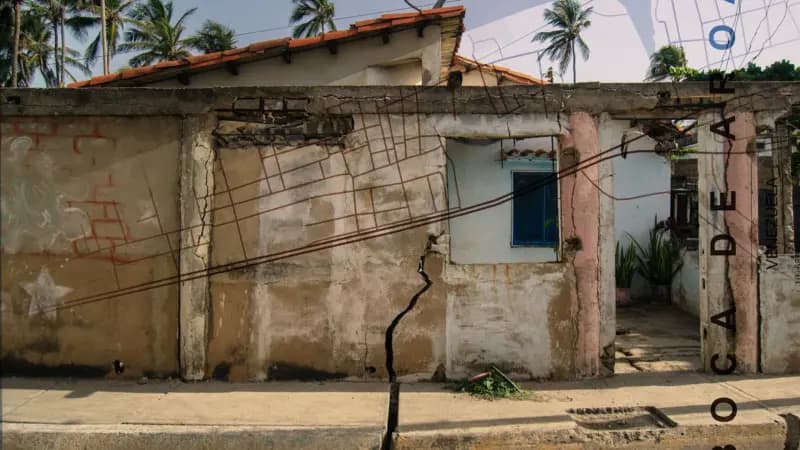
La Guaira, located 30 kilometers from Caracas and home to approximately 400,000 people, was declared a disaster zone by the Venezuelan government. The death toll reached into the thousands, and structural damage was estimated at USD 19.6 billion, according to the World Bank. In Morón, 60 families were affected, with 40 losing their homes entirely and nine fatalities reported. Boca de Aroa documented 87 damaged homes and 252 displaced residents, along with soil liquefaction and infrastructure damage.
A documentary project called "The Sigh of the Earth: Fragments From Communities Overlooked After Venezuela's Earthquake" assembles photographs from affected areas outside La Guaira alongside digital materials including chat messages, maps, and seismological records. The video combines these visuals with voice messages and an acoustic guitar melody recorded during a power outage, creating what its creator described as a piece of visual memory that resists conventional disaster imagery.
International coverage concentrated on La Guaira, where collapsed buildings in densely populated districts dominated news reports. As a result, many residents of other affected areas who lost homes and possessions remained absent from the public agenda. Housing crises, internal migration, and weak enforcement of building regulations in Venezuela have compounded the challenges facing affected communities in the aftermath of the earthquakes.