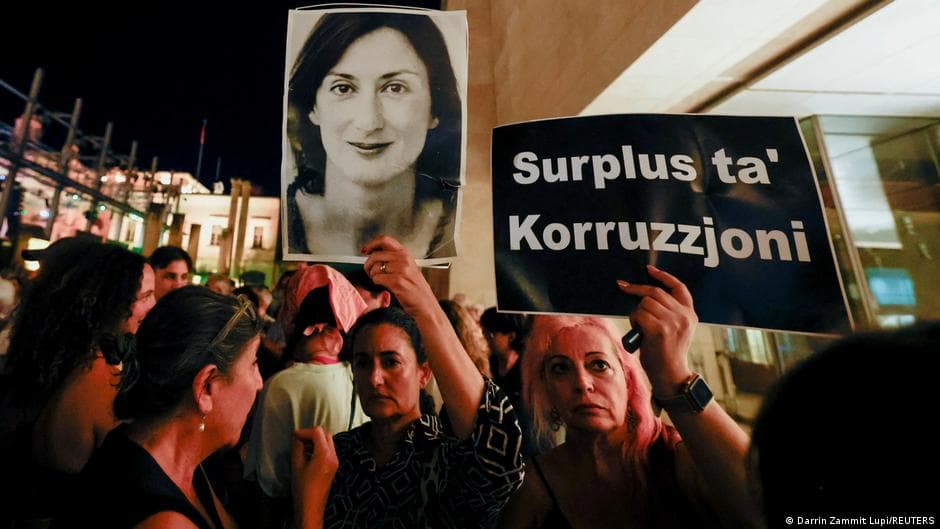
A jury acquitted Maltese businessman Yorgen Fenech on Wednesday of ordering the murder of investigative journalist Daphne Caruana Galizia, who was killed in October 2017 by a remote-controlled bomb planted under her car. Eight of nine jurors rejected the prosecution's case that Fenech had contracted the killing.
Fenech left the courthouse in Valletta amid an angry crowd. Matthew Caruana Galizia, the journalist's son, called the verdict "obscene" and said the jurors' decision "flies in the face of all evidence, of all logic, of the truth." Nearly nine years after the murder, the identity of who ordered the killing remains unresolved, though the men who procured and detonated the bomb have been convicted.
The prosecution's case centered on testimony from Melvin Theuma, a middleman who confessed to organizing the murder and said Fenech had hired him. Theuma received a pardon for his cooperation. Fenech's defense challenged Theuma's credibility, highlighting contradictions in his testimony and past false statements. The defense also argued that prosecutors failed to properly investigate alternative leads, including suspicions pointing to Keith Schembri, the former chief of staff to then-Prime Minister Joseph Muscat.
Prosecutors argued Fenech had a motive because Caruana Galizia was investigating his business interests, including his company 17 Black and the energy consortium ElectroGas, on suspicion of corruption. They noted she had not been about to publish material that would have directly threatened him.
Judge Edwina Grima ordered that trial evidence be forwarded to the chief of police to determine whether criminal proceedings should be brought against others. Former Prime Minister Muscat said on Thursday that prosecutors indicated further investigations were ongoing. The Institute of Maltese Journalists called on authorities to pursue all investigative leads that emerged during the trial, including those involving former high-ranking politicians, while respecting the verdict as a constitutional outcome.
The acquittal has intensified focus on institutional weaknesses in Malta. A 2021 official investigation found an "atmosphere of impunity" had enabled the murder. Since then, Malta has undertaken some reforms, but observers say progress has been insufficient, particularly regarding press freedom and media protection. The European Commission's latest Rule of Law Report noted only limited progress and said core recommendations from the murder investigation remain unfulfilled.