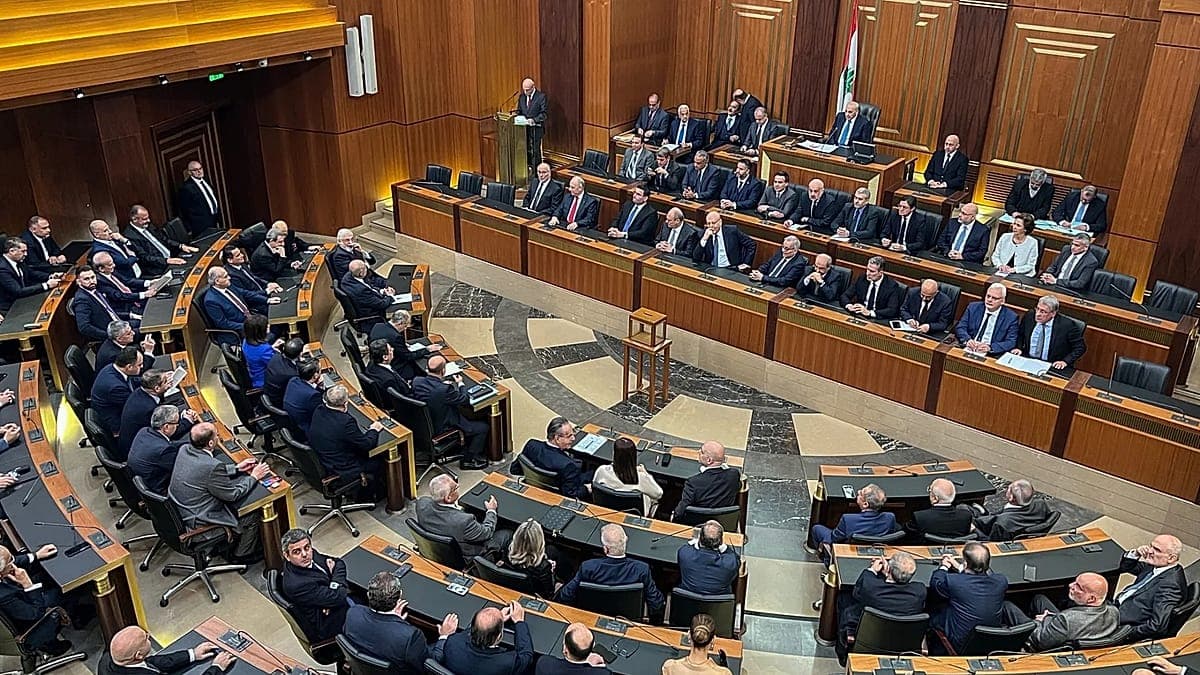
Lebanon's parliament voted to abolish capital punishment during a legislative session that began Wednesday, making it the first country in the Middle East to do so. A majority of the 128-member parliament supported the measure, though Hezbollah's parliamentary bloc voted against it.
Justice Minister Adel Nassar, who attended the session, described the law's passage as a "historic step" for Lebanon. Lebanon had effectively halted executions since January 2004 without formally abolishing the death penalty, though courts continued to issue capital sentences in some cases that were never carried out or were later commuted.
International reaction was swift and positive. France's Foreign Minister Jean-Noël Barrot called the abolition "a historic and courageous step," while the UN High Commissioner for Human Rights Volker Türk noted that Lebanon was the first country in the region to take this action and called on other nations still applying capital punishment to end what he described as an "inhumane practice." The European Union called the decision "an important achievement."
Rights organizations that had long pushed for converting the de facto moratorium into formal law welcomed the vote. Amnesty International praised the abolition, and Ramzi Kayess, a Lebanon researcher at Human Rights Watch, said the country was "finally closing the chapter on a cruel punishment that should never have been imposed," citing the death penalty's irreversibility and potential for arbitrariness and bias.
The parliamentary session encountered sharp disagreements over other legislative matters, causing several lawmakers to leave and the parliament to lose its legal quorum, preventing further debate on other agenda items. Parliament Speaker Nabih Berri adjourned the session, scheduling its resumption for Wednesday at 11 a.m., with lawmakers to continue discussion of remaining items, most notably a proposed general amnesty law that has been a source of political division for years.