Glacier collapse in Nepal unleashes cascading disaster

A massive ice and rock mass broke loose near the Nepal-Tibet border on August 26, sending a torrent of water and debris down mountain valleys in what officials described as a cascading geological event.

By Sama News Agency
September 4, 2026
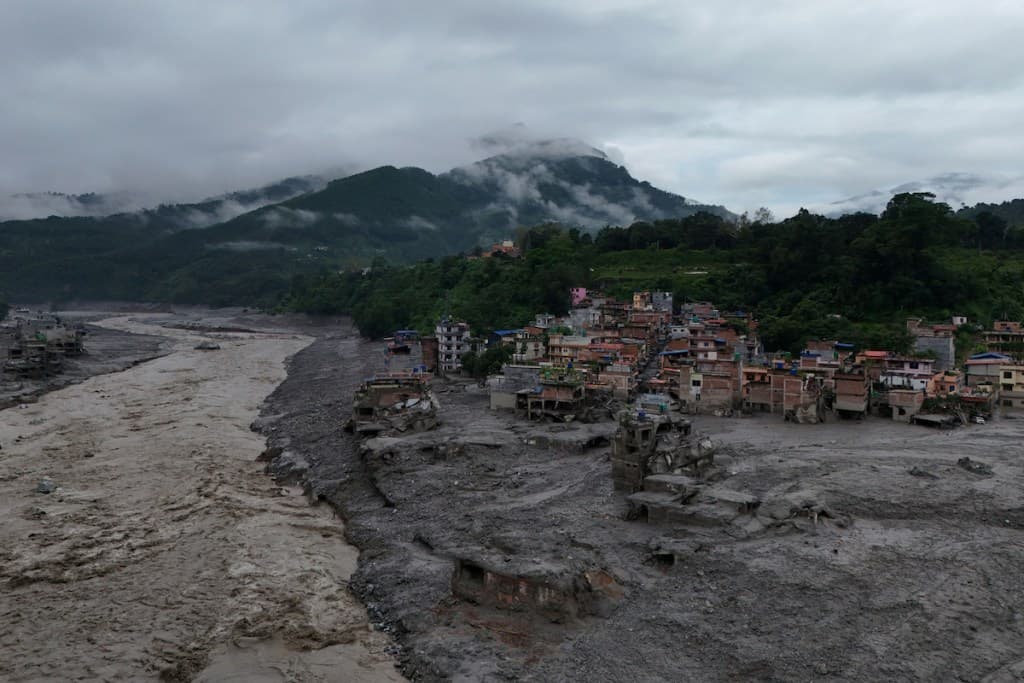
A devastated settlement sits below a mountain shrouded in clouds, with a muddy river in the foreground and debris-covered ground scattered with structural ruins.
A settlement near the Nepal-Tibet border lies buried under mud and debris after a glacier collapse sent a torrent of water and rock down the mountain valley on August 26. The mountain peak is obscured by clouds above the destroyed buildings and barren landscape. (Asia Times)
1 min read
Text size

On August 26, an enormous mass of ice and rock collapsed near the Nepal-Tibet border and plunged into the Lhende Khola River. The collapse unleashed a wall of water, mud, boulders and debris that swept down the mountain valleys below.

The event represented more than a simple flood. The initial glacier collapse triggered a cascading series of geological events as the surge of material moved through the terrain, according to the account of the disaster.

The incident underscored the changing nature of climate-related hazards in the Himalayan region, where warming temperatures have begun to reshape mountain environments and the risks they pose to populated areas below.
Glacier collapse in Nepal unleashes cascading disaster | Sama News Agency