Weapons experts, based on photographs and video footage verified by Reuters, assessed that a house hosting a wedding in southern Iran was struck directly by U.S. munitions, rather than damaged by ricocheting fire from another target, while Washington said it was investigating the incident. The strike occurred Tuesday evening in the coastal town of Kouhstak in Sirik County, which overlooks the Strait of Hormuz, adding to civilian casualties from a conflict now six months old.
Iranian sources said four people were killed in the strike and at least 68 others wounded. Iran's state television announced Thursday that a 22-year-old woman had died of her injuries in hospital, bringing the confirmed death toll to five. The U.S. Central Command said the broader wave of American strikes on southern Iran targeted air defense positions, radar systems, and communications facilities belonging to the Islamic Revolutionary Guard Corps in response to previous Iranian attacks on American military assets and commercial shipping in the Persian Gulf.
Reuters presented photographs and video from the strike site to four weapons and explosives experts after verifying the material. The experts said the pattern of damage was consistent with a direct impact from munitions that detonated on or just above the roof, rather than secondary damage from ricocheting fire. Three of the four assessed the munitions to be American, ruling out the possibility that an errant Iranian air defense missile destroyed the house. Retired British Army brigadier Gareth Collett, an explosives engineering specialist, said overall evidence suggested the use of a 500-pound American air-dropped bomb, adding that munitions sometimes miss their targets even with advanced guidance systems.
Two American officials told Reuters that the U.S. military carried out strikes in the Kouhstak area on September 1, with a communications tower in the town among the targets. The tower was located roughly 135 meters from the wedding site, according to satellite imagery, and was struck around 9:30 p.m. local time, Iranian media reported. One official said the U.S. government was examining multiple explanations for the casualties, including an American strike, a ricocheting Iranian air defense missile, or an errant interceptor missile.
Iranian media cited Hormozgan Province telecommunications authorities as saying the tower was a civilian facility providing mobile phone, landline, and internet services to residents of Sirik County. Photographs verified by Reuters showed blood-stained shoes and wedding decorations scattered among rubble. A witness said in a voice message sent shortly after the strike that several houses were damaged and people were trapped under debris. A network documenting human rights in Balochistan and the organization Haalush, which monitors human rights in Iranian Balochistan, said three wedding guests were among the dead: Kalthoum Malahi Najandani, 43; Zarkhatun Taheri, 50; and the child Amir Mohammad Karimi, 4. Mohammad Malahi, 16, was also killed while riding his motorcycle near the communications tower.
U.S. Vice President J.D. Vance said Thursday that the United States was investigating because it wanted to know what happened, adding that the American military learns from its mistakes if they occur. He expressed skepticism of Iranian reports, however, saying Iran's official state media had not been a reliable source on events in the conflict so far. The U.S. military said it was aware of the reports and investigating them, asserting that it does not target civilians. Iran's mission to the United Nations did not immediately respond to a request from Reuters for comment.
The incident recalled a strike on an elementary school in the city of Minaab on February 28, hours after American and Israeli attacks on Iran began. Iranian officials said that strike killed more than 175 children and teachers. The Pentagon has not publicly released results of its investigation into the school strike, considered the largest incident of civilian casualties inflicted by U.S. military fire in decades. Reuters reported in March that a preliminary internal U.S. military investigation assessed that American forces were responsible.
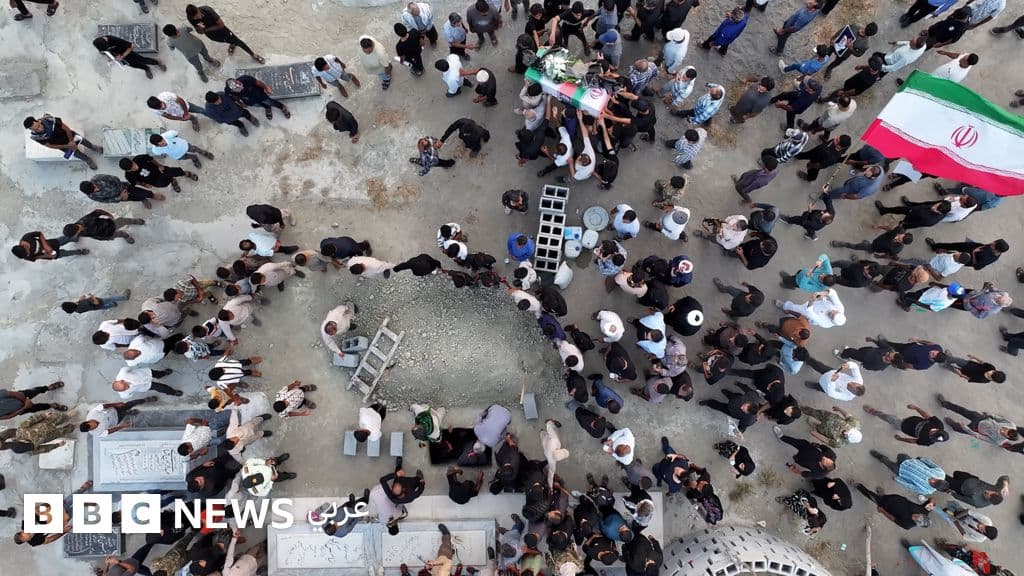
Residents of Kouhstak held funeral processions Thursday for the victims. Video showed crowds carrying coffins and photographs of the dead, with women in black cloaks and traditional red masks placing flowers on the coffin of the child Amir Mohammad Karimi. A witness said residents of Sirik remained in shock. Ali Malahi, the bride's father, said in a recording broadcast by Iranian television that what occurred was a painful incident, expressing gratitude that the death toll was not higher.
Ahmad Vahidi, commander of the Islamic Revolutionary Guard Corps, vowed to avenge the victims, saying their blood "will not be shed in vain." Mohammad Baqer Qalibaf, Iran's chief negotiator, attacked the United States over the strike, while residents expressed frustration with the resumption of fighting and called for negotiations to resume, saying Iranians bore the greatest cost.
The wedding strike came amid the largest escalation between the United States and Iran in more than a month. Iran announced Thursday that it had targeted American assets at Ahmad Al-Jaber Air Base in Kuwait with missiles and drones. The Kuwaiti military said its air defenses intercepted Iranian missiles and drones, and Kuwait described the attacks as a serious violation of international law. The Iranian military also announced that it had targeted Al-Minhad Air Base in the United Arab Emirates, though Abu Dhabi reported no such attack.
The Revolutionary Guard said Wednesday it had targeted bases and American forces in Kuwait, Bahrain, Jordan, and Iraq's Kurdish region, as well as sites in the Emirates. The Jordanian military said its air defenses dealt with 13 ballistic missiles that entered Jordanian airspace, shooting down 10, with three falling in unpopulated areas with no reported casualties or damage. Iran said the latest wave of American strikes killed 19 people. The Tasnim news agency reported Thursday that six members of Iran's naval forces were killed in this week's attacks, though it was unclear whether they were included in the announced toll.