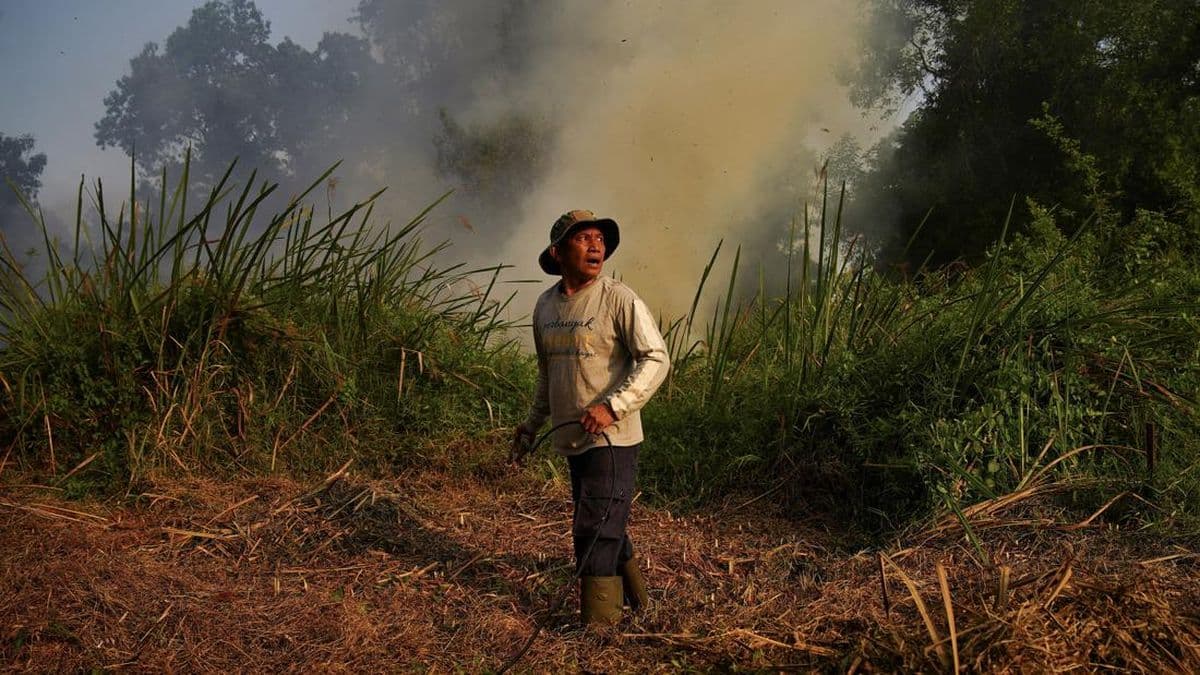
El Niño, expected to last until 2027, is not the primary cause of forest and land fires (karhutla), but can accelerate biomass drying and make surface fuel more flammable, causing fires to spread faster. Bambang Hero Saharjo, professor of forestry at IPB University, said forest fires can still occur even without El Niño.
In 2025, smoke from forest fires in Riau was detected reaching neighbouring countries on 19 July, followed by smoke from West Kalimantan on 21 July based on Sentinel 2 satellite imagery. Saharjo emphasised that fire control must still be carried out whether El Niño is present or not because its harmful impacts on people and the environment are significant.
Saharjo noted that prevention should be the spearhead of forest fire control. However, communities do not always receive significant support from local governments. He also urged compliance audits for fire control before the dry season to ensure corporations are genuinely prepared for fires, not merely following a narrative.
Field data shows that communities and corporations still use fire for land preparation. Saharjo gave an example that in 2025 in Rokan Hilir, land clearing of around 4 hectares with fire ended up with an area of around 300 hectares burned. In Kepulauan Meranti, fires spread to around 632 hectares even though land clearing plans were only around 6 hectares.
Saharjo noted that early warning systems are already available and can be accessed for free, including the Fine Fuel Moisture Code (FFMC) parameter on the BMKG website to detect areas prone to fires. Hotspots can be monitored through the Sipongi website operated by the Ministry of Forestry, and smoke movements tracked through the Wildfire application. He said when the FFMC indicator shows red, patrols and monitoring must be stepped up immediately to prevent fire sources.
Saharjo emphasised that forest fire control is not only related to weather and El Niño, but also concerns prevention readiness, field response, governance, and fire use practices. Key challenges include the availability of adequate and sustained budgets, with some districts allowing fires to occur because they are not a priority for them.