Cocoa farmers in Cameroon's South Region are preparing to comply with a European Union deforestation regulation set to take effect next year, even as prices for their crop have fallen sharply. Forty cooperative farmers gathered in Ekombitie village to discuss agroforestry practices and how to meet the EU Deforestation Regulation (EUDR), which requires all cocoa imported into the EU to be deforestation-free, fully traceable, and legally produced.
The regulation will add organizational and labor burdens to farming operations, but local farmers said they are willing to comply if prices rise to compensate for the extra effort. Prices peaked at FCFA 6,000 (USD 10.42) per kilogram in the 2023-2024 season but fell to between FCFA 2,750 (USD 4.77) and FCFA 2,850 (USD 4.94) per kilogram on July 9, according to the National Cocoa and Coffee Board.
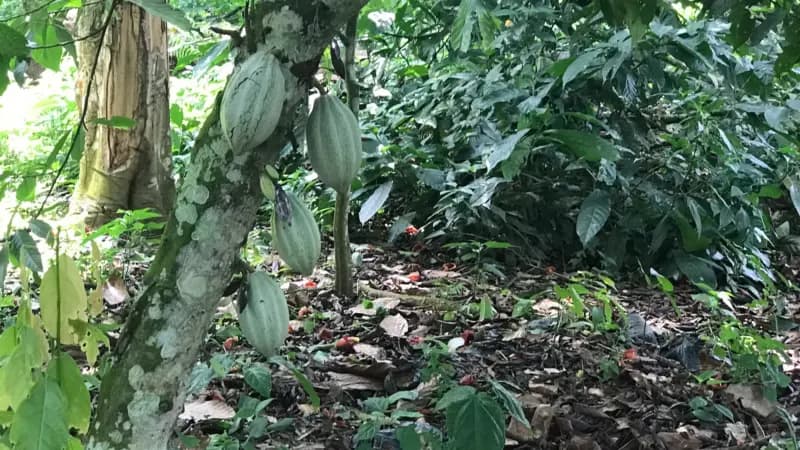
Paul Mbarga Jr., a cocoa farmer in Ekombitie, said his one-hectare farm sits in an old-growth forest where he has not contributed to deforestation. "These are forests that have been exploited by the foresters who cut the wood; this is where we now cultivate cocoa," he said. Mbarga and others are adopting agroforestry techniques including selective tree removal and improved spacing to increase yields while protecting the surrounding environment.
Issah Naimuaforkang Kinyui, the chief of Ekombitie and a cocoa farmer, increased his annual yield from 3 to 10 bags of cocoa through agroforestry and good farming practices on his four-hectare farm. Farmers say they see better results when they avoid over-crowding their farms and trim cocoa on time to reduce rot and boost production.
Bernadette Ondobo, vice-president of the Scoops-PROCAM cooperative, said her group is already working toward EU compliance. "We are at the stage where we produce certified cocoa respecting standards, which means we have learned to keep the environment, the people, and the cocoa bean healthy," she said. Ondobo and other farmers expressed hope that compliance would help preserve their farms for future generations, but stressed they need higher prices to make the effort economically viable.