Astronomers at MIT and other institutions have identified an extremely bright red object in the early universe that appears to be a new type of astrophysical object, combining characteristics of both stars and black holes. The discovery, made using NASA's James Webb Space Telescope, was observed in the universe just a few hundred million years after the Big Bang.
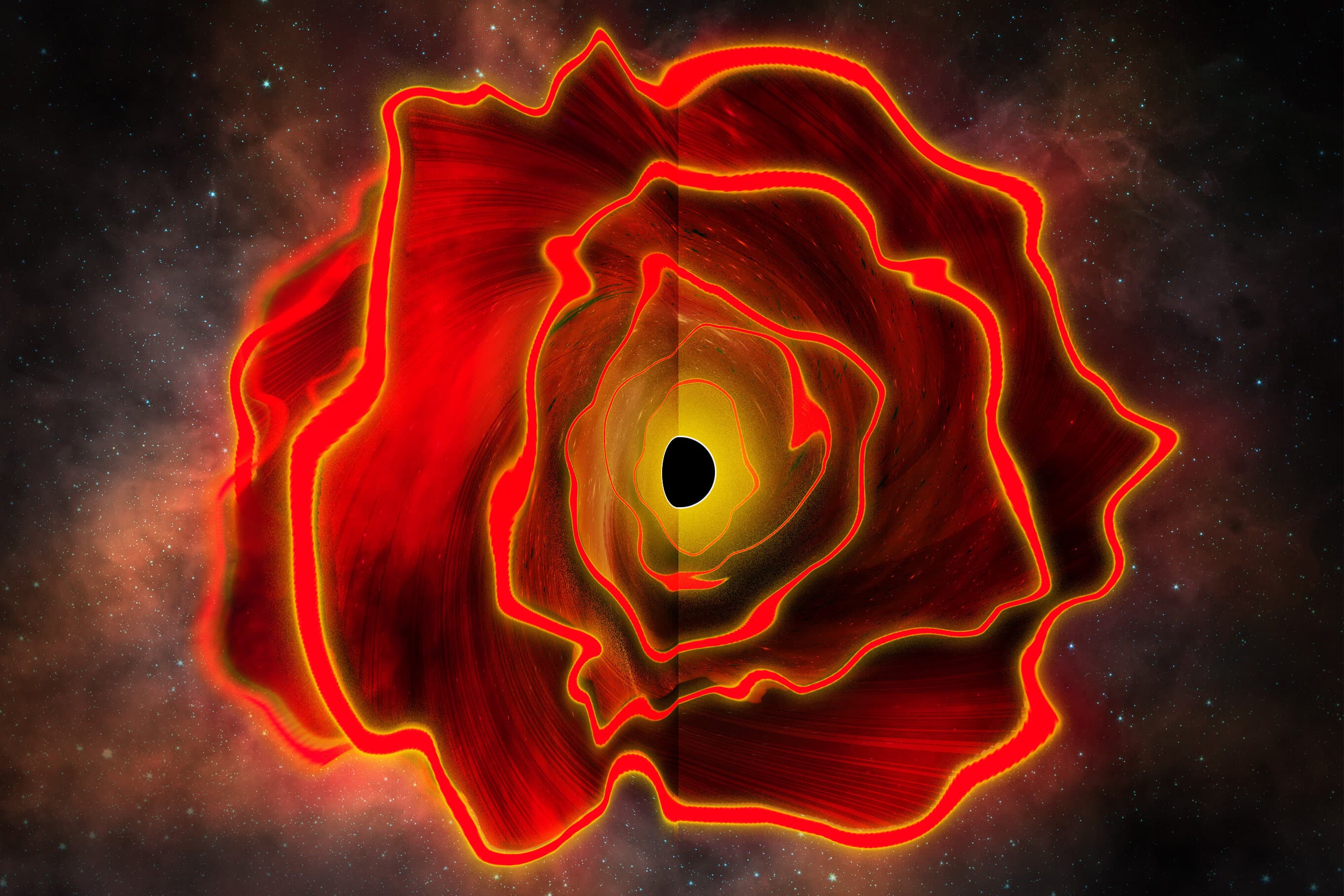
The object resembles an enormous star roughly the size of the solar system but produces 100 billion times more energy than any known star can generate. The energy output is closer to what a black hole would produce, according to the team's analysis published in the journal Nature.
Lead author Rohan Naidu, a NASA Hubble Fellow at MIT's Kavli Institute for Astrophysics and Space Research, said the team's simulations suggest the object contains a central black hole 100,000 times the mass of the sun, surrounded by an extremely extended envelope of hydrogen gas. The scientists concluded that this combination has not been observed until now.
The discovery may help explain other mysterious "little red dots" that have appeared in nearly every deep-space image captured by the James Webb Space Telescope. Naidu said these objects "seem to be everywhere in the early universe but essentially disappear by the present day," and identifying what they are has been among the most debated questions of the early JWST observations.
The research team included MIT co-authors Robert Simcoe, the Bruno B. Rossi Professor of Experimental Physics, and Wendy Sun, along with collaborators from multiple institutions.