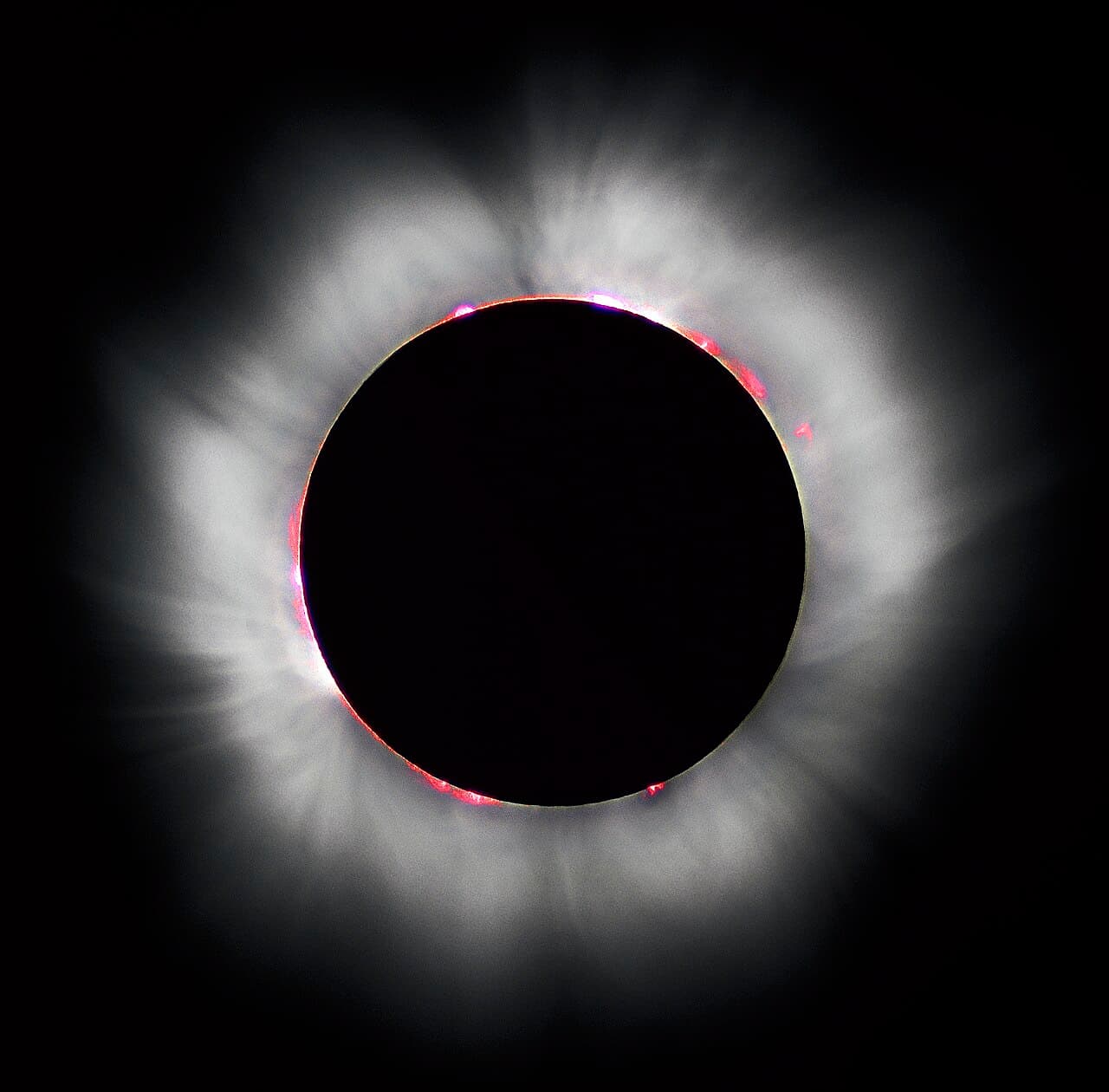
A stork roosting on her nest in Poland during a recent total solar eclipse offers a window into how animals respond to the sudden darkness of totality. Those who experience a total eclipse in quiet, natural settings may observe unusual daytime animal behaviors triggered by the temporary loss of sunlight.
During totality, nocturnal sounds emerge as if on schedule. Crickets and frogs produce their nighttime calls, and fireflies become visible. Most birds fall silent in the darkness, while waterfowl such as ducks prepare for sleep, standing on one leg with their heads turned around and beaks tucked into their back feathers.
When sunlight returns at the end of totality, the animal world shifts again. Songbirds greet what they perceive as a new dawn with their characteristic morning songs, while crickets and frogs resume silence. The temporary disruption ends as animals and people return to their normal routines, briefly affected only by the chance alignment of the Sun and Moon.