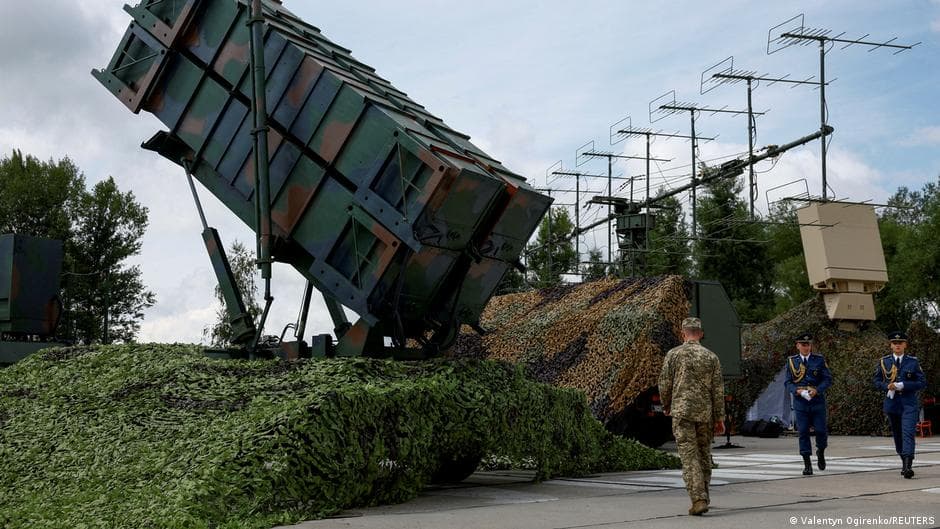
Russia is increasingly relying on ballistic missiles to attack Ukraine, but the country's armed forces are struggling to counter them due to a critical shortage of US-produced Patriot interceptor missiles. Ukraine has effectively built a defense network against drones, but its military is reaching its limits against Iskander-M ballistic missiles, one of the few threats that the Patriot system with its PAC-3 interceptors can reliably address.
The scale of the challenge became apparent in early August. During a Russian attack on August 1, Ukraine intercepted only one of 27 ballistic missiles fired, with President Volodymyr Zelenskyy saying Ukraine had practically exhausted its Patriot interceptor stocks across eight batteries stationed nationwide. Three days later, according to Ukraine, Russia fired 24 ballistic missiles and four Zircon hypersonic missiles, none of which were intercepted.
Patriot deliveries to Ukraine have declined significantly. Zelenskyy said Ukraine received only about one-third as many anti-aircraft missiles so far this year compared with 2025, and the global shortage has been further exacerbated by the war in the Middle East. Ukrainian military intelligence estimates Russia is capable of firing up to 100 ballistic missiles per month without depleting its stocks, while Ukraine's military recorded 195 Russian ballistic launches in July alone, intercepting only 29.
The disparity reflects Russia's ramped-up production capacity. Current estimates put Russian monthly production of Iskander-M missiles at around 60 to 65 units—more than 700 annually. Ukraine also reports that North Korea has supplied Russia with some 150 ballistic missiles since the end of 2023, with a recently deployed North Korean missile unit potentially equipped with up to 120 additional missiles. In contrast, US producer Lockheed Martin supplied only 620 modern PAC-3 MSE interceptor missiles worldwide in 2025, though it plans to increase annual capacity to 2,000 units over a seven-year program.
Ukraine is pursuing multiple alternatives to address the shortage. The French-Italian SAMP/T system is considered a Patriot alternative, but Ukraine owns only a few units and required Aster-30 interceptor missiles are scarce; the newer SAMP/T NG version will only gradually become available. Zelenskyy cited a political decision by US President Donald Trump to grant Ukraine licenses for Patriot interceptor production, though Trump later said the US had not yet approved the technology transfer, adding that officials had to be "careful" with such matters.
Discussions between American and Ukrainian representatives are continuing on production options, including a model where components would be produced in Ukraine with initial assembly in Germany. Outgoing Ukrainian ambassador Olha Stefanishyna estimated establishing domestic Patriot production could take anywhere from 12 months to five years. Until then, Kyiv is seeking to obtain Patriot missiles more quickly through other customers passing on their shipments in exchange for later replacements.
Ukraine is also developing its own system through the European-Ukrainian Freya project. The program's core will be the FP7.X interceptor missile produced by Ukrainian manufacturer Fire Point, whose design architecture is based on Soviet S-300 and S-400 air defense systems. More than a dozen European arms manufacturers are involved, aiming to develop an interceptor missile costing less than €1 million ($1.15 million)—significantly less than the modern Patriot PAC-3 missiles at $5 million each. The Ukrainian side is working toward deployment, though the system will not be available quickly.