The time to buy special solar eclipse glasses has likely passed, as most online orders will not arrive on time and shop supplies have run out. However, people can still watch the eclipse safely using a few household items.
People in England will witness a partial solar eclipse, not a total one like in parts of Spain, Greenland, and Iceland. According to experts, this eclipse is the most prominent phenomenon the country will see since 1999. Experts warn that enthusiasts should not look directly at the sun without using special eclipse glasses.
Do not be tempted to use sunglasses or dark protective glasses as a substitute. These glasses generally do not provide sufficient protection from ultraviolet rays when looking directly at the sun. According to the Royal Astronomical Society, this can cause serious eye damage.
Astronomy groups recommend making a pinhole projection device by making a small hole in a thick sheet of cardboard using the tip of a pen. Hold the cardboard in one hand and a blank sheet of paper in the other, standing with your back to the sun. Align the cardboard with the paper so that the reflection of the sun is visible on the paper, and the pinhole device will display a miniature version of the shadow of the eclipsing sun.
A kitchen sieve can produce a similar effect to a pinhole device. David Jones, an ophthalmology consultant at Royal Cornwall Hospitals, says this is his favourite method for viewing an eclipse. Jones explains: "If you point the sieve at the sun and look in another direction to protect your eyes, you can form a hundred images of the sun at once, not just one." When demonstrating the technique in a social media video, Jones held a white sheet behind the sieve that he held up, creating various images showing the sun and shadow reflections during the eclipse, forming a pattern resembling a multicoloured kaleidoscope.
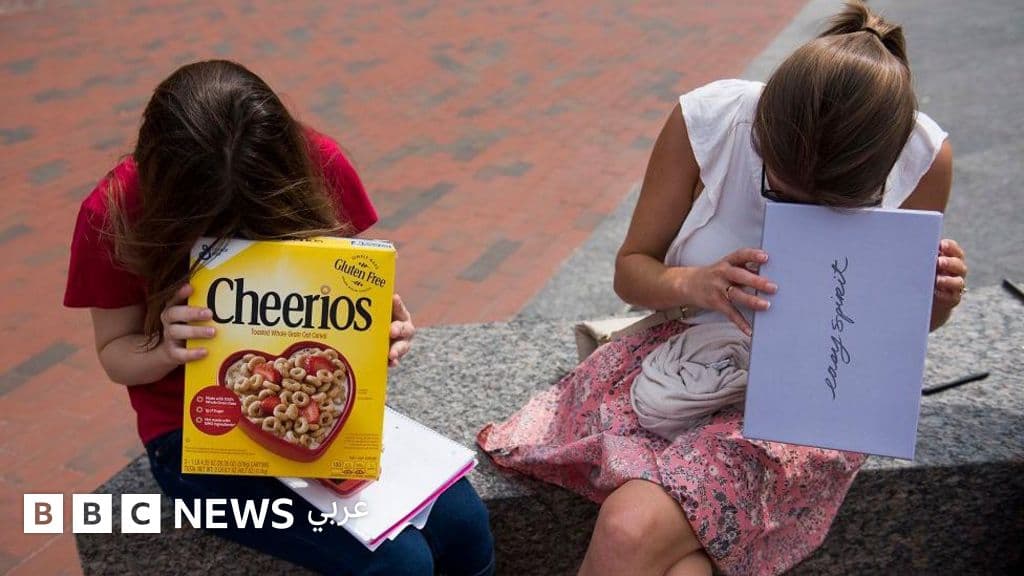
An empty cereal box is also suitable for making a pinhole projection device that works in a similar way but provides a clearer image. The strong cardboard blocks the surrounding sunlight and only allows light to enter from the direction of the eclipse. Cut a piece of paper to fit the bottom of the box, open the top, and secure the cut piece at the base with tape—this will be your screen for watching the eclipse. Seal the box with tape and cut a small box in one of the upper halves so you can see the paper at the base with one eye. In the other half, cut another small box, then cut a piece of aluminium foil large enough to cover it. Secure it with tape over the box and use a pin or needle to make a hole in the centre of the foil. Stand with your back to the sun and look through the open box with one eye. When the hole in the aluminium foil aligns with the sun, an image will appear on the screen below—this is where you will see the eclipse.
People may want to view or record the eclipse using their phone, either by pointing it at the sun or recording a selfie video. However, NASA advises against doing this. According to NASA: "To photograph the sun during a partial eclipse, you will need a special solar filter to protect your camera, just as you need special eclipse glasses to protect your eyes." The agency also explains that the sensor in your phone can be damaged if pointed directly at the sun, especially if using any magnifying lens accessories on your phone.
When the partial eclipse is visible in England and mainland Europe on Wednesday, it will occur in the afternoon and at a low altitude in the sky. For a better view, the Royal Astronomical Society recommends standing in a location higher than the surrounding area with "a clear view to the western horizon." Whatever you do, do not look directly at the sun.