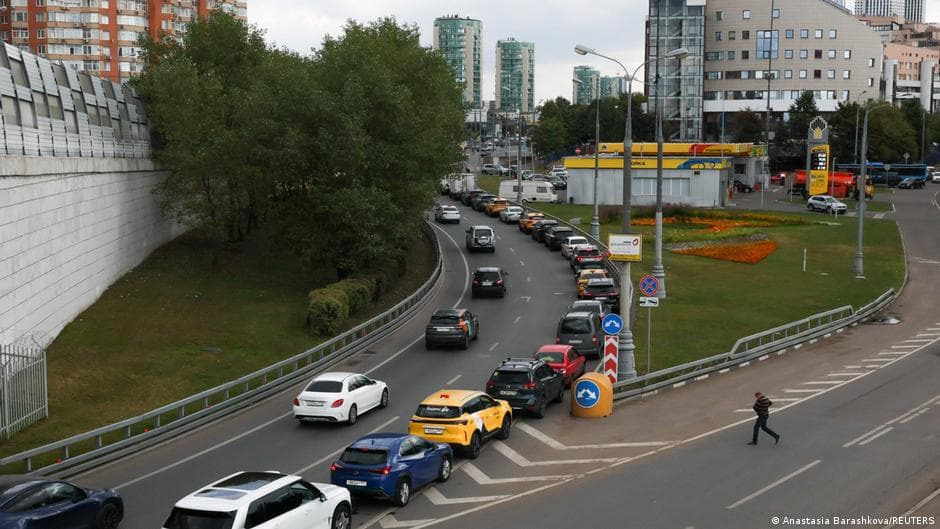
Ukrainian attacks on oil refineries have triggered a widening fuel crisis across Russia. Reuters reports that at least 30 regions are now affected by shortages, with Moscow and surrounding areas experiencing particular strain after gas station chains Gazprom Neft and Tatneft restricted fuel sales in the capital.
The current crisis differs from earlier shortages that lasted from late May to mid-July. Oleg Grigorenko, editor-in-chief of Russian independent media portal 7x7, said the disruptions extend beyond individual inconvenience to create economic problems. "The logistics of private construction companies is heavily reliant on gasoline," Grigorenko reported, noting that taxi drivers, courier services and the construction industry are already losing business due to fuel-dependent supply chains. Long queues have formed at gas stations in southern Russia's Krasnodar region, with authorities attributing the delays to increased holiday-season demand, though local residents described conditions as a disaster.
Russian officials have proposed remedying shortages through imports from India, China and other countries. However, business journalist Vyacheslav Shiryaev, now based abroad, said such a solution is not viable given Russia's international isolation. Ensuring daily supplies of 200,000 tons of fuel—Russia's approximate daily requirement—is impossible under current circumstances, he told DW. Igor Lipsits, an economist also living in exile, noted that damaged refineries cannot be quickly restored and remain vulnerable to further attacks, prompting authorities to implement rationed fuel distribution that prioritizes security personnel and emergency services.
Oil production has fallen significantly since the war began. Nikolai Korzhenevsky, an economist now abroad, noted that production has dropped from 11.5 million barrels per day in 2019 to less than 9 million currently. He warned that further deterioration could push production to 8 million barrels, creating conditions for broader economic crisis. Some economists see parallels to Venezuela's chronic economic decline. Worsening fuel quality has also created problems, with reports of engine damage from fuel impurities causing vehicles to malfunction and creating months-long repair backlogs.
Shiryaev said Ukrainian attacks on targets serving both military and civilian purposes could cripple the Russian economy and hasten the war's end. He suggested that disruption to Russia's 6,000-kilometer railway network and hundreds of factories dependent on diesel could undermine regime stability. Lipsits drew comparisons to the Soviet Union's collapse, noting that the emergence of privileged fuel distribution for elites resembles the closed supply systems that fueled popular resentment before the Soviet system's dissolution.