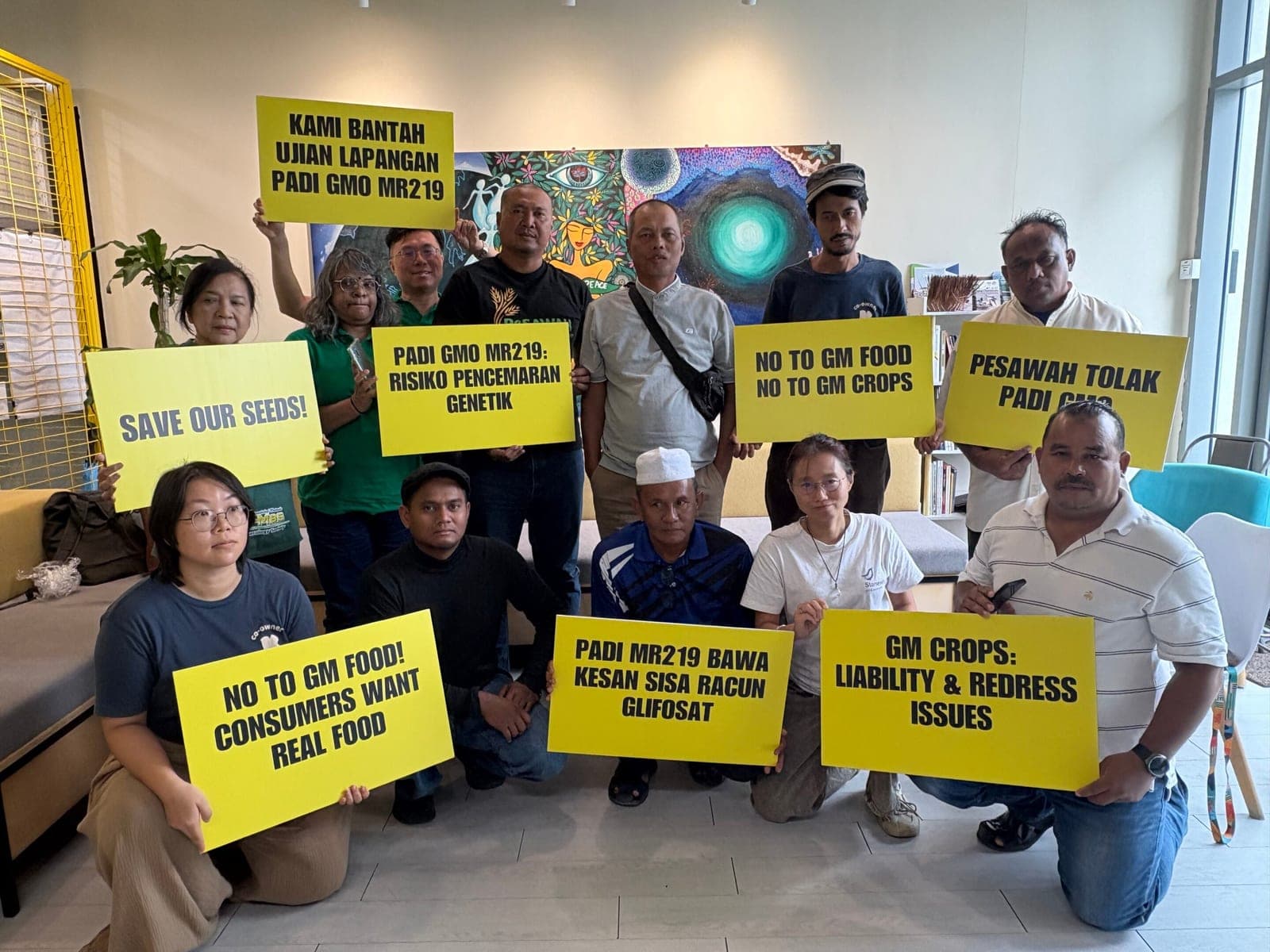
A coalition of 61 farmer, consumer and environmental groups is urging Malaysia's National Biosafety Board to reject a proposed field trial of genetically modified rice, warning that the project could pose risks to food safety, the environment and farmers' incomes. The coalition submitted a formal objection as part of a public consultation process that ended last week.
The board is evaluating an application by Zen Cropscience for a confined field trial in northern Perak state involving a genetically modified version of the MR219 rice variety engineered to tolerate the herbicide glyphosate and resist diseases caused by bacteria and fungi. The coalition said the project is similar to an earlier proposal for a field trial in Perlis state in 2019 that was later abandoned.
The groups' main concern is the potential for genetically modified material to contaminate conventional and wild rice through cross-pollination or other means. They said Malaysia's biosafety law lacks sufficient legal protections and compensation mechanisms for farmers who could suffer economic losses from accidental crop contamination. Farmers also worry that the genetic modification could encourage greater glyphosate use, potentially accelerating the development of herbicide-resistant weeds that would require higher herbicide applications to control.
Abdul Rashid Yob, who heads a farmers association representing 200,000 members nationwide, pointed to previous experience with herbicide-tolerant Clearfield rice. While production initially improved, weeds quickly developed resistance, forcing farmers to use higher herbicide doses, which raised production costs and degraded soil fertility, he said. "GM rice will be much worse. It is not the answer," he said.
The National Biosafety Board has said the proposed trial would be carried out within an insect-proof contained net house on industrial land, far from agricultural areas, and that the risk of cross-pollination is low. It is unclear when the board will make a final decision. Malaysia relies heavily on imported rice, with domestic production meeting only about half its national consumption needs, according to official data.