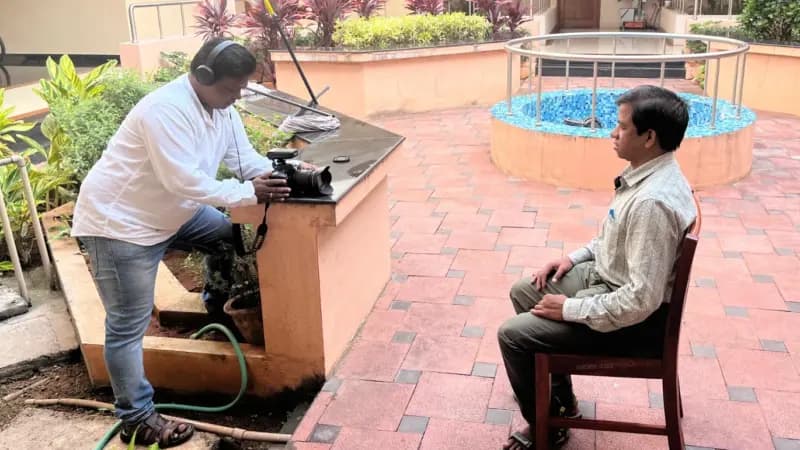
Kshetrabasi Juanga, an educator and writer of the Juang language, said audio-visual documentation is vital to the survival of the vulnerable Indigenous language, which has around 30,000 speakers in the eastern Indian state of Odisha. The Juang language is shifting due to globalization, Juanga said, and recording cultural practices and traditions is essential to preserve them for younger generations.
Several Indian institutions have worked on documenting the Juang language, including the Academy of Tribal Language & Culture, which published tri-language books, and the Central Institute of Indian Languages, which conducted research on the language. However, Juanga said, the culture and traditional knowledge of Juang people—including festivals, marriage ceremonies, and songs—remain largely undocumented.
Juanga compared the language's survival to grass pushing through cracks in a bitumen road. "No matter how globalised the world becomes, Indigenous languages and cultures are surviving, and will continue to survive," he said. Documentation would benefit urban-dwelling Juang speakers who have moved away from rural communities, as well as those remaining in their villages, Juanga added, allowing them to maintain connection with traditions and cultural practices that carry deep moral significance.
Juanga has contributed to documentation efforts through his YouTube channel, Majang Studio Vlogger, which features videos on traditional techniques such as starting fires with stones and creating shelter with palm leaves. He said more documentation work is needed on a larger scale, as people increasingly abandon traditional practices.