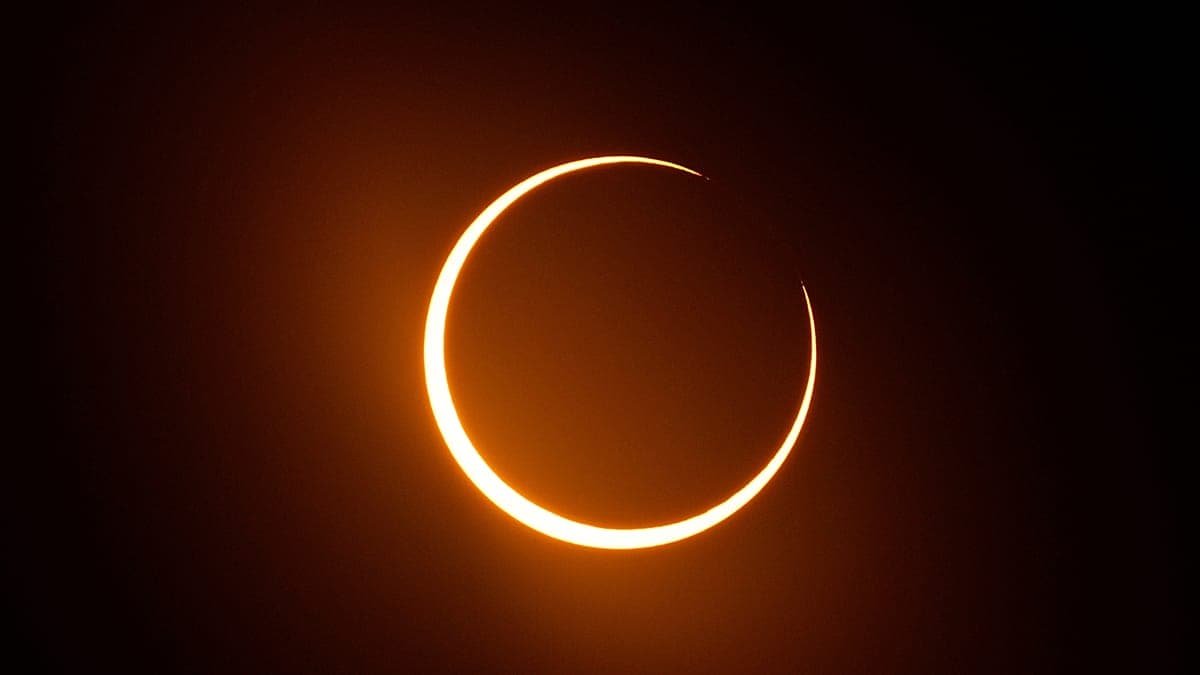
Energy providers and electricity grid operators across Europe are preparing for the impact of a solar eclipse next week on solar power production. On Wednesday, 12 August, part of the sun will be obscured across much of Western Europe, while large areas of Spain, a small part of Portugal, Greenland, and Iceland will experience a total solar eclipse.
Because solar energy is an important part of Europe's energy mix—accounting for approximately 13 per cent of EU electricity production in 2025—this event, lasting roughly two hours, can disrupt the balance of electricity generation. Solar energy represents a larger share of Spain's energy mix, ranging between 21 and 22 per cent, and is likely to be the most affected country as the majority of its territory will experience a total eclipse.
Spain's electricity grid operator Red Eléctrica de España (REE) has announced preventive measures to address the anticipated impact on photovoltaic (PV) energy, which is expected to be "limited and temporary." The event will reach Europe in the early evening, when electricity production from solar energy naturally begins to decline. However, the eclipse is estimated to reduce production on the Iberian Peninsula by up to 5 gigawatts, or approximately 13 per cent of peak demand on a typical Wednesday in August, according to REE's calculations.
REE stated that the company is coordinating closely with official authorities, other European transmission system operators (TSOs), and the national centre for production and distribution control, and is working to increase usual reserves and safety margins while continuously monitoring the situation. At the European level, photovoltaic energy system production can decline by up to 9.7 gigawatts, according to the European Network of Transmission System Operators for Electricity (ENTSO-E).
In the United Kingdom, Octopus Energy, one of the largest household electricity providers, has taken a novel approach by encouraging customers to join a campaign to "reduce consumption during the eclipse." The campaign states: "When the sun goes offline from the grid, we want you to do the same." Households that use less electricity than usual during the eclipse will receive one hour of free energy on Sunday as a reward.
The maximum reward allowance is 16 kilowatt hours—"more than a typical household could consume in one hour (closer to running a small sports stadium's lights!)," according to Octopus Energy. Customers must register in the company's rewards programme to participate. This offer is not merely a promotional gimmick; maintaining the electricity grid's frequency within safe operating ranges to prevent blackouts and disruptions to power flow requires continuous and precise balance between production and consumption in real time.
By reducing energy consumption at the same time as renewable energy production decreases, households can help avoid the need to run polluting fossil fuel power plants to close the gap. The company hopes its initiative will help reduce pressure on the grid, as the eclipse could mean that "most of the UK's capacity to produce electricity from solar energy will come offline—at the same time millions of people return home and electricity demand spikes sharply." Cooling energy demand could be particularly high this week, with the UK entering its fifth heatwave of the year.
However, it is anticipated that demand will drop below usual levels during the eclipse, as millions of people will go outdoors to witness the event, according to the UK's national energy system operator (NESO). The moon is expected to cover up to 95 per cent of the sun's disc over parts of the UK on Wednesday evening.
Portugal's electricity grid operator Redes Energéticas Nacionais (REN) anticipates it will need to use additional energy reserves to compensate for the reduction in electricity production from solar energy due to the eclipse. In a statement released on Monday, 10 August, the company said that "additional reserves from hydroelectric and/or thermal production will need to be mobilised" to rebalance supply and demand in the national electricity system.
This will also be necessary to maintain stability of the interconnection between Portugal and Spain's electricity grids. REN anticipates a reduction of 450 megawatts in electricity production from solar energy, which represents approximately seven per cent of consumption and 45 per cent of the average solar production predicted by the national electricity system for the period between 18:30 and 20:30. The country will experience an "almost total" eclipse, with the ratio ranging between 92 per cent in the Algarve region and 100 per cent in the municipality of Bragança. The village of Gardamiel is considered the best location in Portugal to witness a total eclipse.