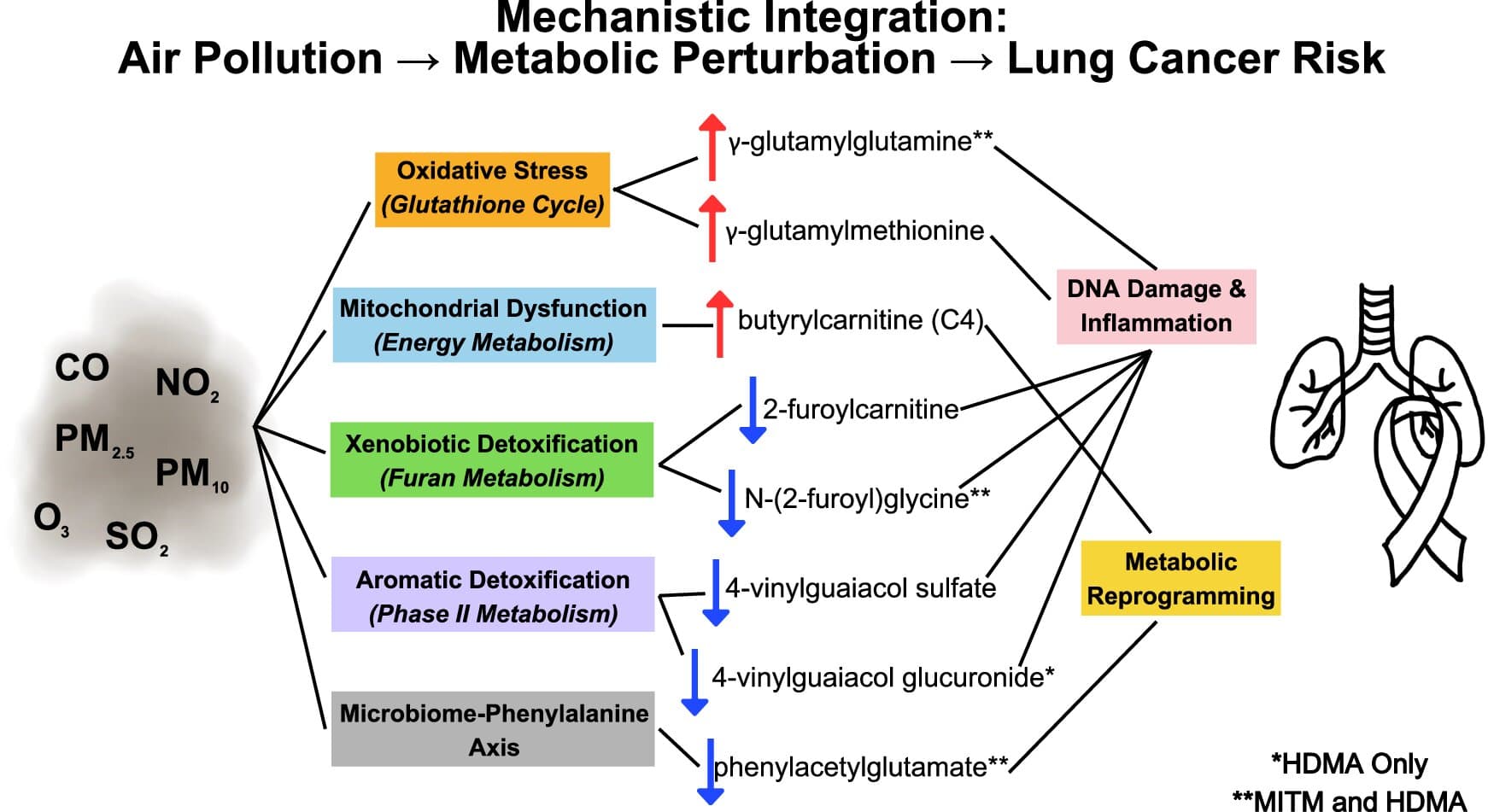
A study published Tuesday in Nature Communications identified measurable changes in blood associated with air pollution exposure that precede lung cancer diagnosis by several years. Researchers at the American Cancer Society and Emory University's Rollins School of Public Health analyzed blood samples from 1,357 cancer-free people and found changes in small molecules called metabolites linked to long-term air pollution exposure.
The metabolite disruptions involved inflammation, oxidative stress, detoxification and energy metabolism—all associated with increased lung cancer risk. Air pollution is already recognized as a key environmental cause of lung cancer, but less is known about the biological changes that follow exposure.
Lung cancer is the leading cause of cancer death in the U.S., yet regular screening is currently recommended only for adults ages 50–80 with substantial tobacco smoking history. Ying Wang, senior principal scientist of epidemiology research at the American Cancer Society and a co-senior author, noted that outdoor air pollution is classified as a human carcinogen, with associations strongest among never-smokers. "Studies like this one, which look at what is measurably changing in the body years before a diagnosis, are how we begin to close that gap," Wang said.
Donghai Liang, associate professor of environmental health at the Rollins School and co-senior author, said more than half of lung cancers are diagnosed in people who never smoked or are ineligible for screening. "Understanding non-smoking-related risk factors, such as air pollution, is important for cancer prevention and early detection," Liang said, noting that environmental risk factors are not considered in current screening recommendations.
The air pollution-related biological changes identified could guide development of blood-based biomarkers to identify people at higher lung cancer risk and support prevention-focused public health strategies, researchers said.