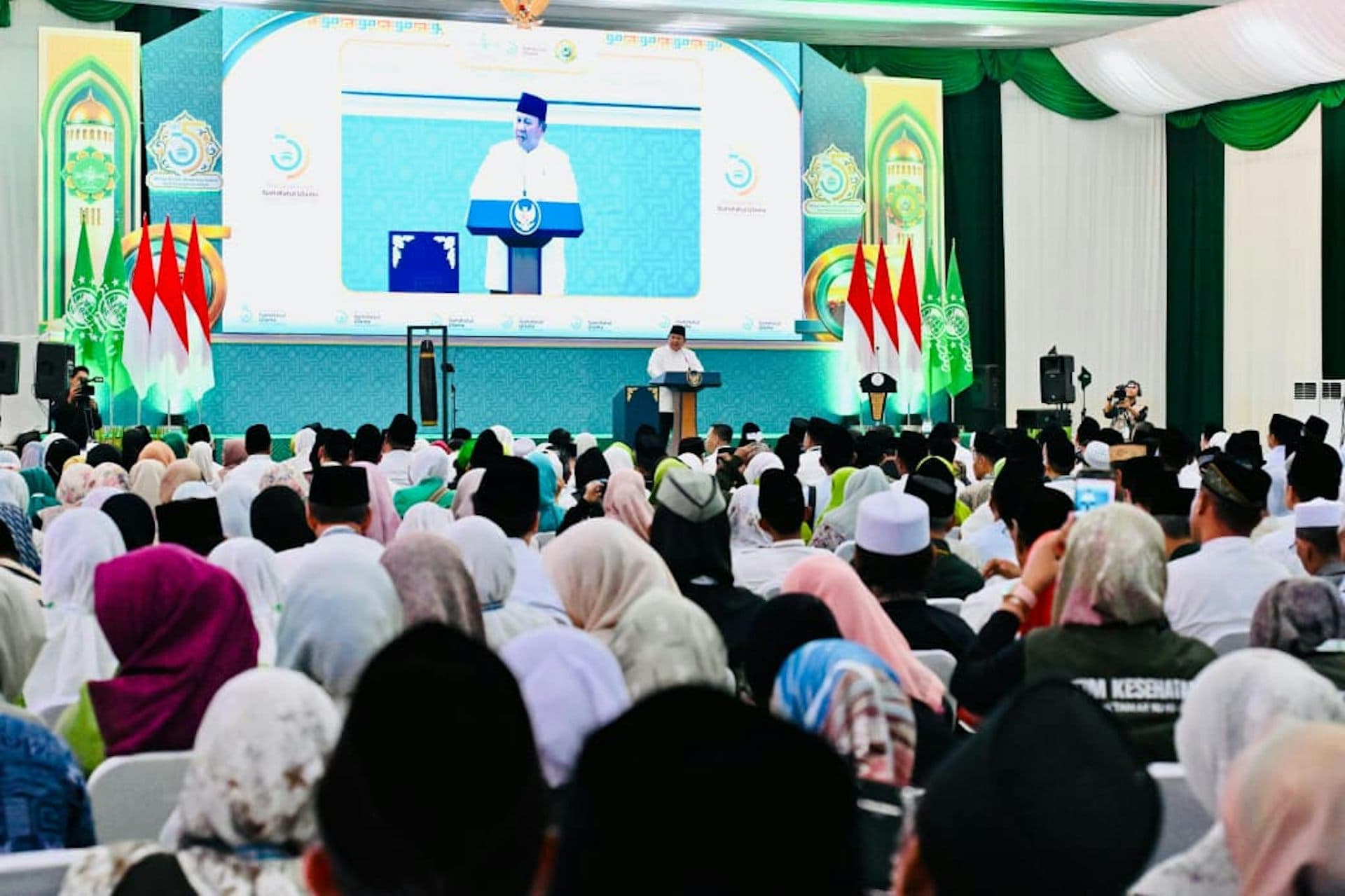
The 35th Congress of Nahdlatul Ulama in Jombang, East Java has produced new leadership. Abdul Hakim Mahfudz, known as Gus Kikin, was elected as the General Chairman of the Central Executive Board of Nahdlatul Ulama (PBNU) for the 2026–2031 term, alongside Miftachul Akhyar, who returned as Rais Aam. The presence of President Prabowo Subianto at the opening and closing of the Congress demonstrates the importance of NU to Indonesia's political elite.
Throughout Indonesia's political history, NU, with its very large social base, has often been viewed as an electoral force capable of determining political direction. However, recent research shows this relationship is more complex than assumed. A survey of 5,500 national respondents and approximately 20,900 respondents in East Java and Central Java found that around 54.6% of respondents felt close to NU, although only some identified themselves as formal members. Cultural closeness to NU did not produce a strong political choice pattern, showing that NU identity does not work automatically in electoral politics.
NU members' political choices are spread across various parties. The survey showed that those who identify as nahdliyin choose different parties, and in the 2024 presidential election their support was not concentrated on one ticket. The candidacy of figures from parties close to NU culture, such as Muhaimin Iskandar, did not automatically cause all NU members to switch to one choice. In other words, being an NU member does not come with a pre-determined ballot.
NU's strength does not lie in its ability to direct voter choices uniformly, but rather in the network of Islamic boarding schools, educational institutions, mosques, Islamic study circles, and organisational structures that reach various layers of society. This network works every day, not only when elections take place. Organisational ties have a more consistent relationship with political choice than merely feeling culturally close, showing that organisational networks can be an important channel for NU's political influence.
The diversity of NU members' political choices is related to changes in the structure of organisational identity and the political channels available. In the 1955 election, NU had its own party and obtained around 18.4% of the national vote; at that time, NU identity had a relatively clear political channel. However, the restructuring of parties during the Suharto era severed the direct link between NU and a single exclusive political vehicle. Since then, NU identity has been able to coexist with various political choices. 2024 election data proves this: a Kompas Research and Development exit poll found that 55.8% of respondents who identified as NU members chose Prabowo-Gibran, yet 21.8% chose Anies-Muhaimin and 12.8% chose other candidates.