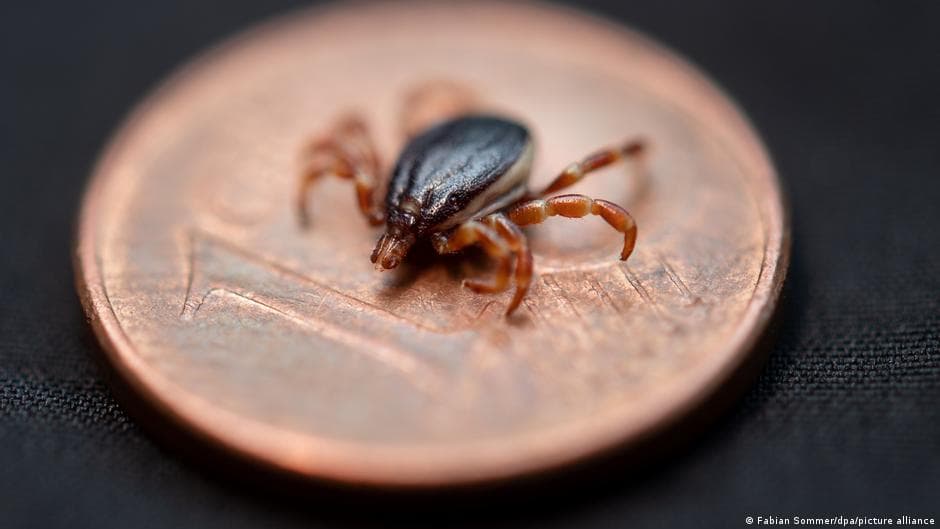
The Hyalomma tick, known as "the great hunting tick," can pursue prey from up to 200 meters away. Once found mainly in Africa, Asia, and southern Europe, the tick has expanded its range northward and has been detected in Germany and several Eastern European countries, with Kosovo emerging as a particular hotspot.
Hyalomma ticks carry Crimean-Congo hemorrhagic fever, a highly pathogenic disease with a high fatality rate. Symptoms include fever, chills, aches and headaches, progressing in severe cases to bleeding from the skin, nose, gums and gastrointestinal tract, potentially leading to organ failure and death. No vaccine exists, and the antiviral drug ribavirin has limited effectiveness in acutely ill patients.
A research partnership between Kosovo's University of Pristina and Germany's Bernhard Nocht Institute for Tropical Medicine began after virologist Petra Emmerich met Kosovan veterinarian Kurtesh Sherifi in 2009. With funding from Germany's Biosecurity Program starting in 2013, the researchers established monitoring systems for the tick and virus, while also conducting public awareness campaigns targeting farming communities particularly vulnerable to infection through handling infected animals with bare hands.
Seroprevalence studies using blood tests to detect antibodies have tracked virus circulation in animals and humans across Kosovo. Sherifi and Emmerich noted that serious infections in Kosovo dropped drastically over the past decade, declining from approximately 100 cases to five cases total. Both researchers expect the ticks and virus to spread further across Europe, with Hyalomma ticks carrying the Crimean-Congo virus recently detected in France.