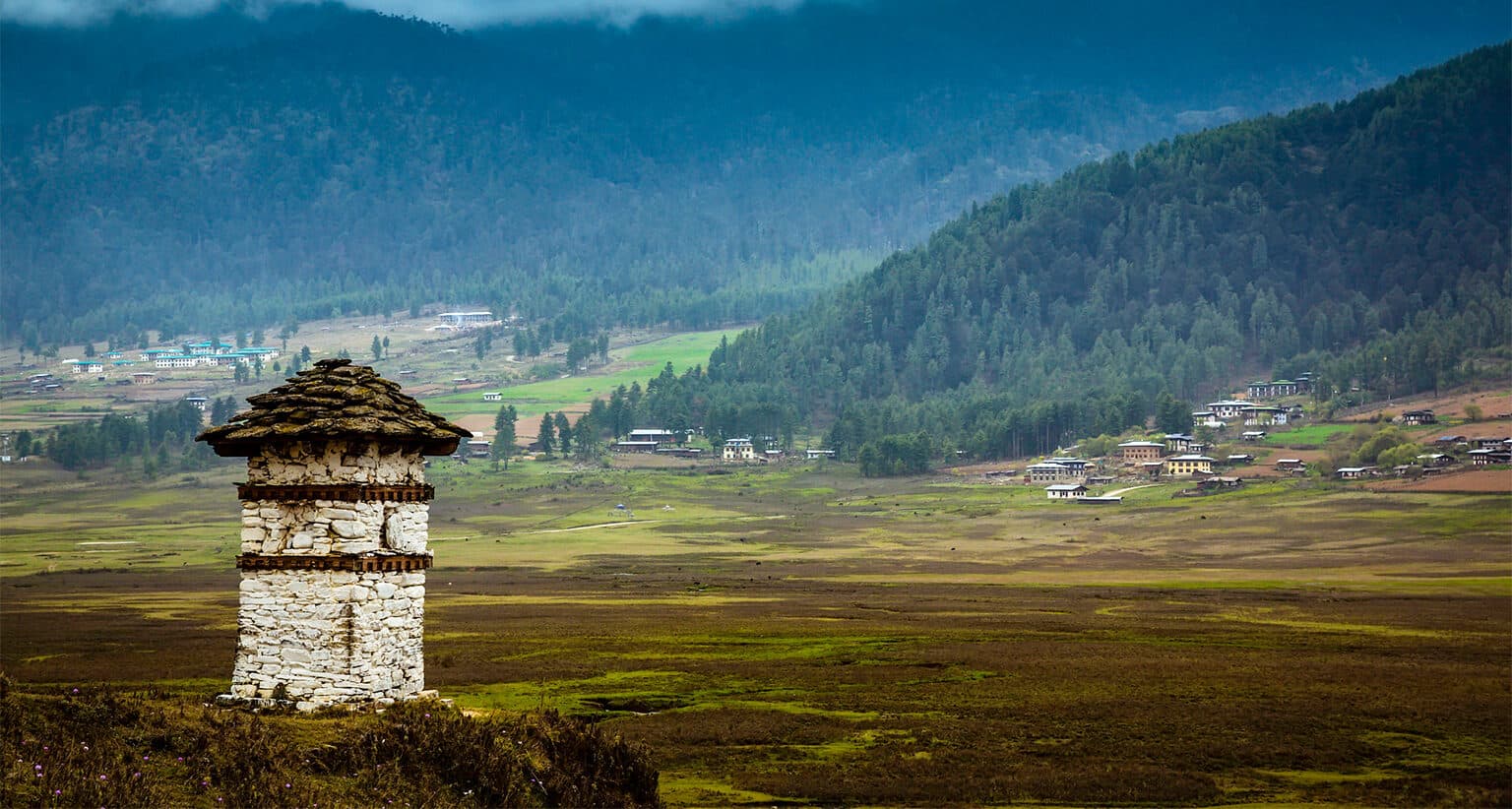
The Himalayan kingdom of Bhutan aims to achieve food self-sufficiency by 2029 under its 13th five-year plan, guided by its national philosophy of Gross National Happiness. The plan seeks to boost domestic production of key commodities while supporting smallholder farmers across the rugged, landlocked nation.
Agriculture employs more than 40% of Bhutan's 800,000 citizens, but arable land is extremely limited. Remote farms struggle with unpaved roads, lack of cold storage, and rugged terrain that extends transit times and affects produce quality and freshness, chef and restaurateur Bleu Tshering Dorji told host Mike DiGirolamo on a recent episode of the Mongabay Newscast.
Young people increasingly leave agriculture for other livelihoods, creating labor shortages in the sector. The government is investing approximately $180 million under the plan, with $139 million targeting smallholder farmers, the majority of whom in Bhutan are women, according to the five-year plan. Sonam Wangchuk, an executive specialist at Bhutan's Ministry of Agriculture and Livestock, said the government is prioritizing youths and women, including introducing smaller-capacity power tillers that can be operated by women instead of the larger machines previously required.
Farmers also contend with human-wildlife conflict stemming from strict conservation laws. The government is building 3,400 kilometers of fencing to protect crops, though Wangchuk said different strategies are needed for different types of wildlife. For Dorji, the path forward requires embracing the relationship between people and nature, with farming as a pillar rooted in coexisting with the natural world.