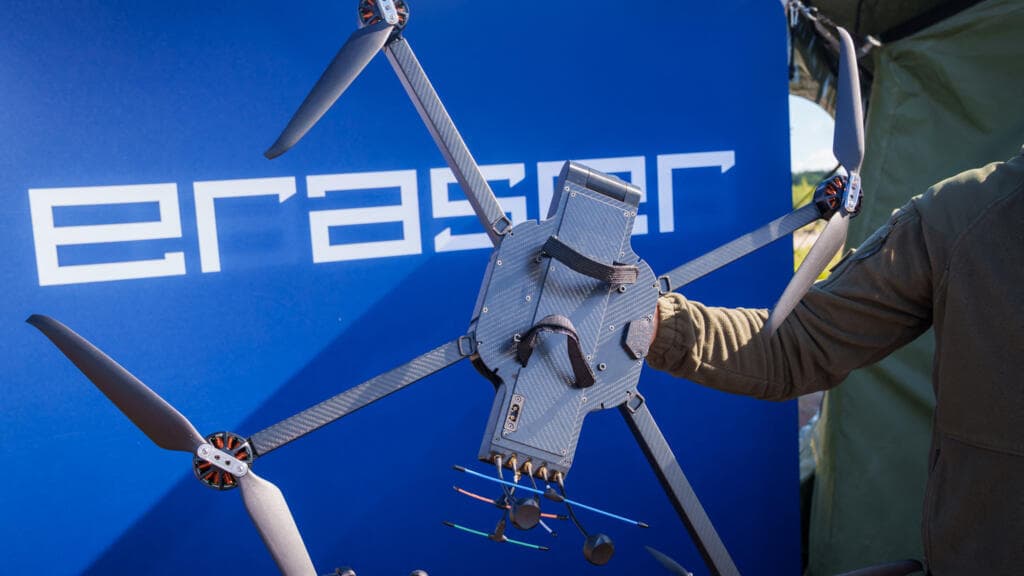
Entrepreneurs across the Baltic region have begun developing defence technologies to respond to the hybrid threat posed by Russia, as military innovation accelerates in response to the war in Ukraine. The startup scene in Lithuania, Latvia and Estonia has shifted focus toward defence following Russia's full-scale invasion of Ukraine in February 2022, according to experts and company leaders in the region.
Tony Lawrence, a research fellow at the International Centre for Defence and Security, said startups can develop technologies rapidly to address shifts on the battlefield. "It's about providing niche solutions that bigger defence primes don't traditionally have the ability to deal with," he said. The companies focus on autonomy by combining artificial intelligence with hardware, drones and edge computing to operate in environments where GPS or communications have been jammed, as well as cybersecurity and electronic warfare.
Among the companies cited as promising is Repsense in Vilnius, which has developed tools to identify sources of propaganda and trace its spread. Darius Antanaitis, a defence analyst from Lithuania, said the company "helps uncover the truth and prevent propaganda from spreading in the future." DefSecIntel, based in Tallinn, provides surveillance for borders and critical infrastructure protection.
Funding remains a challenge despite heavy defence spending by the Baltic states. Lawrence said that while Lithuania, Latvia and Estonia direct significant shares of GDP to defence, the actual cash amounts available to startups are limited because of competing priorities for conventional weapons and artillery. For startups to be self-sustaining, they must export their technologies, he added. Estonia has increased support for defence companies through grant schemes in recent years, according to Lawrence.
The Baltic states benefit from an entrepreneurial culture that emerged after independence in the early 1990s, Lawrence said, particularly in Estonia's development of e-governance and digital systems. "That kind of innovative spirit has been retained," he said. Defence also enjoys broad public support in the region, with residents prepared to back ventures that could strengthen military capabilities.