Israeli Prime Minister Benjamin Netanyahu's rejection of a US-backed peace plan for Gaza has offered a diplomatic advantage to Hamas, according to analysts. The plan, announced by US President Donald Trump in July, would have required Hamas to gradually disarm in exchange for an Israeli withdrawal from the Palestinian territory. Hamas had agreed to the proposal's disarmament provisions.
Netanyahu rejected the 15-point plan more than a week after Hamas's acceptance, stating that Israel would not withdraw from Gaza until Hamas achieved "genuine disarmament." The Israeli military currently controls nearly 70 percent of the 365-square-kilometre territory. Netanyahu's stance aligned with far-right Israeli politicians who have called an Israeli withdrawal from Gaza "unacceptable."
The collapse of the peace plan marked a shift in the international perception of the conflict, according to analysts. Hamas showed Arab countries and the international community that it was willing to engage in a deal, placing it in a position of strength, Bertrand Badie, professor emeritus at Sciences Po university in Paris, said. "Hamas showed the international community, and especially the Arab countries, that it was ready to engage in a deal," Badie said. "This places it in a position of strength."
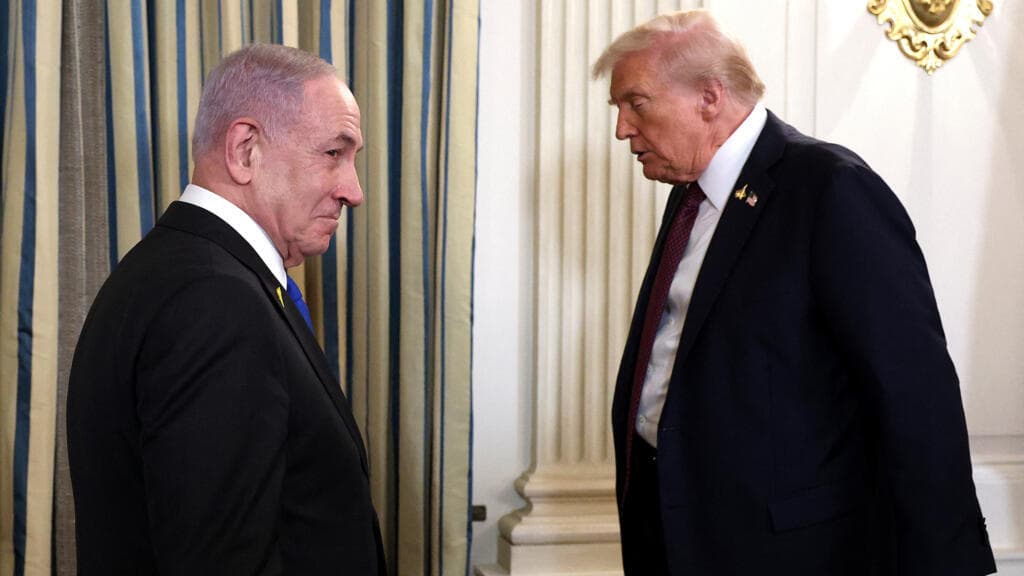
Netanyahu's rejection came ahead of October 27 legislative elections and as he faces corruption and fraud charges. Denis Charbit, a political science professor at the Open University of Israel, said Netanyahu was "trying to maintain the carefully constructed image of a leader who cultivates good relationships with foreign leaders but who doesn't shy away from confrontation when it comes to defending Israel's national interest." Trump insisted on Monday that his relationship with Netanyahu was "very good" despite the disagreement.
The disarmament and storage of Hamas weapons was to be handled by the National Committee for the Administration of Gaza, a Palestinian technocratic body established in January. The committee has yet to enter Gaza and remains blocked in Egypt due to Israel's refusal to allow it into the territory. A key sticking point remains the definition of "disarmament," with Israel insisting on the removal of all weaponry.