The Israeli military announced it had successfully located the burial site of Shlomo Haimson after a lengthy investigation that solved a 78-year-old mystery. Haimson was shot dead by guards at Karaolo Detention Camp in Cyprus on the night of 29-30 September 1948 while attempting to escape to Israel, after learning that his daughter had just been born.
His remains were initially buried in a Jewish cemetery in Margo, Cyprus. In 1970, his remains were transferred along with other skeletal remains from the same location, and most were subsequently buried in Haifa with the classification "identity unknown". An investigation conducted by Israel's military missing persons division in cooperation with military authorities and Cyprus concluded that Haimson was buried in the immigrant section of Haifa cemetery.
Haimson was born in Romania in 1930 and lost his father during World War II. After the war, he decided to migrate to Palestine under British mandate with his mother Itta and his friend Perla. However, British mandate forces stopped the ship and diverted the passengers to Cyprus, where they were detained in a camp for Jewish immigrants.
After Israel was established in May 1948, his mother and his friend were released and migrated to Israel as part of a group intended to establish kibbutz Magen in the Western Negev. In September 1948, Haimson received news that his daughter had been born and decided to escape from the detention camp. On the night of 29-30 September, he and eight others attempted to breach the camp wall, but guards detected the group and opened fire. Haimson was killed while his companions were captured and returned to the camp, and he was buried the next day in Margo Jewish cemetery.
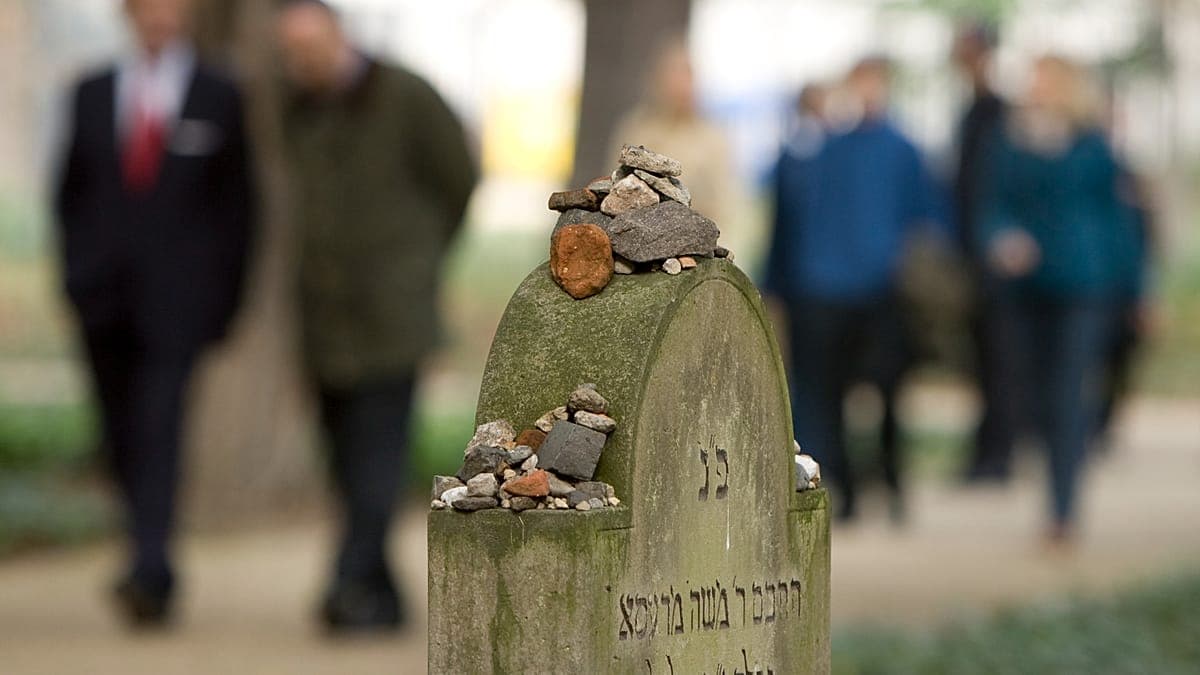
Because the people in the camp did not know him well, the gravestone at his burial site had no inscription, which caused his identity and burial location to remain unknown for several decades. In 1970, the remains buried in Margo were transferred to Israel in an operation later known as "Operation Margo". This operation involved the transfer of the remains of 163 people, with approximately 120 people unable to be identified and buried as unknown identities in a special section of Kfar Samir cemetery in Haifa. Haimson was among them and his grave remained unknown until an organised effort began to identify those buried without names.
In 2010, Amir Rogel, one of the founders of the Cyprus Detainees Association, launched a project to identify people buried with unknown identities and place their names on their graves. During this project, researchers found that Haimson was recognised as a fallen soldier of the Israeli armed forces. However, determining the final location of his remains required additional investigation that continued for years.
In 2023, a special investigative team was formed in the Etan division for missing persons in the Israeli military and began work on the case by gathering evidence from various sources. Investigators examined archival documents from around the world, collected testimony, and re-analysed historical photographs, as well as conducting archaeological surveys. Based on this data, the team, working with military authorities, concluded that Haimson was initially buried in Margo and his remains were transferred to Israel in 1970 before being buried in grave number 11, second row, in the Cyprus immigrant section of Haifa cemetery.
The head of the Israeli military human resources directorate received the investigation results and approved the placement of a gravestone with the name Shlomo Haimson. Haimson's family, which includes his daughter, grandchildren, and great-grandchildren currently living in Rio de Janeiro, Brazil, was informed on Tuesday evening of the completion of the investigation and the determination of the location of his grave. The family was informed with the presence of Israel's military attaché in Brazil, Colonel Uri Ron, as well as senior Israeli military officials, ministry of defence, and members of the investigation team.
The family said that the determination of his burial location gave them profound peace of mind after decades of uncertainty, expressing gratitude to all the specialists and investigators involved in the search operation, praising their dedication, careful efforts, and sensitivity in handling the case. Shlomo Haimson's grandchildren are expected to travel to Israel to participate in an official military ceremony in Haifa, where a memorial gravestone with his name will be added to his grave.