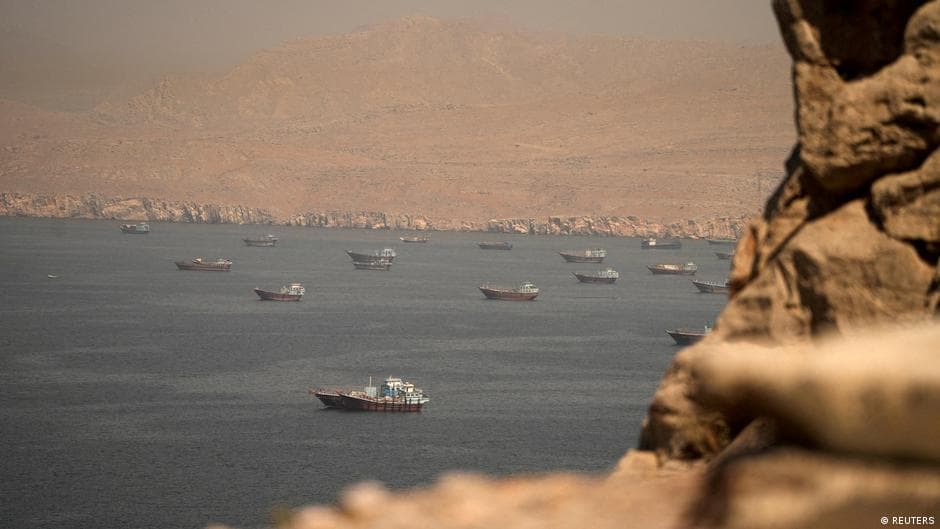
Months of blockades and uncertainty around the Strait of Hormuz have pushed energy exporters to explore ways to bypass the key shipping route. The narrow waterway between Iran and Oman carries around 20% of global crude exports from the Persian Gulf to markets in Europe, Asia and North America.
Saudi Arabia has demonstrated significant capacity to redirect shipments away from Hormuz. During April and May, the kingdom's crude shipments from its Gulf coast fell from 47.5 million tons a year earlier to 6.3 million tons, according to data from the International Monetary Fund's PortWatch platform. Over the same period, exports through the Red Sea rose from 29.6 million to 54.8 million tons, with the additional 25.2 million tons replacing roughly 61% of the volume lost on the Persian Gulf side. The shift relies on the East-West Pipeline, which carries crude from the kingdom's eastern oil fields to the Saudi Red Sea port of Yanbu.
The United Arab Emirates has had less success using alternative routes despite possessing ports and pipelines specifically designed for that purpose. The ADCOP pipeline carries crude from Habshan in Abu Dhabi to Fujairah on the Gulf of Oman, outside Hormuz. However, these facilities remain close enough to Iran to be vulnerable to attack. During recent fighting, the Emirati port of Fujairah came under attack and vessels near the UAE's eastern coast were struck. UAE Persian Gulf coast traffic during April and May fell to 12 million tons from 68.5 million tons in the same period of 2025, according to IMF PortWatch data, while traffic through alternative UAE ports also declined from 13.7 million tons to 6.3 million.
Longer-term alternatives under discussion include new pipelines connecting Iraq with Oman and Jordan, and rerouting ships around the African continent via South Africa's Cape of Good Hope. Economist Hassan Mansour told DW that a Basra-Aqaba pipeline could require five to seven years and cost around $8 billion to $10 billion, while a Basra-Oman connection could cost $10 billion to $15 billion. Mansour noted that rerouting ships around the Cape of Good Hope can add hundreds of thousands of dollars in transport costs to each voyage, and said these projects cannot solve the oil market's immediate problem.
The Red Sea route also carries security risks. Ships moving toward the Suez Canal must pass Bab al-Mandab, where Houthi attacks have repeatedly threatened commercial shipping. Rahman Ghahremanpour, a Tehran-based political analyst, told DW that while pipelines can reduce the impact of Hormuz, they are vulnerable in wartime, as Iranian and Houthi drones can reach both Fujairah and the Red Sea. He said the problem is particularly acute for Qatar, Kuwait and Bahrain, which lack coastlines outside the Persian Gulf and would require cooperation with other countries for alternative routes.