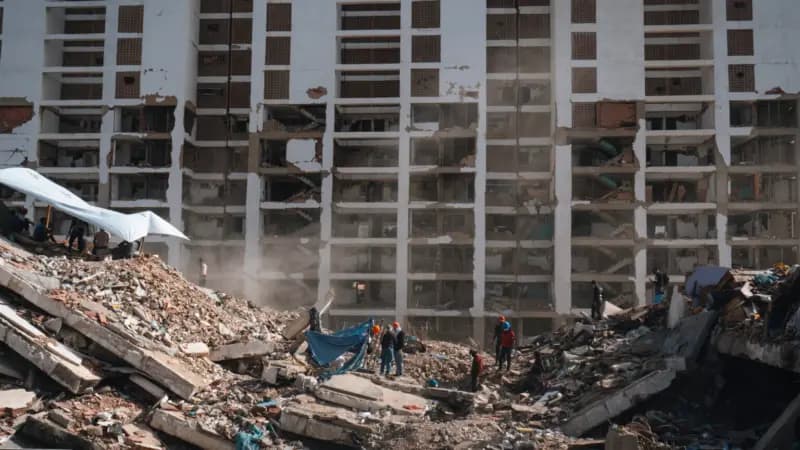
Nearly seven weeks after earthquakes struck Venezuela on June 24, thousands of relatives remain camped at collapsed buildings in La Guaira, searching for missing family members. The relatives continue their efforts despite harsh conditions and insufficient support for search operations.
Miriam Villalta, who traveled from Peru seven days by road after learning of the earthquakes, has lived in a tent for more than 15 days near the Luisa Cáceres de Arismendi housing complex in Playa Grande, La Guaira. She searches for her son, Greiber Gómez, 31, who lived in Tower D, apartment 3-08, before the building collapsed. She has found no trace of him in shelters, hospitals, or morgues. "I'm not leaving here until my son is found," she said.
Women comprise the majority of those conducting the search. They clear rubble by hand, coordinate aid distribution, and identify bodies in morgues. Organizations including UN Women have documented that during humanitarian crises and disasters, women often shoulder a disproportionate burden of unpaid caregiving and support work.
Villalta said aid arrives late and donations have declined as weeks have passed. "But we're still here, fighting for our loved ones," she said. "The only people who have shown up are his friends, not his superiors."
As of July 22, the Venezuelan government reported more than 5,300 deaths, 16,740 injuries, and 17,907 people left homeless. The government did not report the number of missing persons. The United Nations initially estimated around 50,000 missing people, while independent initiatives documented approximately 40,000 missing persons.