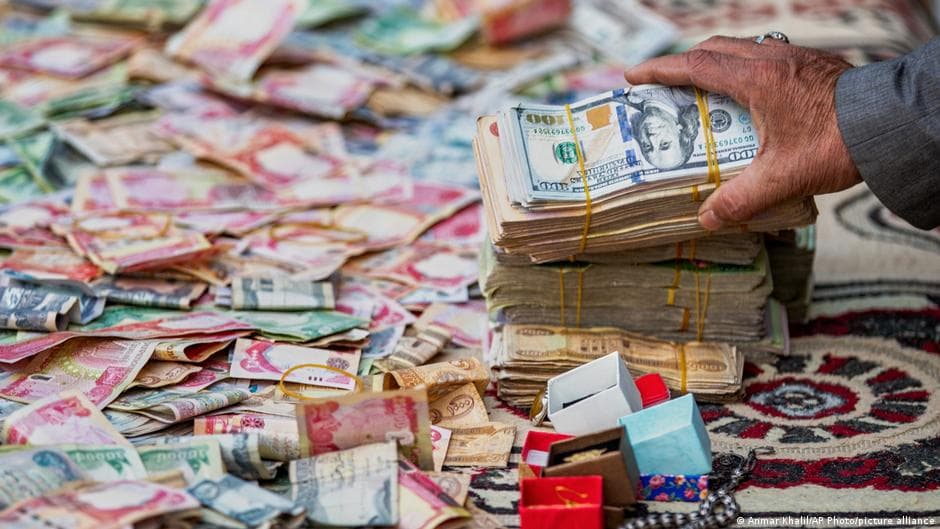
Iraq's government is struggling to pay salaries to thousands of public employees as the blockade of the Strait of Hormuz decimates the country's oil export revenue. Almost all of Iraq's national budget, somewhere between 85% and 90%, comes from oil exports, with roughly two-thirds of Iraq's 30 million working-age population relying on the state for employment.
The blockade has severely constricted Iraq's ability to generate income. According to government sources, Iraqi oil exports through the Strait of Hormuz dropped by around 83% in March compared to the previous year, falling to 97% by May. Monthly government income in May and June stood between $2 billion and $2.3 billion, far short of the $6.5 billion to $8.2 billion needed monthly for salaries, pensions and social welfare. A teacher in Mosul said the delays were making ordinary Iraqis increasingly anxious and forcing them to cut expenses and save for emergencies.
The delays have prompted concern about broader instability. Hayder al-Shakeri, a research fellow at Chatham House, said that while initial protests were likely to remain sectoral, a combination of salary delays with electricity shortages, inflation and deteriorating services over time could connect separate grievances into wider unrest. The Oxford Economics advisory firm noted that maritime traffic through the Strait of Hormuz was unlikely to return to normal levels before 2028.
Iraq's government has said it holds $83 billion in reserves plus gold and non-oil income, enough to cover salaries for the next 10 to 11 months. The government has also sought alternative export routes, including a Turkish pipeline and a long-shuttered Iraq-Lebanon pipeline being revived. Iraqi Prime Minister Ali al-Zaidi visited Iran in late July and asked officials for special permission to allow Iraqi oil through the Strait.
Experts said longer-term solutions required the government to implement reforms reducing corruption and encouraging the private sector to reduce oil dependency. However, Iraqi Horizons economic consultancy reported that government expenditure in May fell by around a quarter from the previous year, with 99% of operational spending devoted to salaries, pensions and social security, leaving little room for other investments.