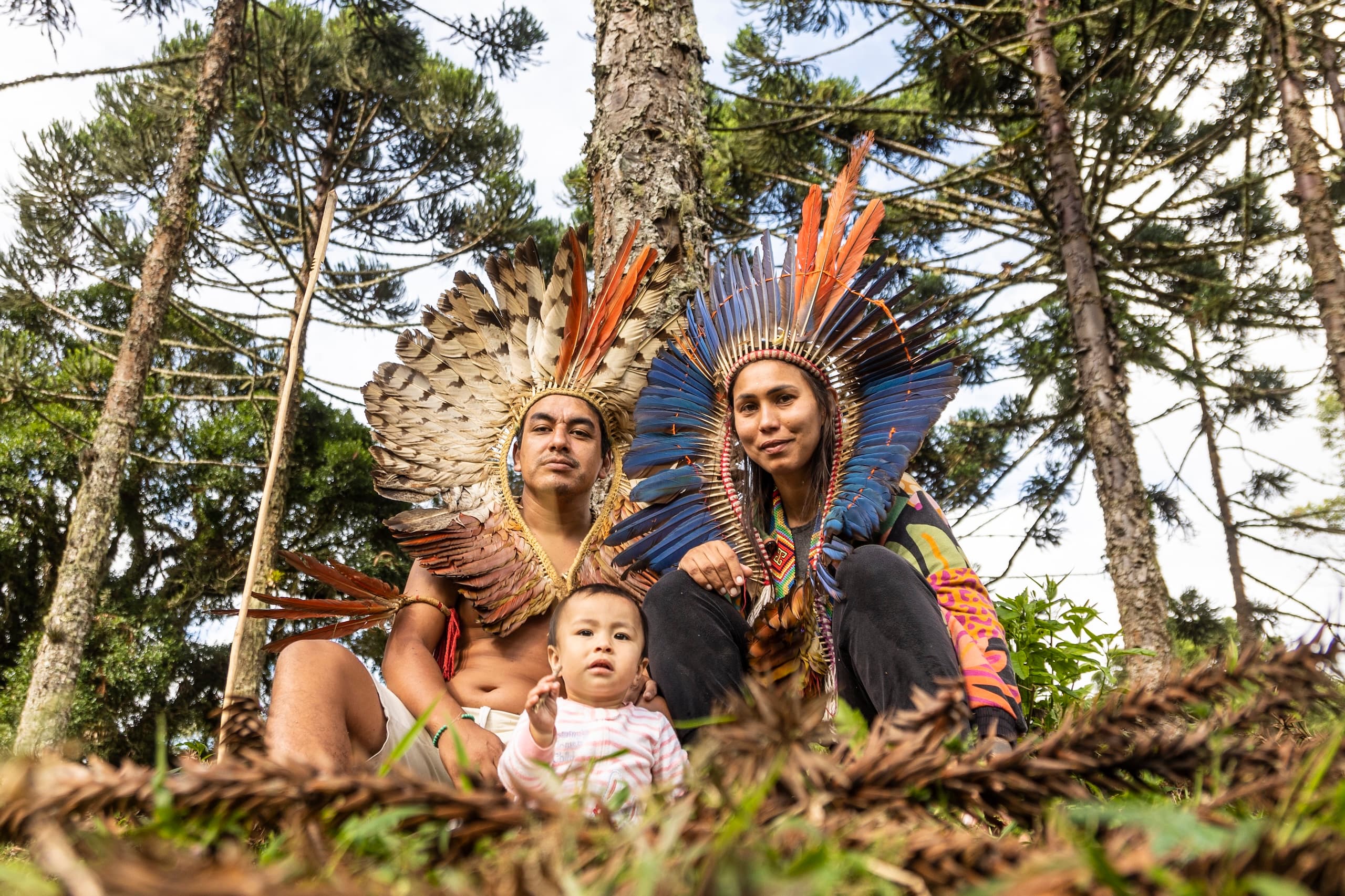
The Xokleng Indigenous people of Santa Catarina state have planted nearly 100,000 seedlings of a critically endangered native tree, the Brazilian pine (Araucaria angustifolia). The species, which can grow more than 50 meters tall, historically covered large areas of southern Brazil but has declined by roughly 97% over the last century.
Carl Gakran, executive director of the Zág Institute, began the restoration effort in 2016 after learning the Brazilian pine was listed as critically endangered by the IUCN Red List. What started as a plan to grow 10 trees on his own property expanded into a community project that launched the following year. The institute, founded by Gakran and his wife Isabel, now works with 30 to 40 volunteers regularly to collect seeds, grow seedlings and restore degraded areas, with participation rising to about 60 people during harvest and distribution periods.
The team has planted Brazilian pines across more than 1,000 hectares of their 37,000-hectare Ibirama-La Klãnõ Indigenous Territory, home to about 2,000 Xokleng, Guarani and Kaingang people. In 10 years, the institute has produced more than 140,000 seedlings. Project organizers harvest seeds while leaving at least 40% behind for wildlife, as the nuts, called pinhão, are a staple food for at least 22 animal species and in the culinary tradition of southern Brazil.
The territory is only a third of the way through the demarcation process to legally secure the land for the Indigenous groups, a process that often takes years. Gakran said the replanting effort also helps strengthen their claim to ancestral land. The institute also removes nonnative trees such as slash pines and eucalyptus and replaces them with native species.