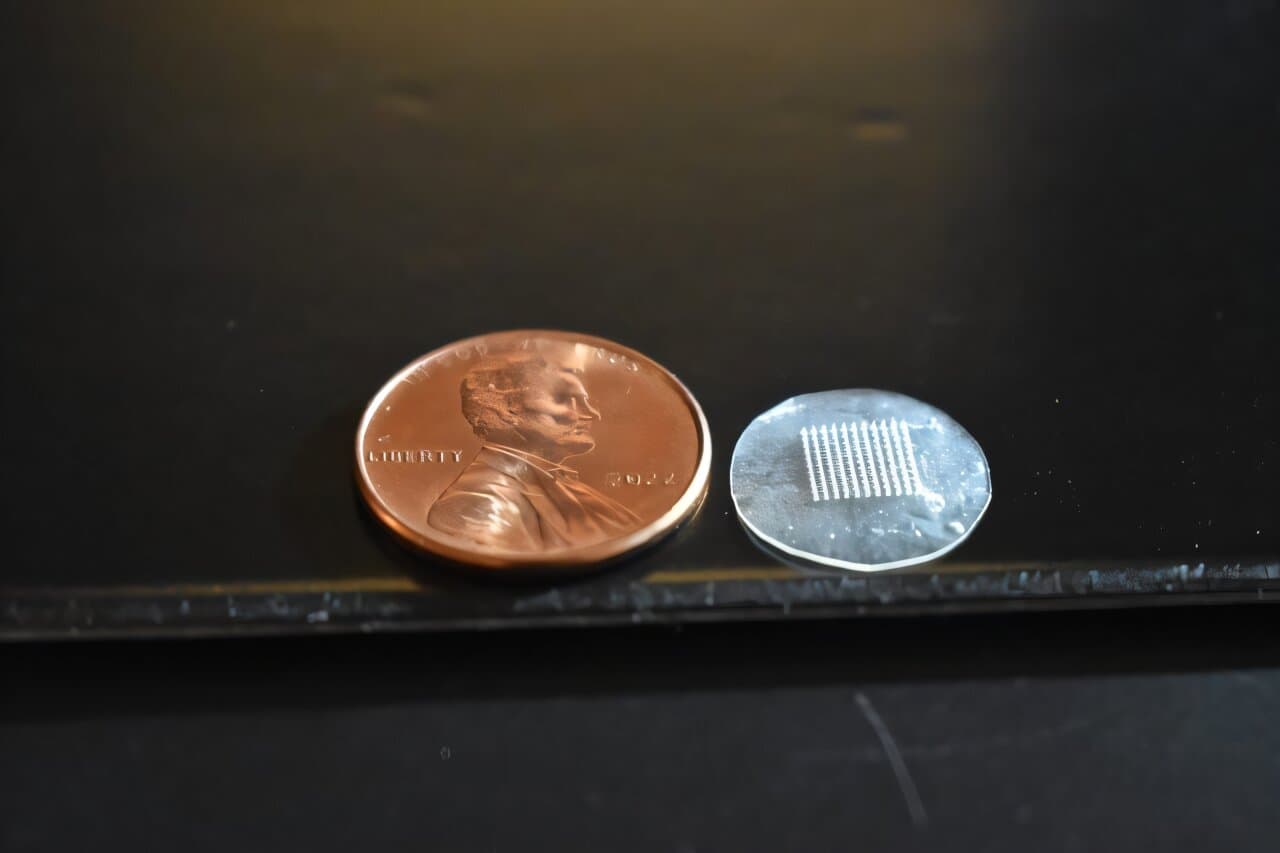
Researchers at Virginia Tech's Department of Biological Systems Engineering have created a wearable microneedle patch that detects fentanyl in the body and automatically releases naloxone, a medication that reverses opioid overdose. The patch, called the iNal patch, was developed by a team led by Wujin Sun, an assistant professor of biological systems engineering.
The patch uses an array of 121 microscopic needles to reach the fluid just beneath the skin, penetrating only far enough to access that layer while causing minimal tissue damage. Inside the patch are porous silica nanoparticles loaded with naloxone, with openings covered by fentanyl-sensitive molecular gates. When fentanyl reaches the patch, it causes the gates to open, allowing naloxone to be released. Higher fentanyl concentrations trigger the release of more medication.
Laboratory testing showed the system responded within minutes and released larger quantities of naloxone as fentanyl concentrations increased. When tested in mice, the patch released more naloxone as the fentanyl dose increased and continued to respond through at least three separate fentanyl exposures. Mice treated with the patch showed substantially fewer opioid-induced symptoms than mice exposed to fentanyl without it.
The repeated-release feature addresses the fact that fentanyl's effects may last longer than naloxone's, meaning overdose symptoms can return after an initial dose wears off. The patch is designed to respond again if fentanyl levels remain high. The team's findings were published in Advanced Science.
More research is needed to understand how well the patch holds up over time, how consistently it works across different skin types and real-world conditions, and how accurately it can respond to different opioids. Sun said the underlying chemistry could be adapted to recognize other opioids or release other drugs that block their effects. The researchers have filed a patent application related to the technology.