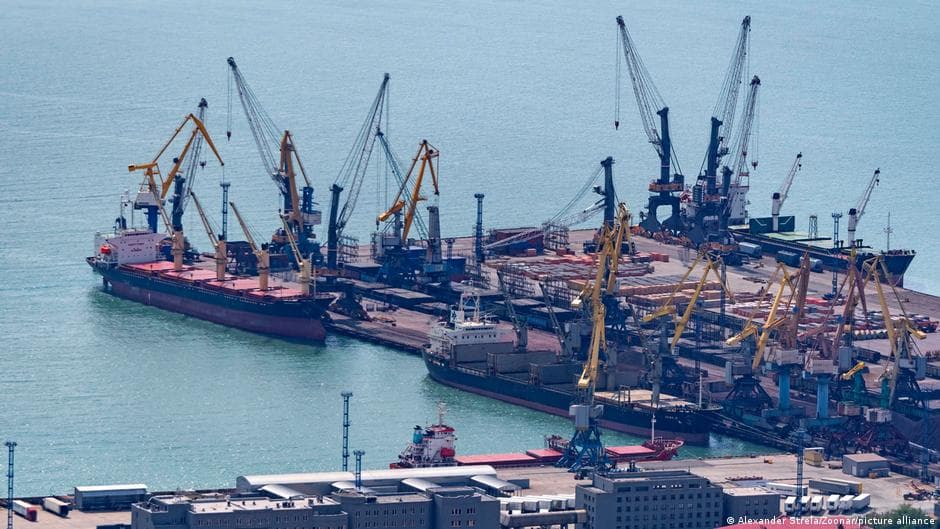
Intensified Ukrainian attacks on Novorossiysk, Russia's largest commercial Black Sea port, have severely disrupted oil and grain shipments in recent weeks, analysts said. The attacks have made exporting goods via the Black Sea increasingly difficult for Russia, with logistics only partially reorganizable, according to experts interviewed by DW.
Ukrainian drone strikes have halted operations at most of Russia's major grain export terminals. Andrei Sisov, head of the agricultural research firm SovEcon, reported that the Novorossiysk Bread Products Plant and Novorossiysk grain terminal ceased operations on August 12, followed a day later by KSK, one of Russia's largest deep-water grain terminals. A grain terminal in Taman had already halted operations at the end of July, and Ukraine had previously paralyzed shallow-water ports in the Sea of Azov. At the time of publication, only Tuapse, the smallest of Russia's deep-water grain terminals, remained in operation, Sisov said. "This means that virtually all Russian grain exports via the Azov-Black Sea basin are blocked," he added.
Novorossiysk, which handles up to a third of Russia's grain exports, has been a major hub for Russian shipments since the 19th century. The port also processes crude oil, metals and containerized goods. If attacks continue at current intensity, the consequences for Russian exporters and the national budget could be significant, experts told DW.
Oil exports have experienced frequent disruptions rather than a complete halt. The Sheskharis terminal, Russia's main Black Sea oil export facility handling around 700,000 barrels of crude oil per day, halted loadings on August 14 and resumed two days later, according to Reuters. The Center for Research on Energy and Clean Air reported that Novorossiysk "loaded 30% less oil than during the same period last year" in the first two weeks of August, following a Ukrainian strike on the Caspian Pipeline Consortium marine terminal on July 19.
The disruptions have broader global implications. According to Argus Media, Russia could have 45 million metric tons of wheat available for export in 2026 to 2027, but the situation in the Black Sea—through which about 90 percent of shipments are usually routed—will make it almost impossible to supply the global market. Russia is the world's largest wheat exporter. Xiaoyi Deng from Argus Media told DW that the disruptions have blocked good wheat harvests in Ukraine and Russia from accessing global markets, adding that alternative infrastructure such as Baltic ports or Danube River ports cannot fully replace Black Sea routes.