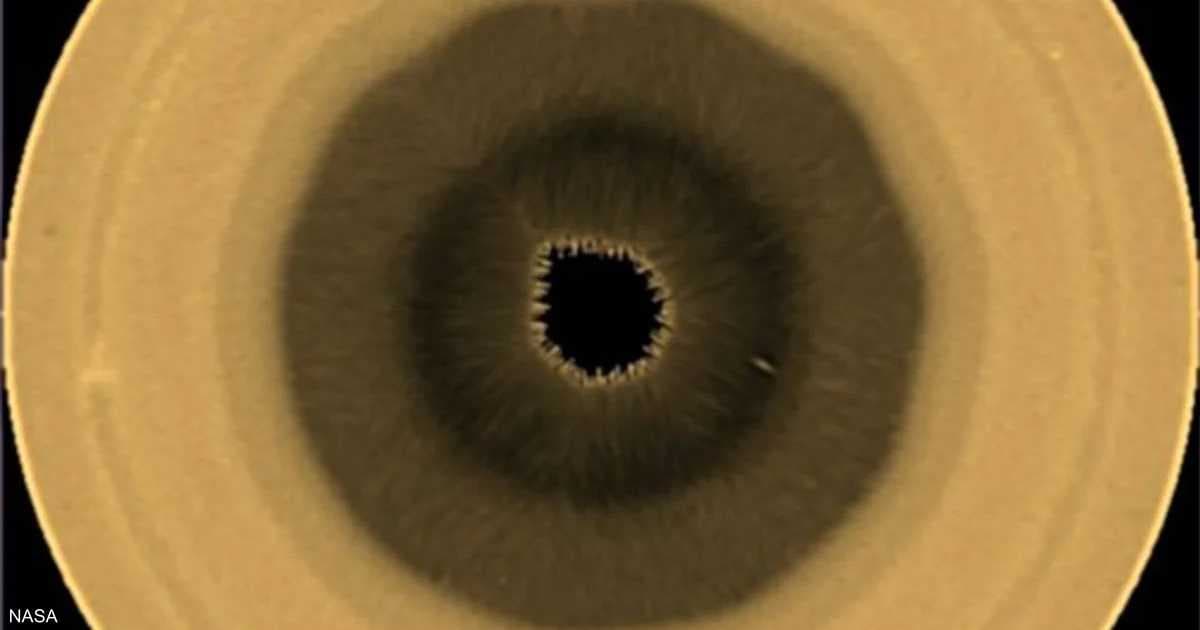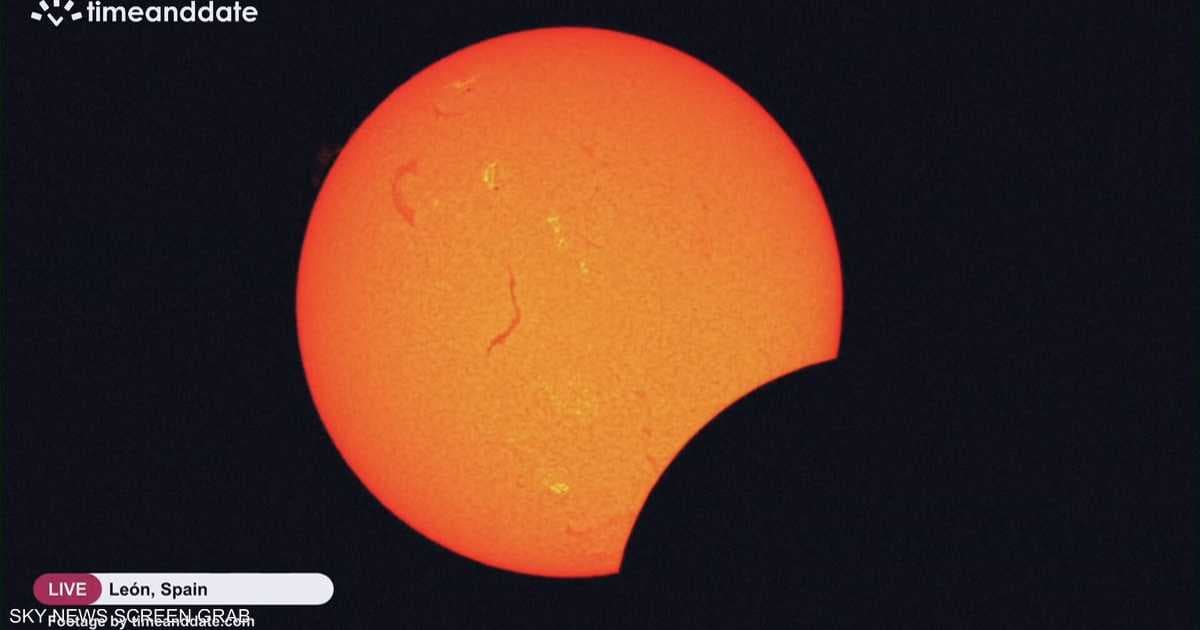
As the eclipse drew near, people in streets, fields and parks stopped what they were doing and lifted their protective eyeglasses to the sky. Light dimmed rapidly, and the sun's corona appeared surrounding the dark disk of the moon, before the crowds erupted with applause and screams.
The path of totality stretched from Greenland and Iceland across the Atlantic Ocean, then across northern, central and eastern Spain, before ending over the Mediterranean Sea near the Balearic Islands. Residents across large parts of Europe and North Africa witnessed a partial eclipse with varying degrees, according to NASA.
Spanish cities including Bilbao, Burgos, Leon, Saragossa and Valencia were plunged into darkness for anywhere from a few seconds to around two minutes, while Madrid and Barcelona remained outside the path of totality despite more than 99 per cent of the sun's disk disappearing in both cities. In Portugal, most of the country experienced a partial eclipse, while a small area in the northeast, near Montesinho park in Bragança, entered the zone of totality for a brief time.
In Belmonte Medinaceli, a Spanish town, open fields transformed into a natural amphitheatre packed with thousands of visitors. Some arrived hours early with chairs, cameras and telescopes, while others travelled long distances from the United States, Japan and European countries to see a phenomenon that will not repeat at the same location within a human lifetime.
The eclipse's peak moment was more dramatic because it occurred near sunset, with the dark lunar disk appearing low on the horizon, surrounded by a white corona, while the sky displayed sunset colours. Spanish media described the sight as "two nights in one day", whilst Portuguese coverage highlighted several seconds when Bragança became the only location in the country where the sun completely disappeared.
European coverage noted a sudden drop in light and heat, as well as changes in the behaviour of birds and animals, some of which treated the darkness as the beginning of night. Within minutes, the X platform filled with images and videos showing the formation of the "diamond ring" — the last point of light at the moon's edge before the sun vanished — followed by the corona surrounding it.
Viewers shared photographs of crowds screaming and applauding after the totality phase ended. Social media users described the moment as "the longest and shortest minute of their lives", while others said photographs could not capture the sudden change in light, heat and silence that preceded the crowd's screams. Videos circulated showing street lights automatically turning on, birds returning to their roosts and an entire field plunged into darkness before light returned in less than two minutes.
One viewer wrote in comments on a video filmed in Spain that "knowing what was going to happen did not reduce the shock when the sun actually disappeared", while another described the sight as "a sunset and sunrise in one minute". Photos also circulated from flights and ships on the Atlantic Ocean, where passengers had chosen routes calculated to remain in the moon's shadow for as long as possible.
Spain prepared for the event by setting up approximately 350 official viewing sites and deploying tens of thousands of emergency and security personnel, amid a heat wave and concerns about fires in dry rural areas, according to Associated Press. European reports estimated around 6 million people gathered along the eclipse path in Spain, including hundreds of thousands of tourists. Hotel prices in some rural towns increased, while eclipse glasses sold out from many shops the day before the event.
European coverage featured views from observation centres in Gavarnie and Leon, where the European Space Agency broadcast the event live with the participation of scientists explaining the emergence of the sun's corona and prominences surrounding it during the phase of full occultation.
For Iceland, this eclipse was the first witnessed by Reykjavik since 1433, although clouds obscured the view in some areas. In England, France, Ireland and Italy, residents witnessed a deep partial eclipse, with the percentage of sun coverage ranging between 85 and 94 per cent in several major European cities.
Wednesday's eclipse was not a single event for the Iberian Peninsula, but the beginning of what astronomers call "three eclipses in a row". Spain is scheduled to experience another total eclipse in August 2027, this time crossing the south of the country, followed by an annular eclipse in January 2028.
But for the millions of people who stood in the moon's shadow, it was not scientific calculations that remained in memory, but those seconds when the sun disappeared, cities fell silent, and life returned with the first rays of light.