In the coastal fishing villages of Pekalongan, residents are accustomed to ducking as they enter their homes. The distance from the floor to the ceiling continues to shrink because they must add earth, sand and stones to raise the floor each time tidal flooding occurs. Land subsidence in Pekalongan reached 2.1 to 11 centimetres per year throughout 2015–2020, one of the fastest rates of decline in Indonesia.
Tidal flooding is no longer an occasional disaster in Pekalongan but a monthly routine that has lasted years. Bappenas estimates economic losses from climate change in coastal areas could exceed Rp100 trillion per year, with projected total reaching Rp1.300 to Rp2.000 trillion by 2029. The north coast of Java accounts for approximately 27 per cent of GDP at risk as it houses 60 per cent of national industry.
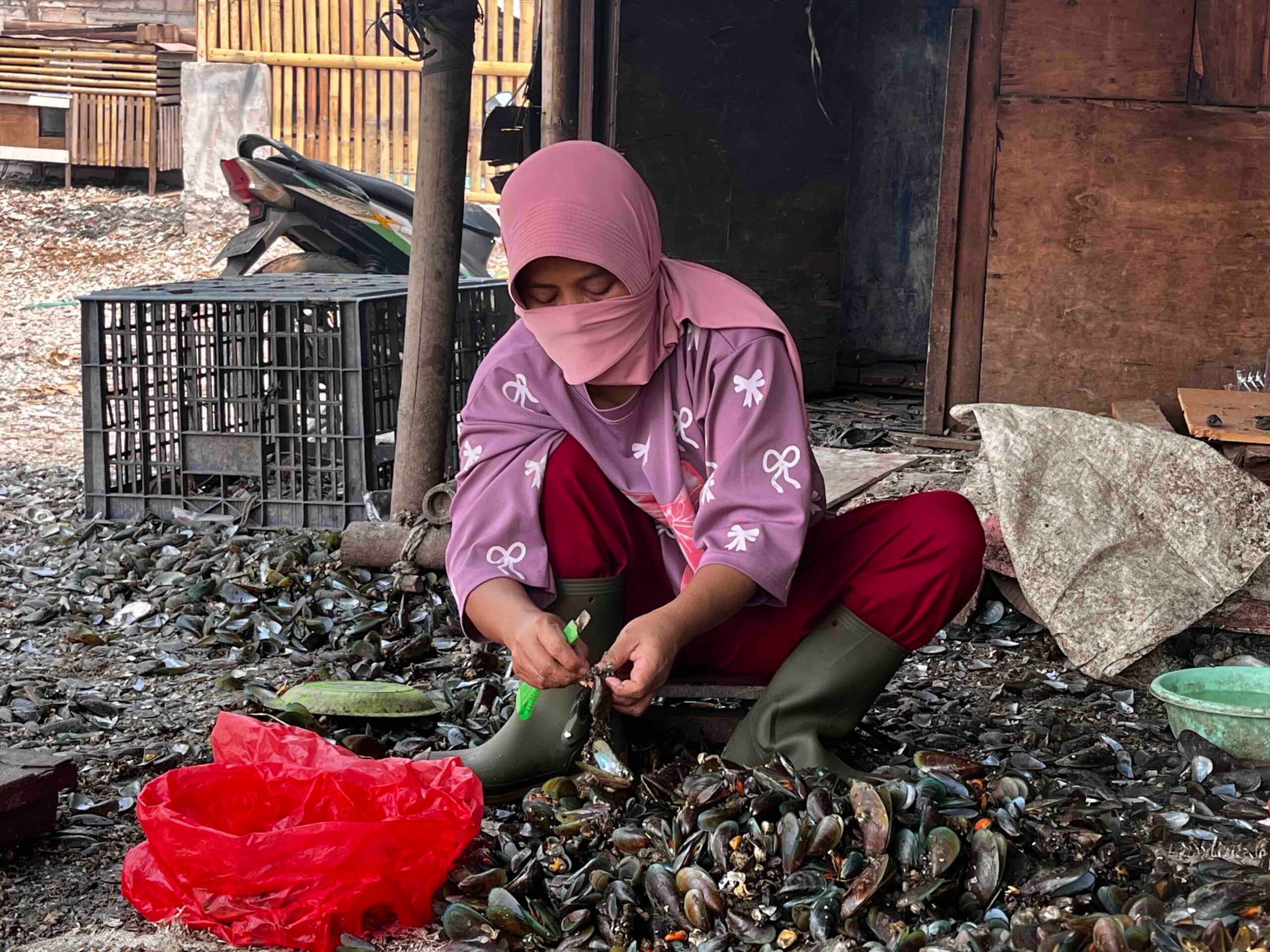
Narratives about climate change and gender in Indonesia generally conclude that women are more vulnerable. Recent research found the situation more complex: flooding does not make women suffer uniformly; rather, it reshapes risks and who bears them, depending on gender roles and types of work. Research conducted July to October 2023 in two villages in Pekalongan with different livelihoods—fishing and batik weaving—revealed differences in work burden based on gender.
In the fishing village, men spend hours catching fish in permanently submerged areas without protective equipment because they cannot afford to rent safer ponds. Two residents recounted how their neighbours died from cold and exhaustion after spending the night setting fish traps in submerged areas. In the batik village, women are more exposed to risks when doing domestic work inside their homes. When tidal water enters to 30 to 40 centimetres, activities such as cooking, childcare and cleaning continue amid batik waste water, causing many children to experience itching and skin rashes.
In both villages, a striking finding concerns household finances. Men hand over part of their income to their wives for daily needs but retain control over the remaining money. When household money proves insufficient due to post-flood costs, women seek loans from informal moneylenders. Women's work is also valued less: female batik workers are paid about Rp25,000 per day for folding and sewing cloth, while men receive Rp75,000 for tasks considered heavier such as dyeing and colouring.
Women in both villages try to process catches into value-added products and sell through online platforms. They also serve as primary managers of the Family Hope Programme, though the Rp900,000 in funds is usually spent on urgent needs rather than job training or business capital. Men are more involved in collective work building emergency dykes, giving them control over infrastructure and decision-making on adaptation in the village. In other words, men adapt by changing the physical environment, while women adapt by managing what remains in their households.
Gender-responsive climate adaptation policies need to account for both sides simultaneously. Programmes for women's economic empowerment need to be expanded, and disaster aid distribution should be redesigned with consideration for gender-disaggregated data so that policies can be targeted fairly to both groups.