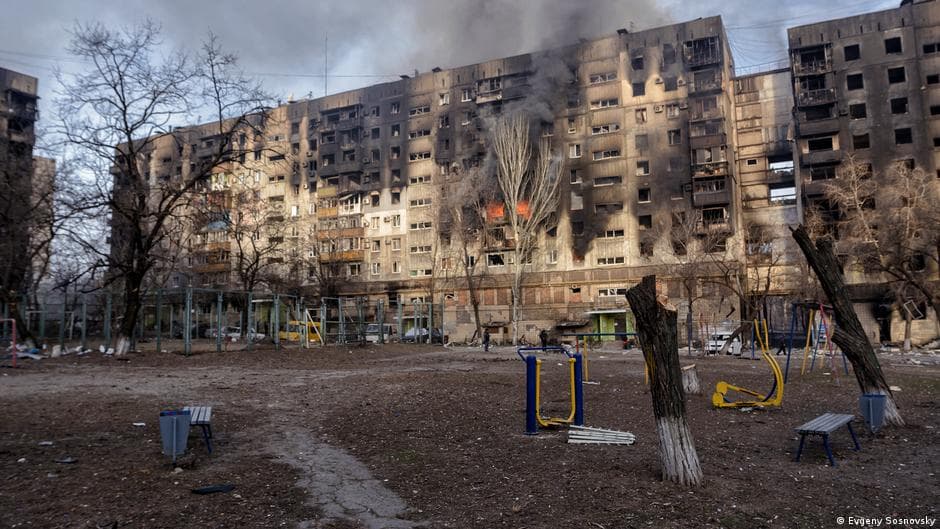
Russian building contractor Su-2007 has cleared destroyed buildings on Metallurgy Avenue in occupied Mariupol and constructed high-rise apartment blocks in their place, forming part of a residential complex called the Leningradsky Kvartal. The new development includes 15 buildings of 12 to 15 floors each, located near the city center and 10 minutes' drive from the sea.
Halyna Artemova, an English teacher, lived on Metallurgy Avenue for almost 40 years before Russian forces attacked the building in March 2022. Photographer Yevhen Sosnovsky and his wife lived next door for 20 years and invested heavily in renovations before their building caught fire in the same attack. According to the United Nations, 90 percent of buildings in Mariupol were damaged or destroyed during the 2022 siege.
Economists said apartments in the new buildings are being bought primarily by incomers including Russian security personnel, officials, and people working in military logistics, as well as those seeking seaside property at more affordable prices than in Crimea or Sochi. Russian banks offer mortgages at 2 percent annual interest for the full loan period to borrowers with Russian citizenship, with maximum loans of 6 million rubles and required deposits of at least 2 percent. Property prices have risen by a third in one year, primarily due to the coastal location.
One- and two-room apartments in the Leningradsky Kvartal cost between 7.5 million and nearly 10 million rubles, with three-room units available for upwards of 10 million rubles. Newcomers to the region are offered discounts of up to 12 percent. Residents have insured mortgages against war risks, meaning they would not have to repay loans if buildings are destroyed, though they would lose their apartments.
Former residents told DW that none of the inhabitants of the former blocks on Metallurgy Avenue were allocated apartments in the new buildings, and those who lost everything in attacks could not afford mortgages. Sources said people were instead placed in accommodation on the city outskirts or in hostels. The occupied authorities demanded that residents whose apartments survived the attacks vacate their homes, promising new apartments in exchange.