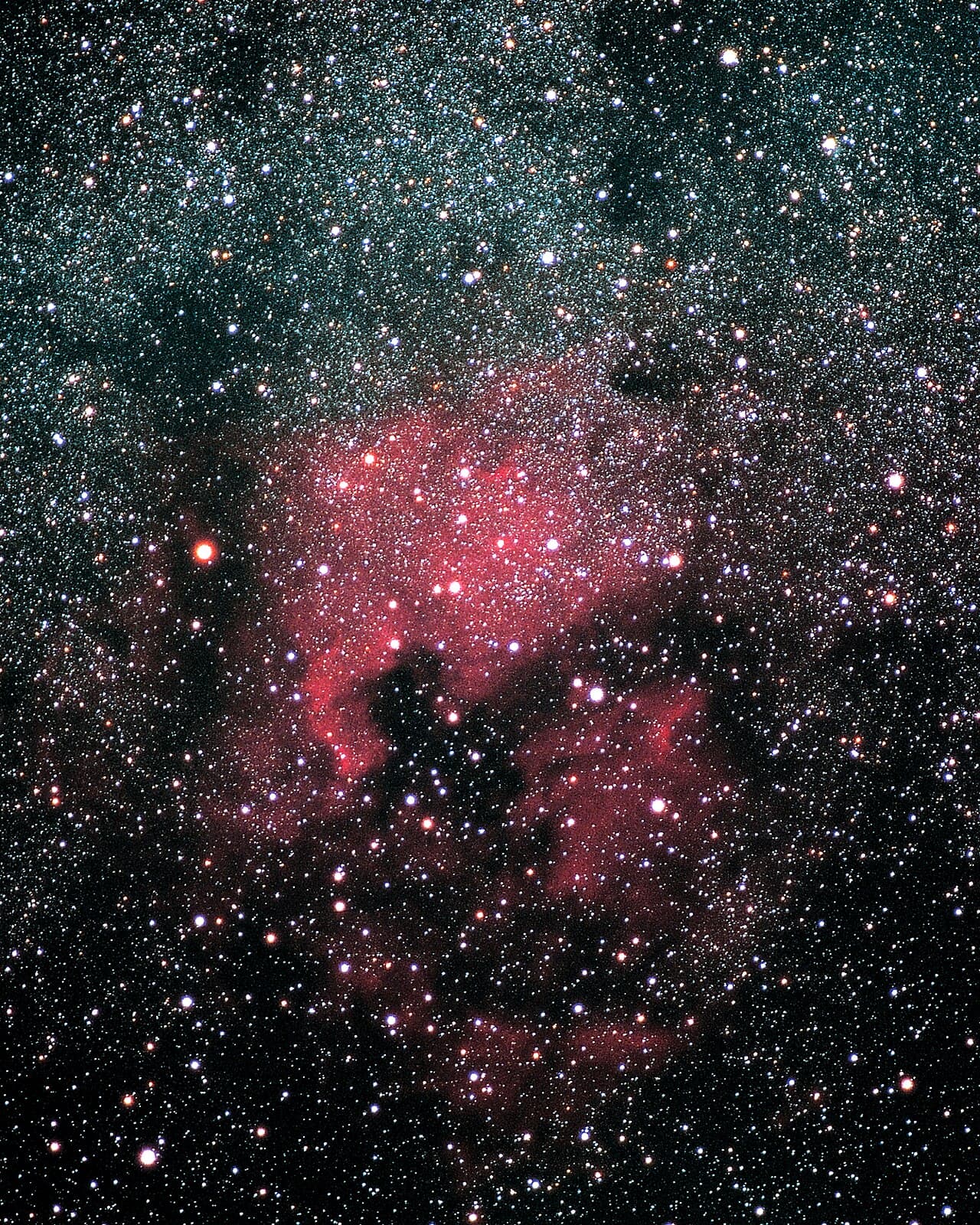
The Pelican Nebula, officially designated IC 5070, is undergoing gradual transformation through ongoing star formation and evolving gas clouds. The nebula is separated from the larger North America Nebula by a molecular cloud filled with dark dust.
A deep photograph taken from Utah using 25 hours of exposure reveals intricate filaments of dust within the nebula. The Pelican Nebula attracts significant scientific study because it combines particularly active star formation with dynamic gas clouds in various states of change.
Radiation from young, energetic stars in the region is slowly converting cold gas into hot gas. An ionization front, marking the advancing boundary between cold and hot gas, appears as a bright orange line on the upper right of the image. Dense pockets of cold gas persist within the nebula, bounded by the dark nebula LDN 935.
Over millions of years, continued transformation through stellar radiation and gravitational forces will alter the nebula's structure and appearance so substantially that it may no longer resemble its current shape, professionals noted.
