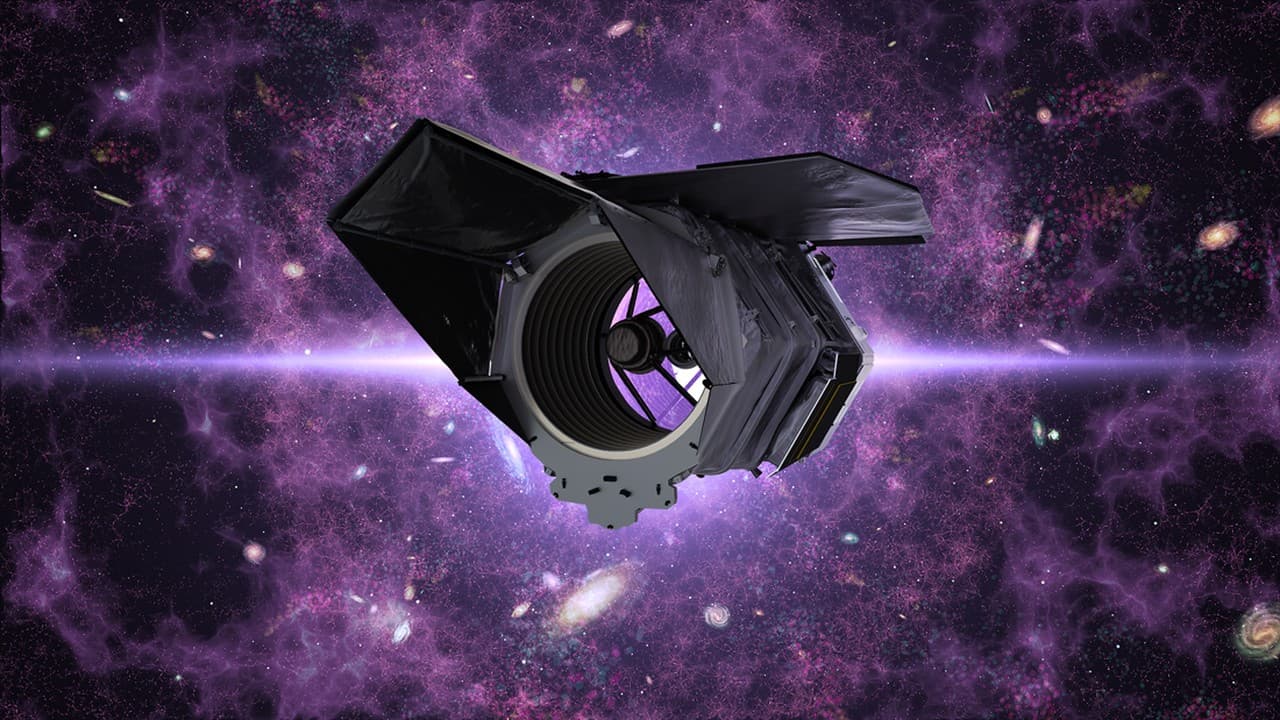
The United States space agency NASA will launch the Nancy Grace Roman space telescope on 30 August at 18:26 WIB from Kennedy Space Center in Florida using a SpaceX rocket. The launch of the $4 billion telescope has been moved forward nine months from its original schedule.
Jeremy Perkins, a test and integration scientist for the Roman telescope, said at a press conference on 29 July that the team will launch the telescope, test it, open the aperture cover, observe the sky, and transmit data to Earth for the first time. The telescope is headed for Lagrange Point 2, a stable gravitational point located approximately 1.6 million kilometres from Earth between the Earth and the Sun.
Researchers claim the Roman telescope is far more advanced than the Hubble Space Telescope in terms of observation speed. Roman is estimated to produce more than 500 terabytes of data per year, while Hubble, which has been operating for about 35 years, has generated only around 400 terabytes of data. Julie McEnery, senior scientist for the Roman project, said that an observation of the Milky Way galaxy by Roman over one month would take approximately one century if performed by Hubble.
Compared to the James Webb Space Telescope, Roman has an extremely wide field of view—one image captured by Roman is estimated to be 50 times larger than an image from JWST, although the sensitivity of its infrared sensors is not as high as JWST. McEnery explained that JWST was designed for very deep research with high sensitivity, while Roman is needed to find rare objects in the universe that are closer to us.
According to a Massachusetts Institute of Technology report, the Roman telescope can also detect small asteroids down to approximately 18 metres in size thanks to its vast field of view and infrared vision. This size is comparable to the asteroid that exploded over the city of Chelyabinsk, Russia, in 2013. Nevertheless, Roman's software will require adjustment for that asteroid detection function, but the telescope will work to complement JWST and other observatories in observing the universe.
