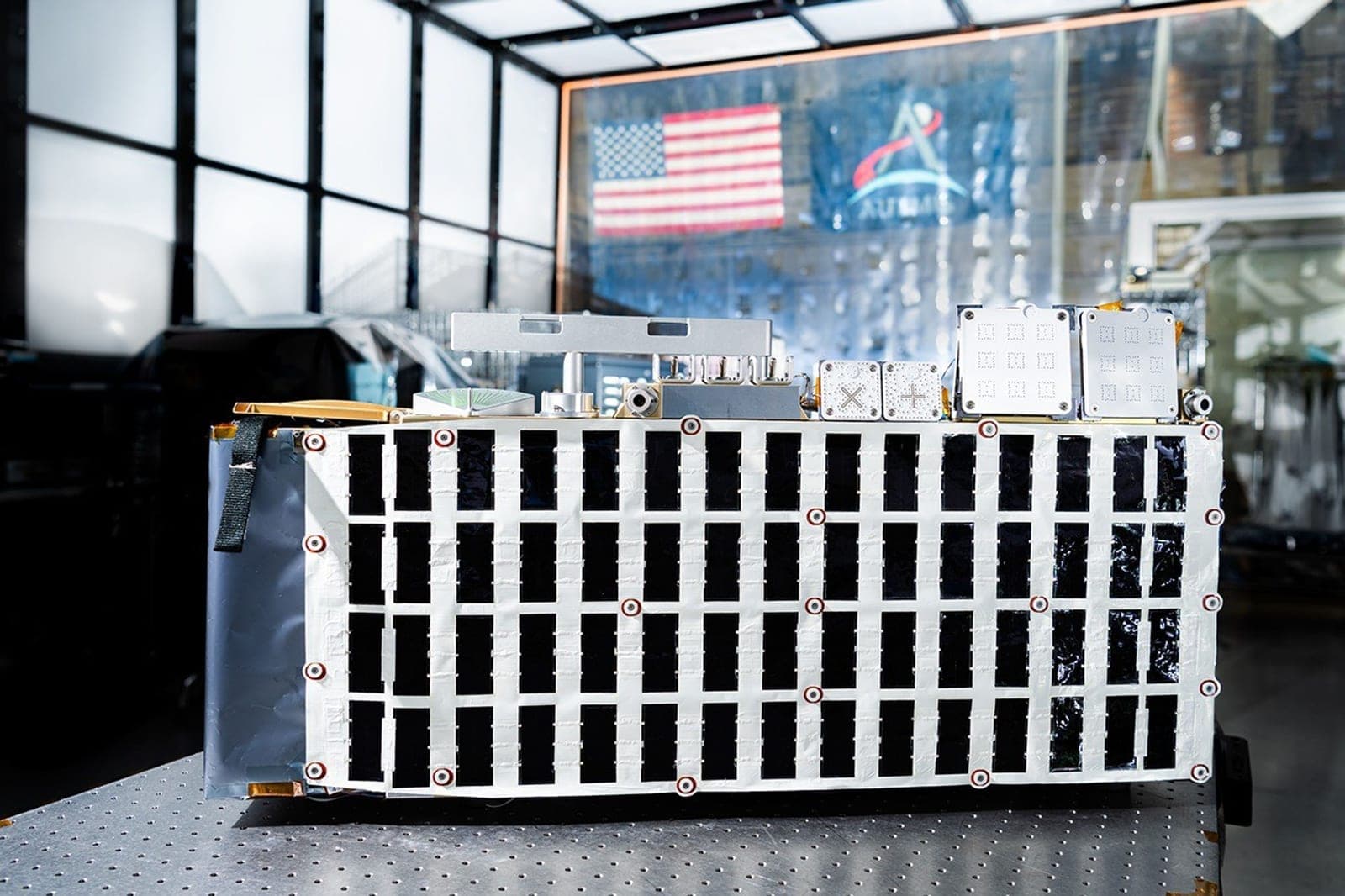
NASA has finished development and testing of the Lunar Environment Monitoring Station, or LEMS, a science payload designed for astronauts to deploy on the Moon's surface near the lunar South Pole. The completion marks a key step toward one of the Artemis program's core goals of enabling sustained lunar science and exploration.
LEMS contains two highly sensitive seismometers that will monitor ground vibrations from moonquakes and meteorite impacts, providing insights into the Moon's interior structure and seismic hazards for astronauts. The modular design allows the system to be adapted or expanded to host new instruments in the future, creating a reusable platform as scientific priorities evolve.
The instrument package, roughly the size of a small suitcase and weighing 11 pounds in the Moon's low-gravity environment, is designed to operate independently after deployment. It will generate its own power through a lightweight, flexible solar array, manage its operational activities based on a preset plan, and maintain stable internal temperatures through the dramatic day-to-night temperature swings at the South Pole region. The system will transmit data to Earth monthly.
LEMS is built to operate through the lunar night, which lasts two Earth weeks, without external power or heat sources. The instrument uses advanced insulation materials, low-thermal-conductivity cables, and a thermal regulator to withstand temperatures dropping to minus 400 degrees Fahrenheit. These innovations reduce mass and power requirements, according to engineers, setting the stage for lighter, energy-efficient instruments at future Artemis landing sites.
The payload will remain in a clean room at NASA's Goddard Space Flight Center in Maryland until assigned to an Artemis mission. The instrument was led by the University of Maryland Baltimore County and University of Maryland College Park, with technical implementation by NASA Goddard. The University of Arizona and Silicon Audio, Inc., supplied the seismometers, Morehead State University in Kentucky provided the telecommunications system, and Washington University in St. Louis will manage data processing and dissemination.
