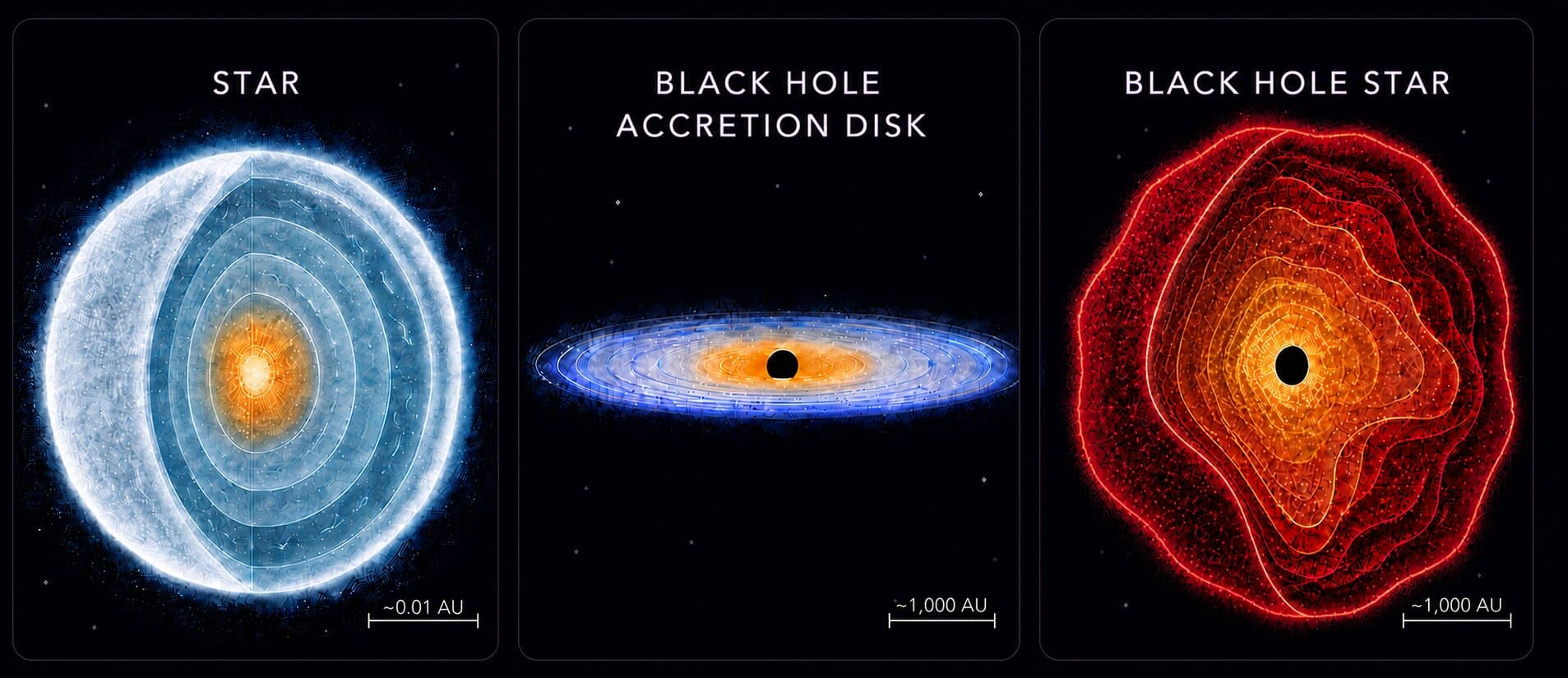
Astronomers have long been puzzled by faint red objects detected in deep-space observations from the James Webb Space Telescope. A study published in Nature suggests these "little red dots" may be powered by a newly identified phenomenon called a "black hole star"—an early, rapidly growing black hole enveloped in dense gas.
Researchers at the Institute of Science and Technology Austria and international collaborators described the discovery in the Nature study released today. The object represents the earliest known example of its kind detected to date.
The finding may help explain a longstanding astronomical mystery: how billion-solar-mass black holes came to exist so soon after the Big Bang, when the universe was only in its infancy.
