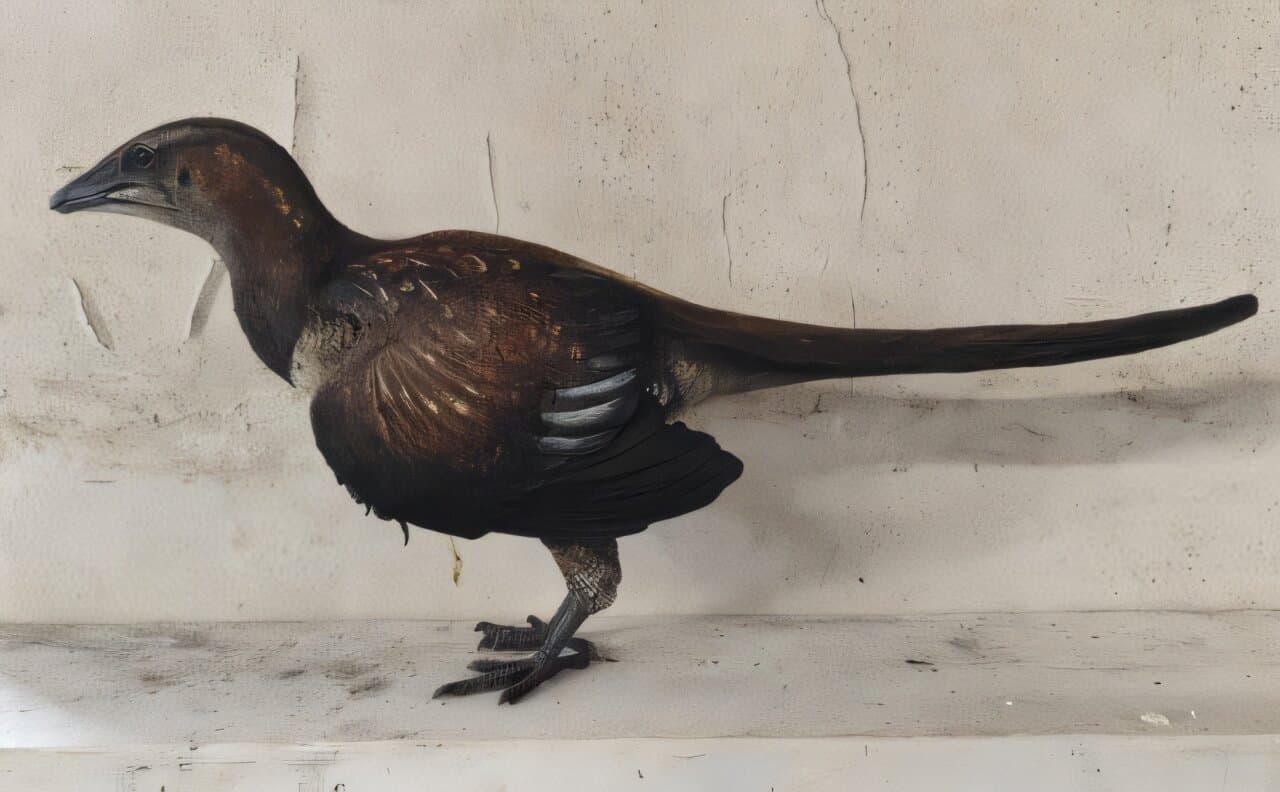
Archaeopteryx, the 150-million-year-old creature that represents an evolutionary link between non-avian dinosaurs and birds, likely took flight by propelling itself upward with two or three powerful leaps while flapping its wings, according to a study published in Developmental Biology by researchers at the University of Southampton.
Scientists have long debated how Archaeopteryx achieved flight given its physical limitations. The creature had limited shoulder mobility and no breastbone, which prevented it from reaching flight speed through the single-jump method that modern birds employ. Archaeopteryx retained several dinosaur features, including a long bony tail, clawed fingers and teeth in a beakless jaw.
Researchers combined computer modeling with observations of living birds such as gulls, magpies, crows and finches to estimate the ancient bird's takeoff capabilities. They analyzed joint moments at the hip, knee and ankle, alongside estimated muscle capacity, to determine how fast Archaeopteryx could have traveled. The team, which included Dr. Pauline Provini from the Muséum National d'Histoire Naturelle in Paris, concluded that a 400-gram Archaeopteryx could have achieved a sustainable flight speed of 7 meters per second using two or three bipedal leaps.
"The legs generate the force, and the wings take over afterward," said Markus Heller, professor of biomechanics at Southampton. Researchers noted that the takeoff sequence likely involved either "leap, leap, leap and then lots of flapping" or "leap, a flap, another leap and more flapping." This multiple-hop technique remains in use among some modern birds, including crows, magpies and seagulls, when they are conserving energy rather than responding to immediate threats.