Physicists at Fermi National Accelerator Laboratory, Stanford University and the University of Delaware have proposed a new use for the Cavendish test, one of the oldest precision experiments in physics, to search for millicharged particles. These hypothetical particles carry only a fraction of an electron's charge and interact very weakly with ordinary matter and electromagnetic fields, making them difficult to detect through conventional particle physics experiments.
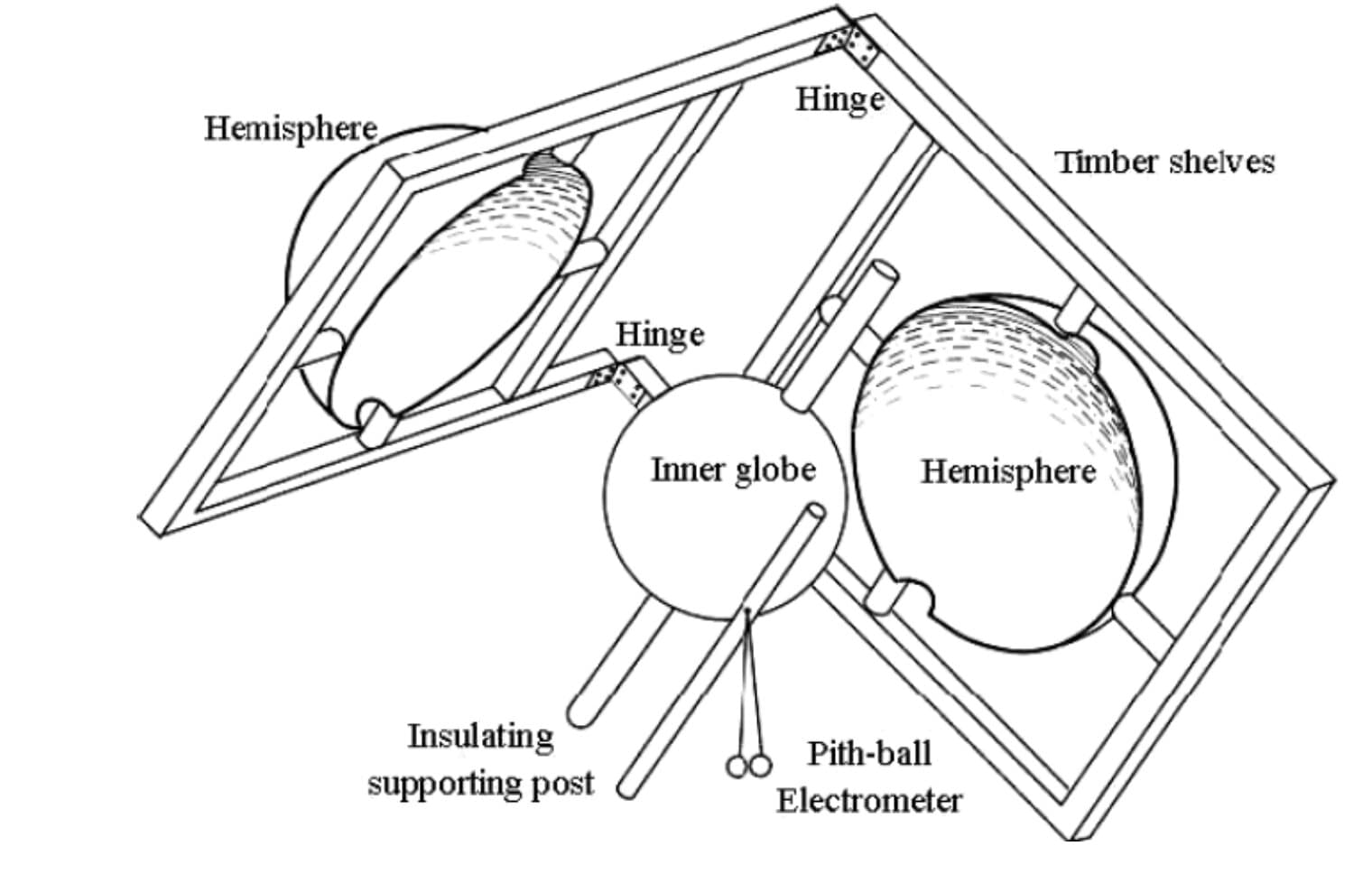
According to the researchers, the classical Cavendish test could reach greater sensitivities than particle accelerator-based experiments in detecting these particles. The experiment relies on a Faraday cage—a shell of conductive material that blocks external electric fields. While the cage would perfectly shield its interior from ordinary charged particles, millicharged particles could penetrate it when the cage has oscillating electrical potentials, producing a detectable oscillating electric field that reveals deviations from Coulomb's law.
Harikrishnan Ramani, senior author of the paper published in Physical Review Letters, said the projections suggest the revised test could be three times more sensitive than existing or future accelerator-based experiments. The research team is exploring a prototype of the experiment with Stanford physicists and applying for funding. Since the experiment can be built with current technology, researchers said results could come within years.
Some studies have hypothesized that millicharged particles may make up a small fraction of dark matter, the elusive substance that does not emit, absorb or reflect light and interacts weakly with ordinary matter. According to the projections, the revised Cavendish test could be sensitive enough to detect signs of millicharged particles making up less than one part in a trillion of all dark matter in the universe.