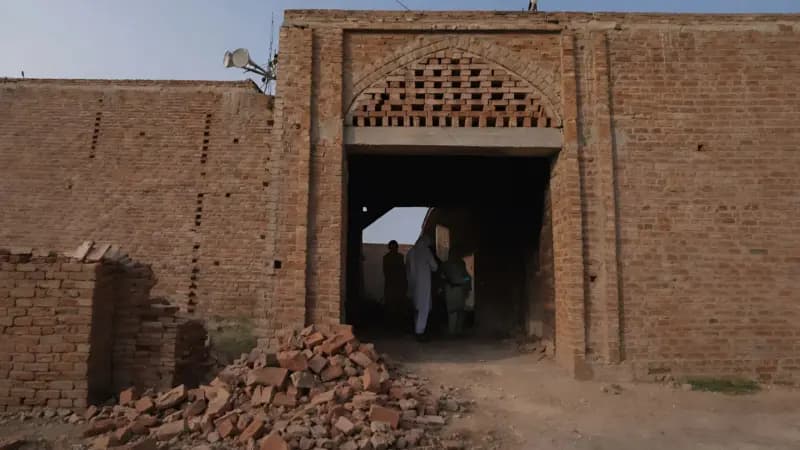
Rajab Ali, a 46-year-old transgender man, spent his entire life savings of 6 million Pakistani rupees (USD 21,000) to build a mosque for his community in Okara district of Punjab province. He hoped the mosque would bring goodwill and allow people to pray without gender discrimination. Since its completion, however, neighbors have harassed him for praying there because he is transgender, known in Pakistan as Khawaja Sira or third gender.
Pakistan's parliament passed the Transgender Persons Act in 2018, granting transgender people equal rights and access to public spaces, including places of worship. In 2023, however, a federal court struck down certain provisions of the law, arguing that self-perceived gender identity is contrary to Islamic principles. The ruling has created uncertainty for Pakistan's transgender community, which has faced increasing violent attacks.
When Ali began constructing the mosque in December 2022, pushback started almost immediately. Neighbors stole items from the building site, and local women were sent to harass him. Motor parts, water taps and fans disappeared, forcing him to repeatedly replace them. Ali eventually suspended construction for a year and a half before resuming in November 2025. Some residents have refused to pray in what they call a "transgender mosque," while others have questioned Ali's presence during prayers.
Ali is not the first to attempt building a trans-friendly mosque in Pakistan. In 2016, transgender activists in Islamabad constructed a mosque on the city's outskirts so they could worship freely, but faced constant harassment and the project stalled. Pakistan's first transgender Islamic school opened in 2021.
Religious scholars are divided over whether Ali's mosque is appropriate. Some argue that it is inappropriate to use income earned from dancing, Ali's former livelihood, to build a sacred space. Islamic scholar Asif Riaz disagreed, saying that being transgender is neither a sin nor grounds to question someone's moral character, and that society overlooks mosques built with corrupt money while applying unfair scrutiny to Ali. According to a lawyer at the Lahore High Court, the 2018 Act provides significant rights to transgender people, but implementation remains fragile without education and broader social acceptance.