A senior Iranian official source rejected reports on Wednesday that Iran and the United States had agreed to extend a ceasefire, according to Reuters. The source asserted that Washington must return to the temporary agreement and establish a timeline for implementing its commitments.
The statement came after Anatolia news agency reported on Wednesday, citing a source in Pakistan's government, that Tehran and Washington had agreed to extend the ceasefire for 60 days based on a memorandum of understanding between them.
The source said that among the issues being discussed through intermediaries were the return of the United States to the temporary agreement and the establishment of a timeline for implementing obligations. "There has been no meaningful progress in this regard," the source said.
The agreement signed by both parties in June established "an immediate and permanent cessation of military operations on all fronts," but it quickly collapsed. United States President Donald Trump said on July 7 that the ceasefire had "ended." Tehran has repeatedly accused Washington of violating its commitments.
The source added to Reuters that there were no talks about an extension. "From Iran's perspective, there was never a period when the ceasefire began and thus there is nothing that can be extended. The United States violated the temporary agreement within 48 hours of it being reached and withdrew days later," the source said.
The 60-day period in the agreement referred to an extendable timeframe in which Iran and the United States were expected to reach a final agreement that would limit Tehran's nuclear programme and lift American sanctions on the Islamic Republic.
A number of provisions—including a ceasefire in Lebanon, freedom of navigation in the Persian Gulf, and sanctions exemptions for Iran's oil sales—were considered necessary before launching another round of negotiations.
Meanwhile, Pakistan's Ministry of Foreign Affairs announced on Wednesday that Pakistani Interior Minister Mohsin Naqvi was visiting Iran to discuss security and regional stability as well as other developments in the region. Ministry spokesperson Tahir Andrabi told journalists in Islamabad that his government, which has served as a mediator to end the war in the Middle East, said the interior minister would "discuss bilateral relations, regional security and stability, constructive engagement among parties in the region, and regional developments."
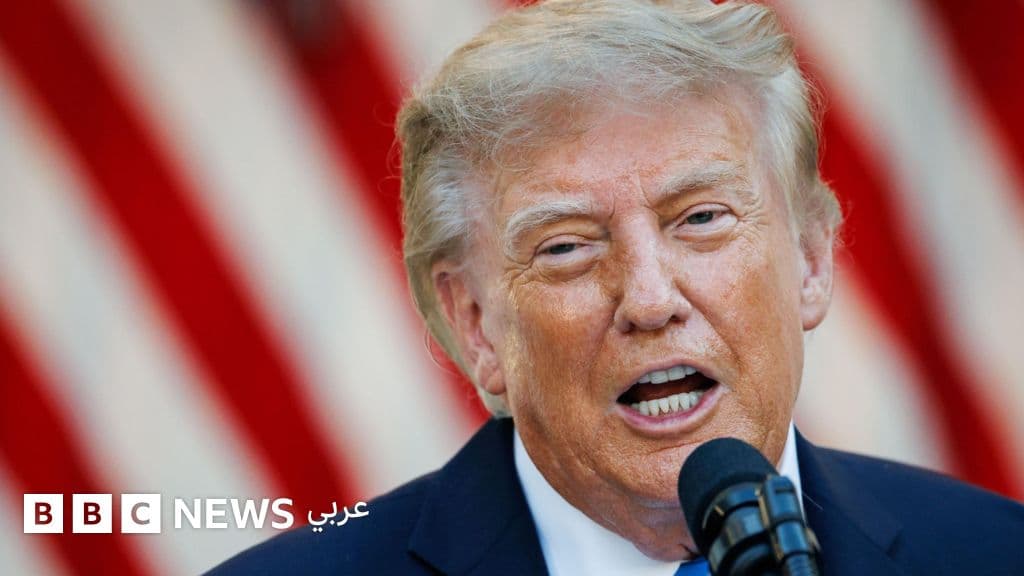
President Trump said on Wednesday that he does not trust Iran and indicated that the United States fully controls the Strait of Hormuz. Responding to press reports stating that he had boarded a replacement aircraft last month out of fear of an Iranian assassination threat, Trump said: "I faced many such threats as a strong president."
The aircraft he boarded after quietly departing on a military flight from Turkey last month "faced greater risk," he said. The switch involved moving the president, behind a food service truck, from one aircraft to another over concerns about a possible Iranian assassination threat.
Trump told journalists, after the Washington Post released a report on the matter: "I really think the aircraft I boarded faced greater risk ... that is why the aircraft I think they might target."
Over the past two days, Iran and the United States have escalated their rhetorical tone. Mohsen Rezaei, secretary general of Iran's Supreme National Security Council, said on Tuesday that the Strait of Hormuz would remain closed unless the United States accepted Iran's conditions to end the war, namely the release of frozen Iranian assets, the end of the war across the region, including Lebanon and Gaza.
This came after a new demand from President Trump on Monday that Iran pay compensation for deaths that occurred during the war, attacks, and protests over the past 50 years. Throughout the conflict, Trump's remarks have varied between threats of escalation and saying that a deal was close.
In an interview broadcast late Monday, Trump suggested that the current state of uncertainty might continue for some time, saying he might be satisfied with "waiting." He added in an interview with Real America Voice: "I'm somewhat of a negotiator ... they are very crafty negotiators."
Rezaei's remarks, who was elevated to his position on Sunday to become the second-ranking member of the council responsible for coordinating Iran's security and foreign policy, represent the strongest indication so far that the Strait of Hormuz will not be opened to maritime shipping in the immediate future. Before the war, one-fifth of the world's oil and liquefied natural gas flows passed through this waterway.
Iran's semi-official Tasnim news agency reported Rezaei's words: "As long as America does not change its behaviour and does not accept Iran's conditions, the Strait of Hormuz will not be opened."
Washington has not yet commented on Iran's latest statement. The United States announced that Yemeni Houthis carried out two separate attacks on two ships on Tuesday, in line with statements from the Houthi group itself according to Reuters.
While prospects for ending the war with Iran that began five months ago appear to have diminished, Tehran maintains that the Strait of Hormuz will remain closed unless Washington accepts its terms. Oil prices rose and global stocks fell amid growing pessimism about the possibility of ending the conflict quickly. Brent crude oil futures contracts rose 1.4 per cent to close at $88.91 per barrel, while West Texas Intermediate crude rose 1.3 per cent to $83.20.
The Saba news agency, managed by the Houthi group, reported that the group "targeted a vessel carrying Saudi military equipment" in the Bab el-Mandeb Strait. There is no confirmation from the Kingdom about this attack, but Yemen's Ministry of Transport said that four crew members of a small cargo ship were killed in an alleged Houthi attack in the Bab el-Mandeb Strait on Tuesday.
Yemen's ministry said that three Pakistanis and one Indonesian died, noting that the crew lost control of the vessel following the attack. Yemeni coast guard said that two rescuers from the National Resistance Forces, an anti-Houthi force, were killed when Houthis launched a new attack after the rescue team arrived. Ten people were wounded, including seven crew members, two coast guard officers, and one member of the National Resistance Forces, according to Yemen's coast guard.
The deaths on the Tihama ship would be the first in a Houthi attack on a vessel since the start of the American-Israeli war against Iran on 28 February. The Houthis said on 20 July that they would impose a maritime shipping ban against Saudi Arabia in the Red Sea, in response to what they called a Saudi blockade of Yemen, an allegation denied by Riyadh.
On the other hand, the American military said that an MH-60 helicopter belonging to the Navy launched two Hellfire missiles to disable the guidance system on a Panama-flagged cargo vessel, after the ship ignored repeated warnings to stop violating the maritime blockade imposed on Iranian ports. Reuters sources reported that the ship was damaged off the coast of Pakistan while sailing toward the Gulf of Oman.