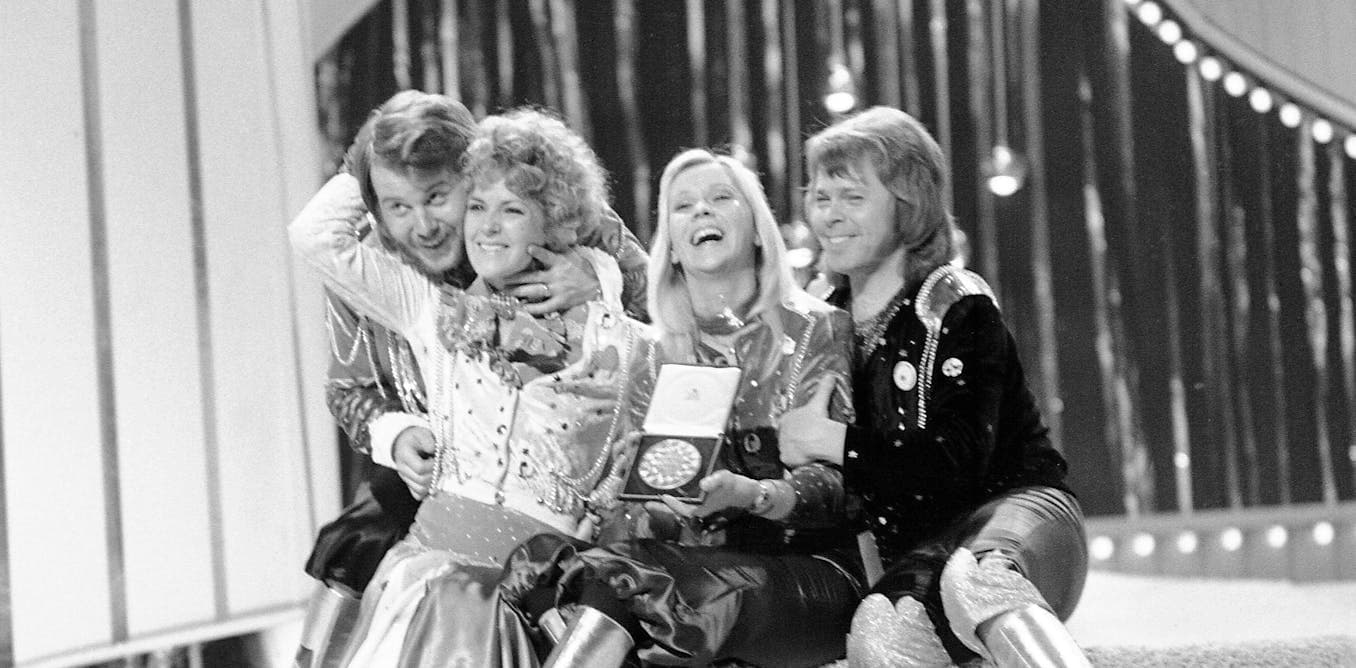
In 1976, Swedish pop group ABBA released the single "Dancing Queen", which immediately topped the charts in 15 countries including Australia, the United States, Norway, and South Africa. Half a century later, the song continues to echo on West End stages, in karaoke bars, at Mardi Gras parades, and at wedding receptions around the world.
The song was born a year after ABBA won Eurovision with "Waterloo" in 1975, when the disco wave was developing. According to the book "ABBA All The Songs: The Story Behind Every Track" by Benoit Clerc, Benny and Björn created the song at a cottage on Viggsö Island near Stockholm. They recorded a piano and guitar demo and then played the work to ABBA's manager Stig Anderson and his daughter Marie, who later remembered the demo as a "bad" recording of "an extraordinary song".
ABBA historian Carl Magnus Palm noted that when Benny played the final recording to vocalist Anni-Frid, she was moved to tears. Their manager Stig then changed the title from "Boogaloo" to "Dancing Queen", a decision that proved fortunate. In June 1976, ABBA performed at a gala honouring Swedish King Carl XVI Gustaf and his future queen before the song was released two months later.
The success of "Dancing Queen" lies in its sophisticated musical design. The song flows steadily at 100 beats per minute, more relaxed than other disco songs of its era. Anni-Frid's vocals enter directly in the middle of the chorus at the highest note, a strategy that effectively captures attention from the start. Benny's string and piano arrangement adds a dramatic tone reinforced by a theatrical glissando opening the melody.
The lyrics of "Dancing Queen" depict a protagonist who is free and pursues their own pleasure, not escaping. This double meaning connects the song naturally with the LGBTQIA+ community, making it a popular gay anthem at parades such as the Sydney Gay and Lesbian Mardi Gras. Its universal message—"You can dance, you can jive"—resonates with listeners from different backgrounds.
After ABBA disbanded in 1982, the song experienced a revival thanks to the compilation album "ABBA Gold" and Australian film "Muriel's Wedding" in 1994. Performances of "Dancing Queen" by U2's Bono and later by Metallica's Kirk Hammett and Robert Trujillo gave it recognition from rock music legends. The West End London premiere of the musical drama "Mamma Mia!" in 1999, and its film adaptation in 2008 starring Meryl Streep, introduced the song to a new generation. In 2015, the song was inducted into the Grammy Hall of Fame.